“SCRoG” (Screen of Green) Cannabis Cultivation Technique
Welcome everyone to this new, in-depth chapter of our “Cannabis Cultivation Manual,” entirely curated by the Annibale Seedshop Growing Team.
In the previous chapter, we explored the secrets of the Sea of Green (SOG), an intensive technique based on a high number of plants and vegetative growth times reduced to zero. Today, we will radically change both our geometric and biological perspectives to analyze SCROG (Screen Of Green) in detail!
In this complete guide, we will discover what this manipulation technique is, why it represents one of the most efficient and economical solutions for indoor growers, how to implement it step-by-step without making mistakes, and its structural differences compared to SOG. Finally, we will answer the most frequently asked questions with a dedicated FAQ section.
What Is the Screen Of Green (SCROG)?
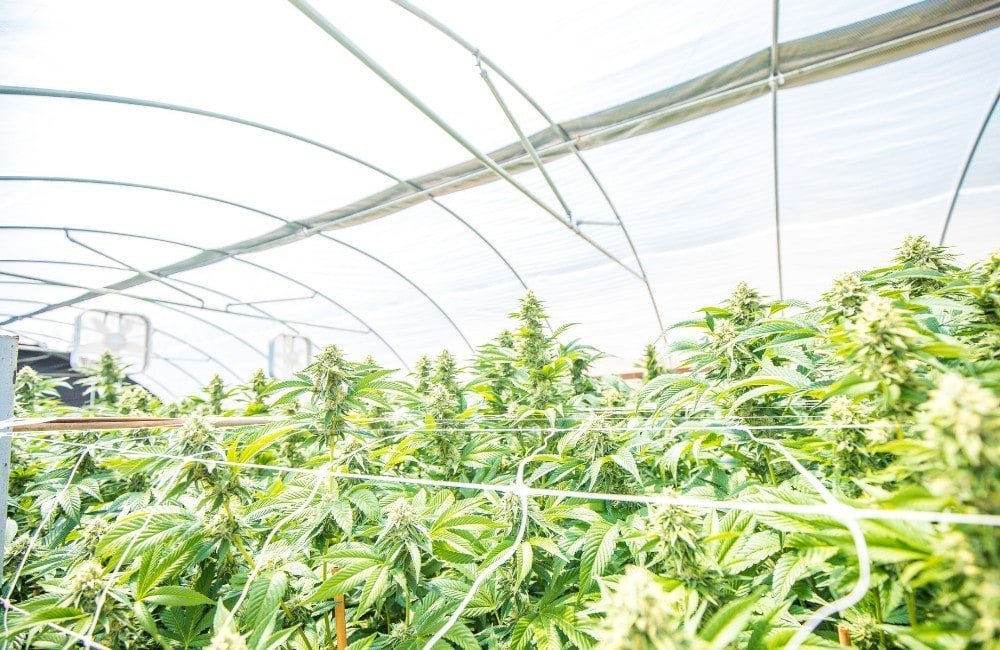
The SCROG technique gets its name from using a “screen” (generally a wide-mesh wire or plastic net) positioned at a fixed distance above the pots. The ultimate goal of this method is to train plants to grow horizontally rather than vertically during the vegetative phase.
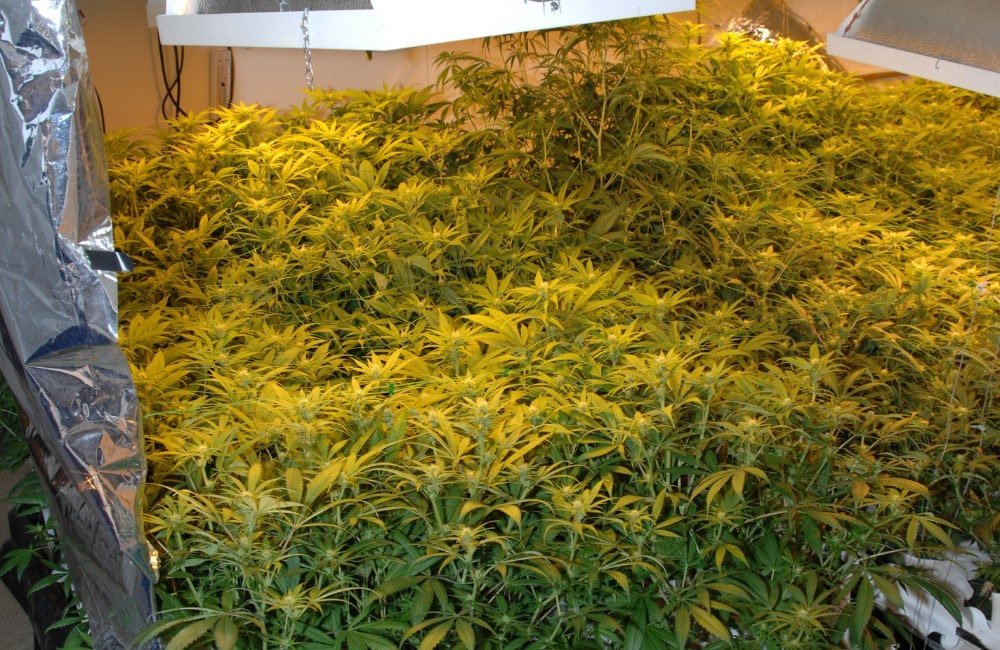
By constantly tucking and weaving the branches beneath the net, the grower manages to level the canopy, forcing all future flowering sites to be at the exact same distance from the light source. When the plant is switched to flowering, the entire net transforms into a uniform expanse of dominant buds, completely eliminating low-quality secondary flowers.
A Synergy of Advanced Training Techniques
SCROG is not an isolated action, but rather the harmonic synthesis of several pruning and manipulation techniques that every grower must master:
- Apical Pruning (Topping) or Fimming: Cutting techniques that remove the dominant apical bud to redistribute growth hormones (auxins) toward the lateral branches.
- LST (Low Stress Training): The manual bending of branches, which are anchored under the net without breaking them, to force horizontal growth.
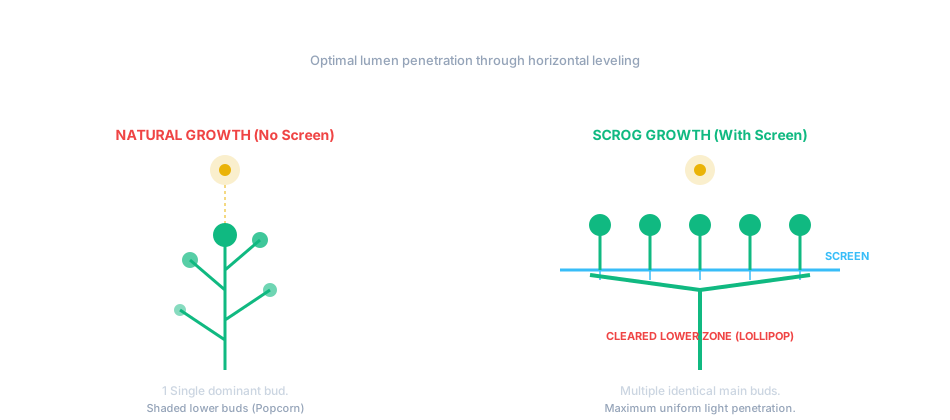
- Lollipopping (Lower Branch Pruning): The total removal of foliage and small branches located on the lower part of the plant (below the net), where light cannot penetrate. This concentrates the plant’s entire energy exclusively on the upper buds.
Unlike SOG, SCROG requires using very few plants per square meter (from 1 to a maximum of 4) but demands a significantly longer vegetative phase to allow the plant structure to colonize the entire grid.
Why Choose SCROG in a Cannabis Grow?
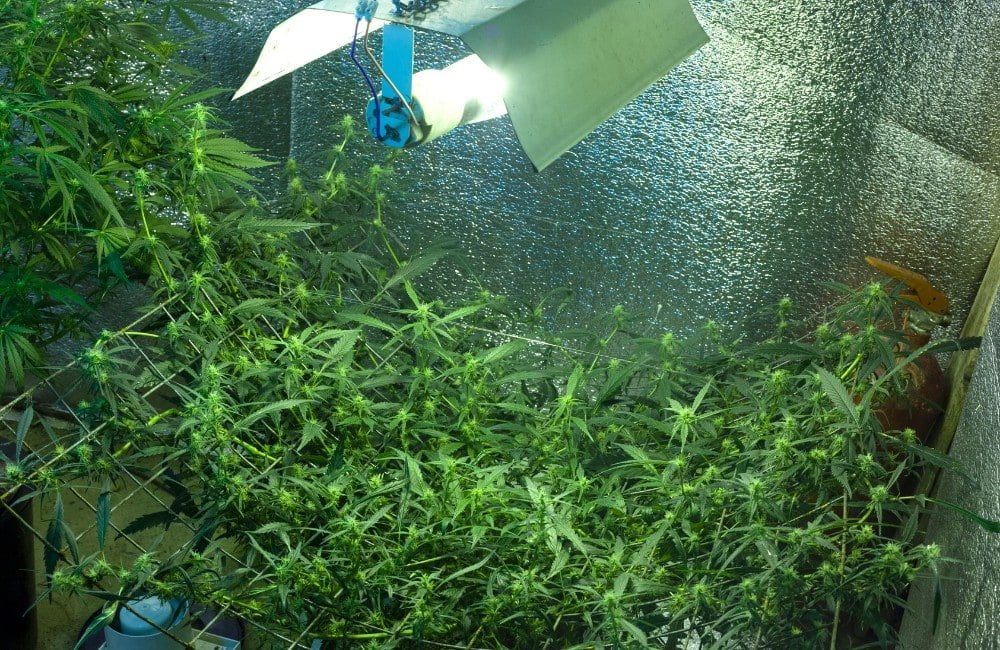
If you have a limited number of high-quality seeds, a single mother plant to preserve, or simply legal limits on the maximum number of plants you can grow, SCROG is the definitive choice.
Savings on Consumables
While SOG requires purchasing large quantities of seeds, dozens of pots, and hundreds of liters of substrate, SCROG reduces these expenses to a minimum. Having very few specimens in the box drastically reduces soil and pot consumption. Even fertilizer dosing becomes simpler and more targeted, allowing you to invest your budget in purchasing elite genetics or superior lighting equipment.
Light Distribution Efficiency
Indoor grow lights suffer from the inverse-square law: light penetration decreases drastically as the distance from the bulb increases. In a naturally grown plant (shaped like a Christmas tree), the main apical bud receives the perfect amount of lumens, while the lower buds remain in the shade, producing small, airy flowers. SCROG solves this problem at its root by creating a two-dimensional surface where every single bud receives 100% of the available light intensity.
Less Effort and Greater Visual Control
Managing one or two large, healthy plants is significantly easier than monitoring the health of 25 or 30 small pots packed together. You will have more maneuvering room inside the grow box to clean the environment, check ventilation parameters, and enjoy the progress of your garden stress-free.
How to Apply the SCROG Technique Step-by-Step
Executing the Screen of Green requires surgical precision and rigorous management of the plant’s biological timeline. Here is the official protocol recommended by our experts:
Phase 1: Strain Selection and Initial Setup
For a successful SCROG, look for cannabis strains that show a strong tendency toward lateral branching and respond well to pruning. Sativa-dominant hybrids or strains with a strong stretch in flowering are perfect, as their flexible branches lend themselves well to being intricately woven into the net. Set up large pots (18 to 30+ liters) to support a massive root system, proportional to the final size of the canopy.
Phase 2: The First Apical Pruning (Weeks 3-4)
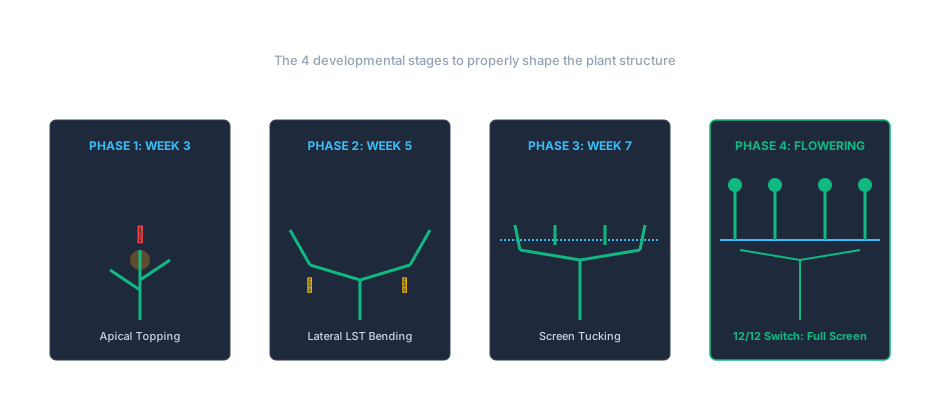
Let the plant grow naturally until it has developed its fourth or fifth internode (usually around the third or fourth week from germination stage). The main stem must be solid and woody. Perform a clean apical pruning by cutting the tip of the main stem. This action will disrupt apical dominance, redirecting growth hormones to the branches below, which will begin to rapidly stretch outward, forming a bushy structure.
Phase 3: Horizontal Low Stress Training (LST)
As the lateral branches grow, start gently bending them outward using rubber-coated gardening wire. The goal is to force the plant to develop in width rather than height. If necessary, once the new main branches have gained vigor, you can perform additional topping on their tips to double the number of potential buds once again.
Phase 4: Net Placement and Tucking
Install the SCROG net at a height between 20 and 40 cm away from the base of the pots. When the growing branches grow past the net and point upward, gently take them and reposition them beneath the next mesh space, directing them toward areas of the grid that are still empty. Continue this process of “guided branching” day after day.
Phase 5: The Timing of the Switch (The 60-70% Rule)
Do not make the mistake of filling the net 100% before changing the light cycle. During the first 2-3 weeks of flowering, plants undergo the stretch, doubling or tripling in size.
The Golden Rule of the Switch: Change the photoperiod from vegetative (18/6) to flowering (12/12) when the net covers about 60-70% of its total surface area. The natural stretch will take care of filling the remaining 30% of the space during the first weeks of flowering, generating a perfect, impenetrable screen.
SCROG vs. SOG: The Structural Comparison
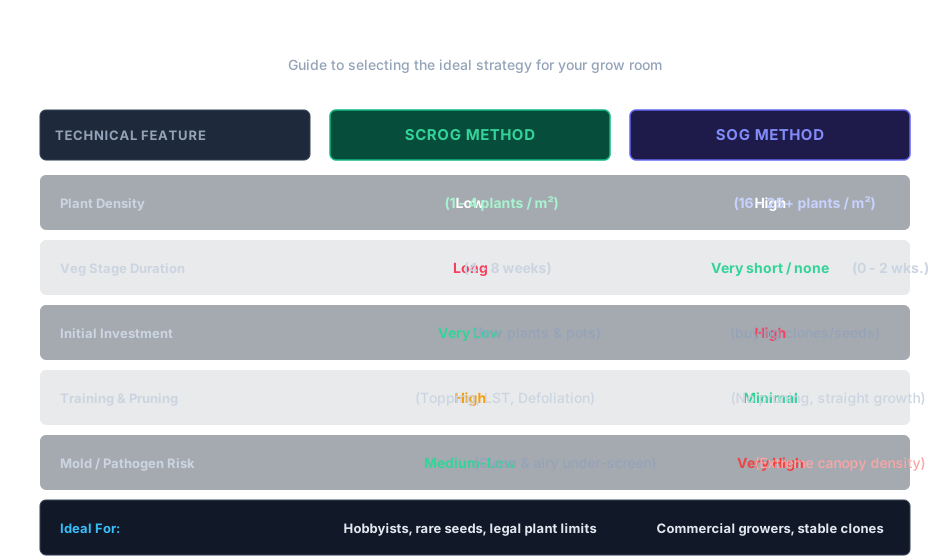
To help you choose the ideal cultivation strategy for your grow room, we have summarized the key factors in this comparative table:
10 Golden Tips from the Annibale Seedshop Growing Team for SCROG
To ensure a record-breaking harvest without any technical hitches, carefully follow these 10 empirical rules developed directly inside our test grow rooms:
Respect Vital Space (No Overcrowding):
The most common mistake for beginners is packing too many plants under the same screen. Remember that SCROG is designed to work miracles with very few specimens. Using 1 to a maximum of 4 plants per square meter will allow you to achieve the exact same final weight as an intensive SOG, while maintaining an infinitely cleaner management.
Select Sativa-Dominant Genetics or Stretchy Hybrids:
Sativa varieties or stable hybrids possess long, flexible, and vigorous branches, perfect for being bent and guided along the net mesh without the danger of snapping. Pure Indicas, conversely, tend to develop structures that are too stocky, rigid, and compact, making tucking extremely complex.
Choose a Light and Highly Oxygenated Substrate:
A prolonged vegetative phase requires exceptionally healthy and responsive roots. Use a specific soil like Biobizz Light-Mix, formulated to ensure maximum porosity and perfect drainage. This will prevent water stagnation during the frequent waterings required by large plants.
Do Not Rush to Change the Photoperiod:
Patience is the scrogger’s virtue. If you force the switch to flowering (12/12) too early, when the net is only half covered, you will end up with large empty spaces under the lamp. This will drastically reduce the overall efficiency of the cycle and the final yield of grams per watt.
Moderate but Frequent Feeding (Prevent Lockouts):
With a single plant covering an entire square meter, a lockout from overfertilization can turn into a disaster. Feed fertilizers at medium-low dosages but with constant frequency, continuously monitoring the runoff EC (electrical conductivity). It is infinitely easier to correct a slight nutritional deficiency than to flush a substrate saturated with toxic mineral salts.
Practice Regular Strategic Defoliation:
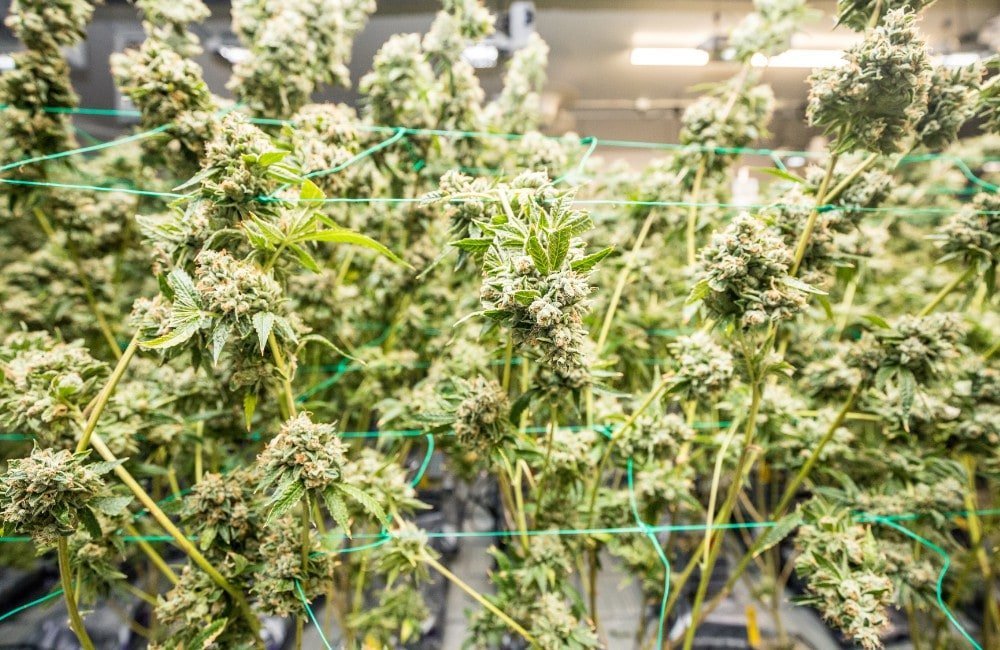
The cannabis grow density in a well-executed SCROG becomes impressive. Periodically remove the largest fan leaves that overlap and cover the flowering sites below. This will improve light penetration and, above all, increase internal air circulation throughout the crop, drastically reducing stagnant relative humidity.
Cultivation Leveling Is a Must:
No bud should dominate over the others in terms of height. If a branch shows excessive vigor and tends to tower toward the lamp, bend it immediately and move it toward the periphery of the net. The use of the screen serves precisely to ensure that the distance between the light bulbs and every single flower remains strictly millimeter-exact and constant.
Final Leaf Cleanup and UV-B Boost:
In the last 2-3 weeks of flowering, perform targeted defoliation to expose the calyxes directly to the light. If your equipment allows it, integrate a complementary UV-B emitting lamp. The controlled stress induced by UV rays will push the trichomes to secrete industrial quantities of protective resin, increasing the final concentration of terpenes and cannabinoids.
Allow for the Development of a Solid Trunk:
A long vegetative phase allows the plant to build a massive central trunk, a true highway for transporting nutrients from the roots to the buds. Do not be afraid to extend the vegetative phase: every day spent strengthening the structure will translate into denser, heavier, and more compact buds during flowering.
Implement the Three-Pot System (Progressive Transplanting):
To optimize the growth speed of the root system, never plant the seed directly into the final pot. Follow the 3-step progressive transplanting scheme:
- Starting pot: 2-3 liters (for the first 2 weeks, to concentrate the roots).
- Intermediate pot: 8-12 liters (during the pruning and first bending phase).
- Definitive pot: 25-50+ liters (to be stably positioned under the net before the switch).
5 Final FAQs on the SCROG Technique
1. What is the ideal height to place the SCROG net above the pots?
The standard height varies between 20 and 40 cm from the soil surface. The exact distance depends mainly on the genetics: for Indica-dominant strains or very compact hybrids, the net is usually placed lower (about 20-25 cm) so as not to stress the plant with unnatural extensions. For Sativas, which have a vigorous stretch, a higher placement (35-40 cm) is preferred to give the trunk room to develop a solid structural base before meeting the containment grid.
2. What happens if a branch accidentally breaks while bending under the net?
Don’t panic; it’s a common minor accident. If the branch is not completely detached but only has a partial lesion or fracture (known as involuntary supercropping), you can save it immediately. Bring the two broken parts back together and wrap the wound tightly with electrical tape or grafting tape. Within 7-10 days, the plant will form a conspicuous, knotty healing callus at that spot, making it even more efficient at transporting nutrients. Avoid applying further stress to that branch during recovery.
3. Can I apply the SCROG technique with autoflowering seeds?
Generally speaking, SCROG is highly discouraged for autoflowering plants. Ruderalis varieties have a genetically preset life cycle and switch to flowering independently after about 3-4 weeks, regardless of the photoperiod. Since SCROG requires aggressive pruning (Topping) and long vegetative recovery times to cover the net, an autoflower would enter flowering while its structure is still microscopic, resulting in a failed harvest. For autoflowers, prefer light LST techniques without any cutting.
4. How do I water the plants if the net prevents me from accessing the base of the pot?
This is one of the structural limitations of a manual SCROG setup. To solve the problem without moving the net, you have three options: install an automated drip irrigation system before positioning the screen; use an extendable watering wand connected to a pump or pressure bag; or use sub-irrigated self-watering pots (which water from the bottom). Keeping the floor clean and free of dry foliage beneath the net is also crucial to prevent the onset of Cannabis pests.
5. When should I stop tucking and weaving branches under the net mesh?
You should stop horizontal weaving around the end of the second week of flowering (about 14 days after switching to 12/12). At this moment, the initial stretch momentum begins to taper off, and the plant concentrates its energy on producing pre-flowers. From this point onward, let the buds grow exclusively vertically, protruding above the screen. The net will then serve as a solid scaffold to support the massive weight that the flowers will accumulate in the following weeks.
And that’s all for today from the Annibale Seedshop Growing Team! We hope this detailed guide on the Screen of Green allows you to master your indoor space and squeeze every last gram of resin out of your favorite plants.
Keep studying with us: in the next chapter, we will analyze the anatomy of cuts and see how to perform a perfect topping to multiply your buds!
A big greeting to all growers,
Davide – CEO, Founder & Geneticist of Annibale Seedshop