Cannabis Pest Infestations: A Guide to Prevention, Treatment, and Harvest Management
Welcome everyone to this new article on our blog dedicated to the diagnosis, prevention, and treatment of pest infestations in Cannabis plants. After dissecting the dangers associated with the main molds in Marijuana cultivation, the Annibale Seedshop & Genetics staff takes you into the heart of entomological defense.
In the 2026 indoor and outdoor cultivation landscape, crop protection can no longer rely on the indiscriminate use of toxic chemicals. Protecting prized and sensitive varieties like our Jack Cloudwalker F1 requires a scientific approach based on Biocontrol and the precise management of environmental factors. In this clinical guide, we will analyze the attack vectors of the 5 killer pests, how to eradicate them in the grow room, and how to manage emergencies on the buds during the drying phase.

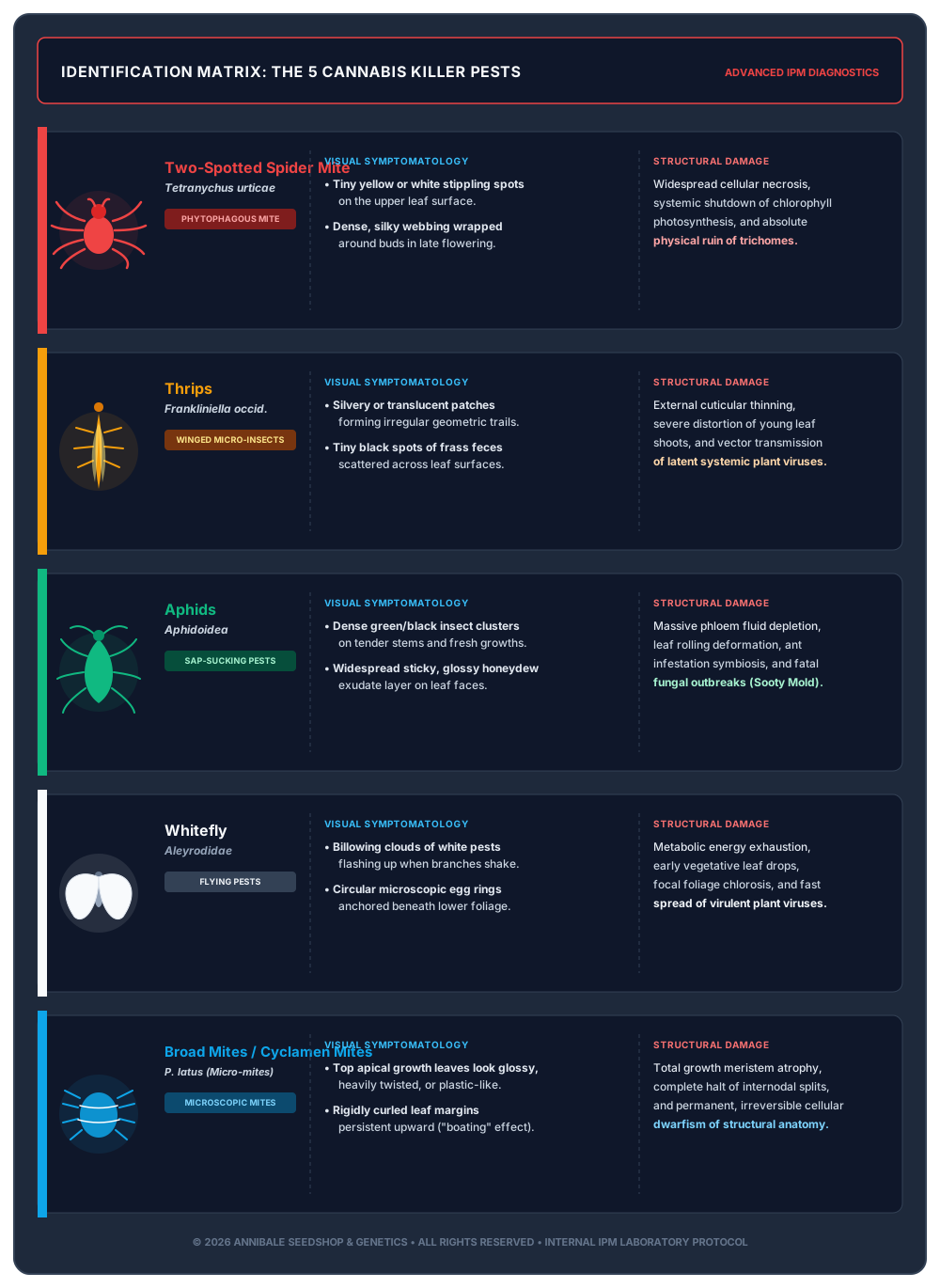
The 5 Killer Pests of Cannabis: Identification Matrix
Recognizing the enemy at the very first sign of appearance is the only way to avoid the systemic collapse of the plantation. Below is the clinical mapping of the most widespread pests:
Environmental Triggers: The Pest Microclimate
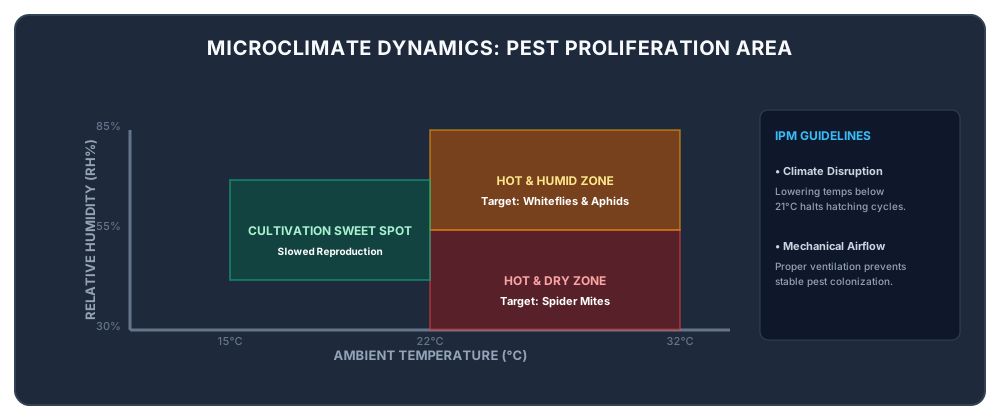
Insects do not appear out of nowhere; their proliferation is regulated by precise physical conditions. Modifying these parameters means breaking their reproductive capacity.
- The Critical Thermal Window (20°C – 30°C): This is the perfect metabolic spectrum for most insects. At 26°C, the life cycle of the Spider Mite (Ragnetto Rosso) accelerates exponentially, allowing eggs to hatch in just 3 days.
- Incorrect Relative Humidity (RH%): High RH (above 70%) combined with poor ventilation favors Whiteflies and Aphids. Conversely, low RH (below 40%) associated with warm temperatures accelerates leaf dehydration, driving Spider Mites to multiply and colonize the plant’s remaining water reserves.
- Stagnant Air (Lack of Recirculation): The absence of oscillating fans creates pockets of hot, still air devoid of pressure shifts. This allows insects to fly, mate, and lay eggs undisturbed on the underside of the leaves.
Integrated Pest Management (IPM) Protocol
The preventive barrier is the only defense that guarantees zero chemical residues on the flowers. The Annibale Genetics team applies a strict Integrated Pest Management (IPM) protocol:
- Access Biosecurity: Never enter the grow room after walking in an outdoor garden or touching ornamental plants. Change clothes and use footwear dedicated exclusively to the cultivation area.
- Cyclic Substrate Sanitization: Avoid reusing old soil. Substrates must be stored in sealed environments to prevent the introduction of latent larvae.
- Preventive Predatory Inoculation: Introduce beneficial predatory mites before the problem appears. Phytoseiulus persimilis & Amblyseius californicus are voracious natural predators of Spider Mites. Orius laevigatus is excellent for the preventive biological control of thrips.
- Synchronized Neem Oil Application: Treat plants in the vegetative phase every 10-14 days with a solution of pure Neem Oil and an organic emulsifier. The azadirachtin contained in Neem blocks the hormonal system of chewing insects, preventing them from molting and reproducing.
Eradication Methods During an Active Infestation
If pests have breached preventive barriers, intervention must be immediate, surgical, and tailored to the plant’s life stage.
Vegetative Phase: Zero Tolerance and Mechanical Knockdown
In the vegetative phase, the plant does not yet have flowers, allowing for heavy-handed shock actions.
- Pressurized Foliar Wash: Spray a potassium soft soap solution (15 ml/L) at a calibrated pH on the underside of the leaves. The soap dissolves the protective cuticle of soft-bodied insects (aphids and whiteflies), suffocating them.
- Emergency Chemical Treatments (Exclusive Veg Use): In cases of total infestation threatening the genetic’s survival, specific systemic insecticides can be used. Please note: These products must be categorically discontinued before switching to 12/12 hours (flowering phase) to ensure the total decay of the toxic molecule within the plant tissues.
Flowering Phase: Pure Biological Controls and Zero Residues
During flowering, any spraying of chemical or oily liquids will destroy terpenes and remain trapped inside the floral calyxes, rendering the weed toxic if smoked.
- Massive Release of Beneficials (Useful Insects): This is the only viable path. Release Chrysoperla carnea larvae (voracious predators of aphids and thrips) directly onto the plant canopy.
- Targeted Defoliation: Manually remove leaves showing evident colonies or egg sacs, sealing them immediately in a plastic bag before leaving the grow room to prevent dispersion.

Post-Harvest Management: Removing Pests During Drying
If the infestation persists up to the time of harvest (cutting), the plant material can still be saved by applying physical evacuation and biological extraction dynamics.
The Spontaneous Vertical Migration of Spider Mites
The Spider Mite is an obligate phytophagous pest: it needs the active lymphatic flow of the living plant to feed. When the plant is cut at the base and hung upside down in a dark drying room, the sap stops circulating and tissues begin to dehydrate from the buds down toward the main stem.
Driven by negative geotropism and a survival instinct, the spider mites will abandon the flowers within the first 24-48 hours, moving upward (which is toward the cut point of the main stem).
Grower’s Action: Wrap sticky double-sided tape around the base of the cut stem (the highest point when hung). The mites will get trapped in mass during their migration, clearing the flowers below.
The Chemical-Physical Protocol of “Bud Washing”
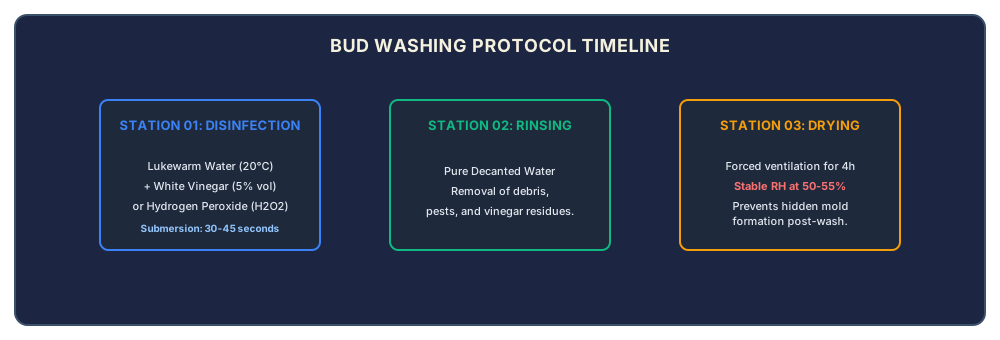
In cases of severe infestations with residues of feces, honeydew, or dead insects trapped in the resin, washing freshly harvested buds is a mandatory procedure to save the product’s consumption safety and medical purity.
Cannabinoids and terpenes are enclosed within trichomes, structures composed of hydrophobic lipid membranes (insoluble in water). Pure water does not dissolve THC or CBD. Consequently, a quick wash in an aqueous solution removes mechanical dirt without affecting the potency of the flowers.
- Side effects on aromatic quality: Prolonged submersion will inevitably cause the loss of the most volatile terpenes (which are water-soluble or susceptible to thermal and mechanical stress). The weed will taste slightly more neutral, but it will be completely clean.
- The Danger of Post-Wash Mold: If the washed buds are not flawlessly dried using forced ventilation within the first 4 hours following the bath, water trapped inside the flower’s core will trigger devastating attacks of Botrytis (Grey Mold). Never close the jars before drying is completely finished!
Toxicology and Human Health Risks
Consuming pest-contaminated inflorescences is not only unpleasant from an organoleptic perspective, but it also poses specific medical risks to the human body:
- Systemic Allergic Reactions: Shed skins from insect molting, webs, and their feces contain highly allergenic glycoproteins. Inhalation through combustion or vaporization can trigger immediate asthma attacks, acute allergic rhinitis, and contact dermatitis.
- Inhalation of Chitin and Toxins: The exoskeleton of insects is composed of chitin. The combustion of chitin produces cyanides and toxic nitrogenous compounds that deeply irritate lung mucous membranes, causing chemical bronchitis.
- Mycotoxin Contamination: The honeydew secreted by aphids and whiteflies is a sugary substance that serves as a perfect growth substrate for black saprophytic fungi (Sooty Mold / Fumaggine). These fungi produce stable spores which, if inhaled or ingested through edibles (cookies, cakes, etc.), can cause severe gastrointestinal intoxication and hepatotoxicity.
FAQ: Frequently Asked Questions on Pest Management
Can I spray Neem Oil on plants during the final weeks of flowering?
Absolutely not. Neem oil has an extremely bitter taste, a persistent odor, and an oily consistency that penetrates the flower calyxes. If applied during flowering, it will irreparably ruin the aromatic profile of the buds, making them totally unsmokable and toxic via inhalation. Neem should be used exclusively during the vegetative phase.
How can I tell if spots on the leaves are caused by pests or a nutritional deficiency?
Nutritional deficiencies (such as Magnesium or Nitrogen deficiency) follow a symmetrical, widespread pattern, usually starting from the veins or margins of the leaf. Pest damage (such as thrips or spider mites), on the other hand, presents as localized, asymmetrical, and isolated micro-punctures. Furthermore, by flipping the leaf and examining it with a grower’s magnifying glass (60x), you can physically see the moving insects or their eggs.
Does bud washing reduce the THC percentage of my harvest?
No. Cannabinoids are hydrophobic resins, meaning they are insoluble in water. As long as you handle the buds gently during submersion, without shaking them violently (which would mechanically detach the trichome heads, as happens in ice-water extraction like Bubble Hash), the potency and THC levels will remain completely unaltered.
I found ants on my Cannabis pots. Are they dangerous to the plants?
Ants themselves do not feed on the Cannabis plant, but their presence is a very serious warning sign: it almost certainly indicates an ongoing Aphid infestation. Ants “farm” aphids to feed on the sugary honeydew they secrete, actively protecting them from natural predators (like ladybugs). By eliminating the aphids, the ants will leave on their own.
Are chemical pest-control products safe if used only at the beginning of the life cycle?
Systemic chemical insecticides are absorbed by the roots and leaves, entering the vascular system of the plant. Although they have a withdrawal period established by the manufacturer (the period during which the molecule degrades), the use of heavy chemicals is strongly discouraged for those cultivating for personal or medical use. Microscopic chemical residues can accumulate in the soil or plant tissues, compromising the purity of the final product. Biological prevention always remains our team’s choice of excellence.

Conclusions…
The presence of insects and pests in cannabis cultivation can represent a significant problem. Prevention, early identification, and adopting preventive measures are fundamental to ensuring a healthy and high-quality grow.
Consuming cannabis infested with insects or pests can pose health risks, so it is important to be aware and take the necessary steps to avoid such situations.
And this manual on the Main Pests in Cannabis Cultivation comes to an end. Hoping to have been of help, see you in the next article!
Best regards from the Annibale Seedshop Team!
Davide V, CEO, Founder & Geneticist