Cannabis Nutrient Excess and Overdose Symptoms: A Technical Guide to Diagnosis and Cure
Welcome to this specialized chapter of our Cultivation Manual, brought to you by the Annibale Seedshop & Genetics team. After exploring the genetics and mapping of the rarest Landrace strains on the globe, today we tackle one of the most critical chapters for every indoor and outdoor grower: over-fertilization (or nutrient burn).
Many beginners approach plant nutrition following an incorrect dogma: “The more fertilizer I apply, the bigger the inflorescences will be.” In agricultural biochemistry, this approach is the fastest way to destroy a harvest. Cannabis is an accumulator plant, extraordinarily efficient at absorbing mineral salts, but equipped with an osmotic tolerance limit beyond which cellular tissues collapse.
In this guide, we will analyze the physiology of nutrient excesses, the specific visual markers for each macroelement, and scientific flushing protocols to reset the rhizosphere.

The Physiology of Over-Fertilization: What Happens in the Rhizosphere
When we introduce a concentration of fertilizers into the substrate that exceeds requirements, we reverse the root osmotic pressure. Under normal conditions, the internal EC of the roots is higher than that of the soil, allowing water to enter the plant tissues via osmosis.
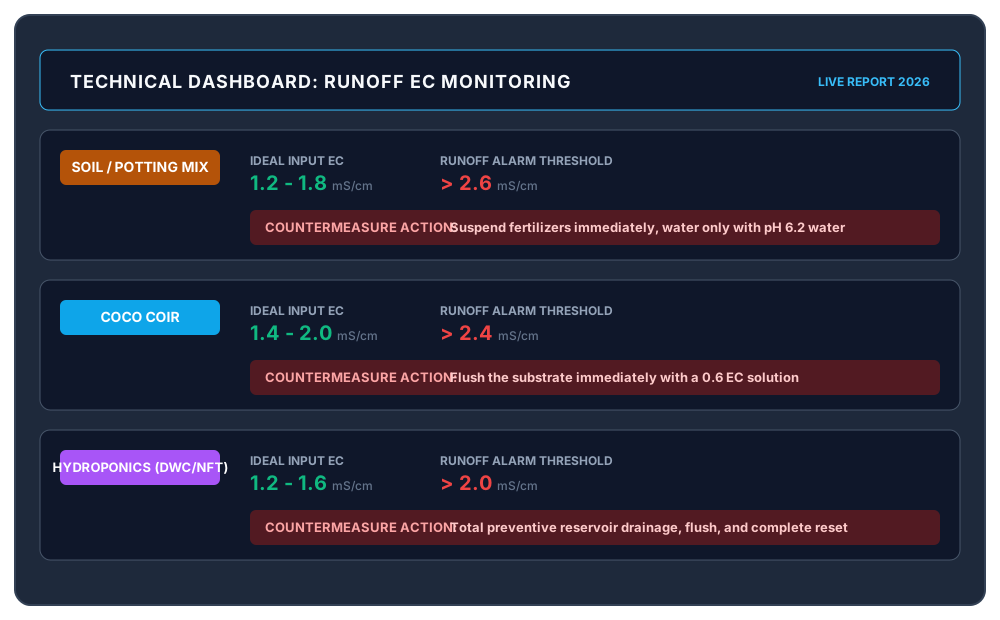
When the substrate’s EC rises to toxic levels (e.g., above 2.2 – 2.5 mS/cm in soil), the medium becomes hypertonic. This phenomenon literally extracts water from the roots outward, causing a systemic dehydration known as “nutrient burn.” Excess mineral salts crystallize on the root walls, causing necrosis of the root hairs and blocking the plant’s ability to transpire.
Anatomy of Excesses: Profile of Macroelements (N-P-K)
Not all over-fertilizations are equal. Depending on the fertilizer used or the current phenological phase, the excess manifests with very distinct chemical and visual signatures.
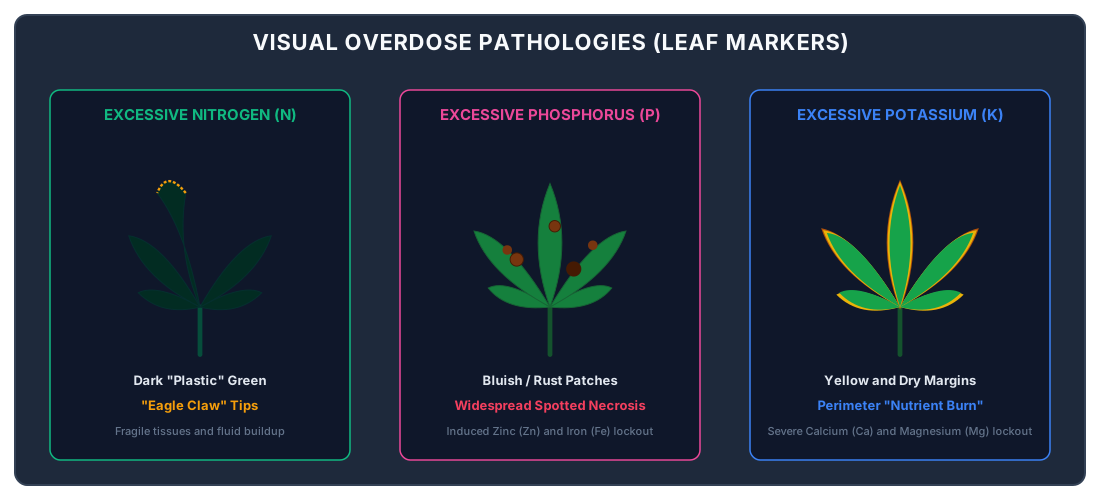
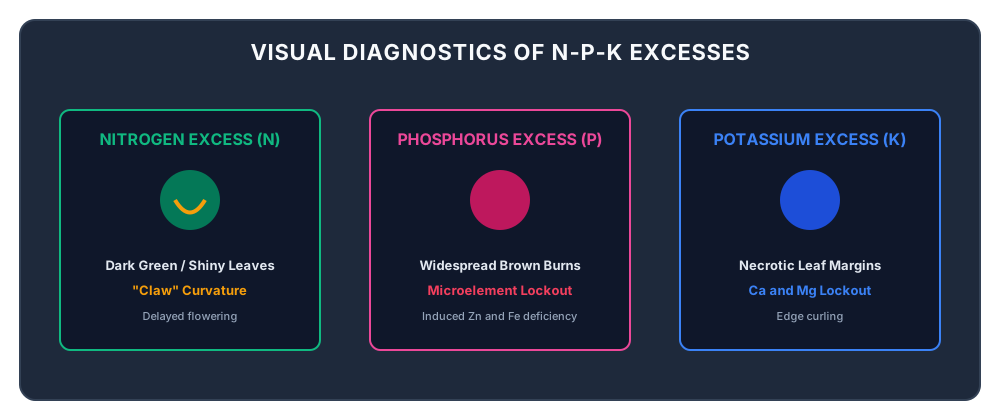
Nitrogen Excess (N) – The Dark Green Signature
Typical of the vegetative phase or the first weeks of flowering. Nitrogen is a mobile element, essential for chlorophyll synthesis, but its accumulation is highly toxic.
- Visual Symptoms: Leaves take on a dark green, almost waxy or artificial coloration. Leaf tips bend drastically downward, assuming the classic “eagle claw” shape.
- Collateral Damage: Stems become fragile and watery, flowering undergoes a drastic delay, and the plant becomes a primary target for sucking pests (such as mites and aphids), which are heavily attracted by the extremely high level of nitrates in the tissues.
Phosphorus Excess (P) – The Microelement Lockout
Rare in the vegetative stage, common in the advanced flowering phase due to the abuse of flowering stimulators (PK boosters).
- Visual Symptoms: Leaf tips show widespread brown burns, but the real damage is indirect. Excess Phosphorus alters the absorption of other ions, manifesting as a combined deficiency of Zinc, Iron, and Calcium.
- Collateral Damage: Interveinal chlorosis on young leaves and structural blockage of calyx development.
Potassium Excess (K) – The Magnesium Antagonist
Potassium regulates stomatal opening and cellular osmosis. An excess of it saturates the cation exchange sites of the soil.
- Visual Symptoms: Leaf edges turn yellow and burn rapidly, curling upward.
- Collateral Damage: Instantly blocks the absorption of Magnesium (Mg) and Calcium (Ca). The plant will show the typical symptoms of Magnesium deficiency (necrotic spots between the veins) even if Magnesium is fully present in the soil.
The Organoleptic Impact: Why Salts Ruin the Final Product
Over-fertilization does not just limit the biological development of the plant; it completely destroys the commercial and medical quality parameters of the inflorescences.
- Black Ash and Combustion Issues: A flower saturated with mineral nitrate and phosphate residues cannot complete combustion cleanly. The result is a black, hard, and carbonaceous ash that requires continuous re-lighting.
- Degeneration of Tastes and Aromas: Unused mineral salts leave a chemical, harsh, and metallic aftertaste when smoked, which severely irritates the throat. This happens because the excess of nutrients prevents the proper degradation of chlorophyll during the drying and curing phase (or even better, during Lotus curing).
- Reduction of the Terpene and Cannabinoid Profile: The plant, busy managing osmotic stress and cellular toxicity, diverts its energy resources from secondary metabolism (synthesis of THC, CBD, and terpenes) to primary survival metabolism. The flowers will appear visually dark and compact but chemical, and decisively less potent.

Instrumental Diagnostics: The Runoff EC Test
To intervene before irreversible necrosis appears, we must not limit ourselves to looking at the leaves: we must measure the chemistry of the pot’s runoff water.
Restoration and Cure Protocols
If runoff EC levels indicate salt saturation, or if the plants show obvious apical burns, it is necessary to immediately apply differentiated therapeutic protocols.
Natural Solutions and Cures (Conservative Intervention)
Suitable for mild over-fertilization in soil or organic substrate.
- The Structured Water Flush (Flushing): This consists of watering the substrate using exclusively pure, decanted water (to eliminate chlorine) and strictly calibrated in pH (6.25 for soil, 5.8 for coco). The water volume must equal 3 times the volume of the pot (e.g., for an 11-liter pot, you need about 30-33 liters of water). This flow physically dilutes the accumulated salts, pushing them out of the drainage holes.
- Controlled Increase of Irrigation Volumes: In the days following the flush, to avoid water stagnation and subsequent root rot, adjust the irrigation routine by ensuring you always achieve a 20% runoff with each watering, preventing new localized buildups.
Technical/Chemical Solutions and Cures (Emergency Intervention)
Suitable for severe cases, intensive crops, or inert substrates (coco, hydroponics).
- Chelating Agents and Commercial Flushing Solutions: Using specific flushing products (flushing agents) drastically accelerates recovery. These solutions contain biomimetic chelating agents that chemically bind to the crystallized mineral salts in the substrate, making them highly soluble and facilitating their immediate expulsion with lower water consumption.
- Injection of Specific Enzymes: Over-fertilization destroys part of the root hairs. Injecting enzymes (cellulase and beta-glucosidase) allows for the rapid decomposition of dead roots inside the pot, turning them into assimilable sugars and preventing the onset of pathogenic fungi such as Pythium.
- Radical Reset (Substrate Replacement): In the most extreme cases where the soil is completely cemented by salts and the plant is in total lockout, the only therapeutic option is an emergency transplant. Gently extract the root ball, shake off the saturated soil while being careful not to break the taproot, and reinstall the plant in a fresh, light, and totally unamended substrate (Light Mix).

Conclusions: The Annibale Seedshop Approach to Conscious Nutrition
Cultivating at the highest levels in 2026 requires abandoning empirical approximations. Fertilizer manufacturers’ schedules are structured on generic guidelines, calculated for plants at the peak of their photosynthetic efficiency and under perfect industrial lighting. Each phenotype responds to its own salt tolerance index.
The secret to never encountering over-fertilization lies in preventive minimalism: always provide 20% less than recommended by commercial charts and regularly monitor runoff mineral parameters. Preventing osmotic lockout will guarantee inflorescences with an unpolluted aromatic profile, white ashes, and a flawless burn from the first to the last puff.

Lemon Zkittly F1 – Annibale Genetics
And this post on Common Symptoms of Fertilizer Excess in cannabis cultivation comes to an end. Hoping to have been of help, see you in the next article!
Best regards from the Annibale Seedshop Team!
Davide V, CEO, Founder & Geneticist