Cannabis Pruning: The Topping Technique (Apical Pruning)
Welcome everyone, both new users and loyal readers alike, to this new and essential chapter of our “Cannabis Cultivation Manual,” brought to you by the experts at Annibale Seedshop.
After thoroughly deconstructing indoor geometric systems with our in-depth guides on Sea Of Green technique (SOG) and Screen Of Green (SCROG), let’s take a fundamental step forward. Today, we will delve into the art of surgical plant manipulation by analyzing Topping, or apical pruning. This chapter is entirely dedicated to all growers who aren’t satisfied with a “classic cannabis harvest” but wish to maximize the plant’s structure to completely transform its commercial yields and space efficiency.
What Is the “Topping” Apical Pruning Technique?
The cannabis plant pruning technique known as Topping (or apical pruning) is an elementary yet incredibly powerful technique for the structural manipulation of marijuana. Although today it is considered a cornerstone of modern indoor cannabis cultivation, its discovery and use by humans have been documented since ancient times in traditional agriculture to increase the fruiting of fruit trees and shrubby plants.
It is a highly accessible pruning technique that works with almost all dicotyledonous plants existing in nature, including cannabis. Because it requires minimal theoretical botany knowledge, very little technical equipment to use, and presents a minimized risk of failure, it is considered the perfect entry-level technique for anyone wanting to try their hand at advanced outdoor cannabis grow for the first time.
If you are wondering why it isn’t convenient to keep growing your marijuana plants the classic way—letting them grow vertically with their natural conifer shape and without abruptly interrupting their development with an irreversible pair of scissors—the biological answer lies entirely in physical space management and the energetic redistribution of sap.

Why Apply the Topping Technique to Your Cannabis Plants?
To an untrained eye, cutting off the healthiest and most vigorous part of a plant in full growth might seem counterproductive or purely punitive. So why on earth apply the Topping technique in your garden?
The biological and strategic reasons to opt for apical pruning are manifold:
1. Strict Height Control
The first reason, glaringly obvious to anyone growing in limited spaces like grow boxes or apartments, is the need to rein in vertical development. Cannabis, especially Sativa-dominant strains, tends to stretch excessively upward during the early flowering phase, risking touching the light bulbs and suffering fatal burns. Topping breaks this verticality, promoting expanded, bushy, and easily manageable growth.
2. Multiplication of Dominant Buds and Final Weight
If you ask a commercial cannabis grower or an experienced breeder this question, the answer will be immediate: Topping serves to multiply the harvest weight. By removing the single apex, you force the plant to produce two twin main buds. By repeating the process in a calculated manner, two buds become four, four become eight, and so on. All of this, logically, will require more patience and a few extra days in the vegetative stage, but the economic return in terms of grams produced will amply reward you for the time invested.

How to Prune Cannabis Plants: A Practical Guide to Cutting
To apply the Topping technique in total safety, complex machinery is not required, but rigorous procedural hygiene is.
Equipment Needed:
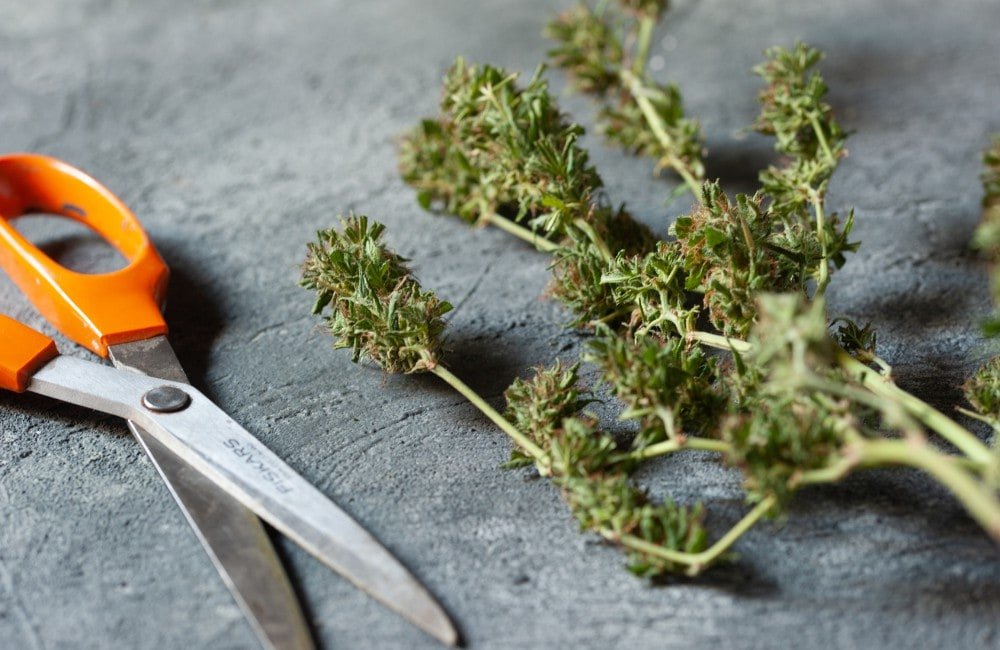
- A pair of extremely sharp pruning scissors (pot shears).
- Denatured alcohol (or isopropyl alcohol).
- A clean microfiber cloth.
Step-by-Step Action Protocol:
- Tool Sterilization: Before approaching the plant, thoroughly clean the scissor blades with the alcohol and cloth. This step is mandatory: an open cut is, for all intents and purposes, an exposed wound that can carry viroids, fungi attack, or systemic bacterial infections capable of killing the plant or stunting its growth.
- Identifying Biological Maturity: Never apply this technique to a plant that is too young or just sprouted. The plant must have reached sufficient structural maturity to withstand the hormonal stress of the cut. The perfect moment is experienced when the plant has clearly developed its fifth stage of true leaves (fifth internode).
- The Clean Cut: Locate the third or fourth internode. Place the blades just above the two emerging lateral branches and make a clean, horizontal cut, removing the upper portion of the main stem. Avoid fraying the tissues.
By arming yourself with the right amount of patience over the next 2-4 days—necessary for the plant to metabolize the wound stress and redirect fluids—you will witness a biological magic: what was previously a single main bud will have perfectly split into two identical new dominant branches.
The Biological Benefits: Auxin Redistribution
To understand the effectiveness of Topping, you have to look at what happens at a microscopic level inside the lymphatic channels of cannabis. Plant growth is regulated by a family of plant hormones called auxins.
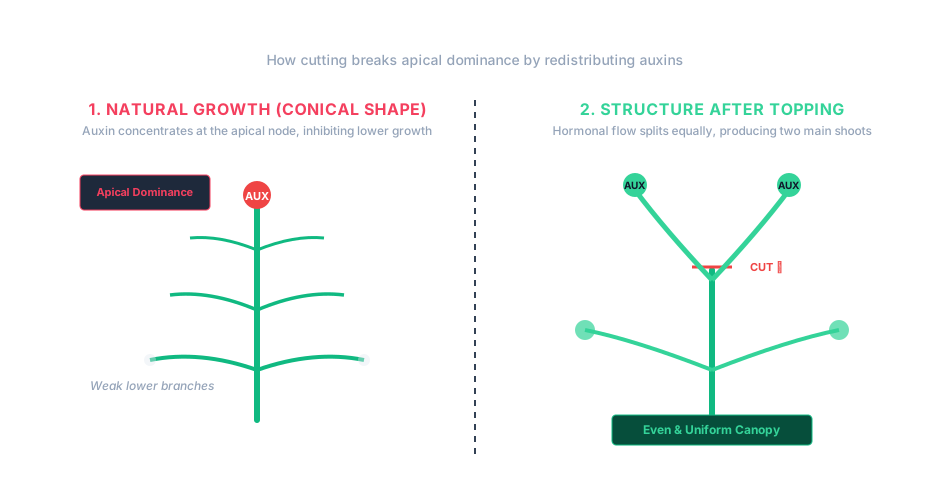
Auxins are primarily produced in the upper apical bud and move downward, exerting a botanical phenomenon known as apical dominance. In simple words, the hormone tells the lower branches to remain small and subordinate because the absolute energetic priority belongs to the highest bud.
In nature, this helps cannabis tower over competing vegetation, capture more sun, produce a highly visible dominant flower, and increase the chances of being wind-pollinated to preserve the species.
With the Topping technique, the indoor grower breaks this hormonal monopoly. By eliminating the apical bud, auxin production stops abruptly at that point, and the hormone redistributes itself perfectly and evenly toward the two underlying axillary buds and lower branches. The result? The lower branches break free from their state of submission, grow vigorously upward, and the cannabis cultivation levels out automatically, saying goodbye forever to small, insubstantial secondary flowers (popcorn buds).
Main Differences: Topping VS Fimming
In grower jargon, you have surely heard the Fimming (FIM technique) mentioned as a direct alternative to Topping. The history of Fimming is fascinating because, unlike apical pruning, this technique is the unwanted child of an execution error.
It was fortunately discovered by an American grower who, while attempting a classic Topping using their fingernails, missed the target due to imprecision, leaving a small percentage of the apical bud intact. Realizing the mistake, they exclaimed the famous phrase: “Fuck I Missed!”—hence the acronym FIM.
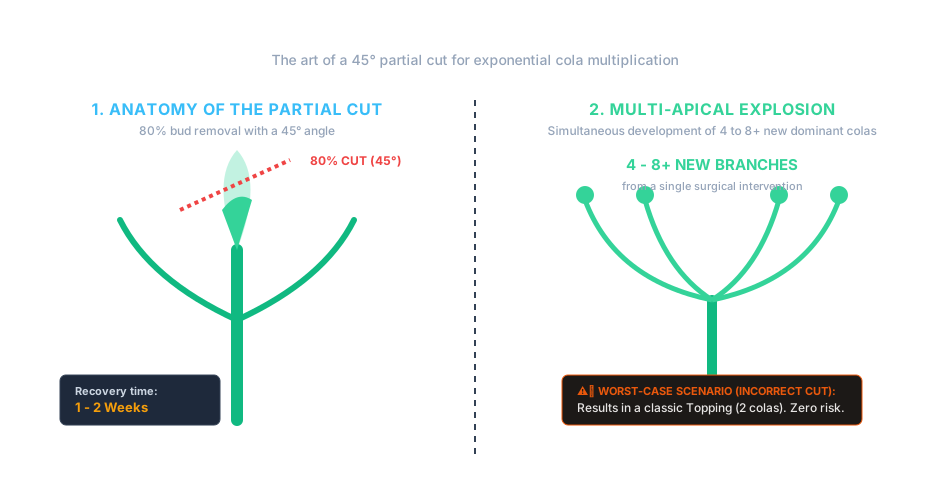
Thinking they had ruined the plant, they let it rest; a few days later, instead of finding the bud doubled by Topping or remaining single, they saw no fewer than 4 or 6 new main buds sprout simultaneously.
The Substantial Difference:
- Topping: Involves the total removal of the apical shoot with a clean cut. It mathematically produces 2 main buds and requires less precision. The stress on the plant is medium-high.
- Fimming: Involves the partial removal (about 80%) of only the vegetative tissue of the bud, leaving the base intact. It is a more complex surgical operation but, if executed correctly, stimulates the development of 4-6 main buds at the exact same point, as it simultaneously cuts multiple micro-internodes in formation.
We will analyze the microscopy and millimeter execution of Fimming in detail in the next chapter of the manual.
Golden Tips for a Perfect, Mistake-Free Topping
- Obsessive Hygiene: Never underestimate cleanliness. The denatured alcohol on the blades must evaporate completely before cutting to prevent chemical residues from burning the internal tissues of the stem.
- Indoor Height Management: If you grow in an apartment and strictly need to contain plants that are too tall, you can apply Topping to multiple secondary branches up until the first week of flowering (during the very early transition phase).
- The Ideal Time Window: To avoid drops in overall production, our Team’s advice is to apply the last scheduled Topping no later than the last week of the vegetative phase, before switching the photoperiod to 12/12. This will guarantee the plant the necessary days (at least 5-7 days) to fully recover from the cutting stress, rebuild cell walls, and restart at full hormonal capacity before beginning to produce flowers.

And that’s all for the “Topping” cannabis pruning technique! Hoping this chapter of our manual will be useful for optimizing the structure of your garden, we invite you not to miss the next installment. We will go into the finest details of the “sister” technique that revolutionized indoor training.
Until next week, and happy growing to all growers from the Annibale Seedshop Team!
Davide V. – CEO, Founder & Geneticist of Annibale Seedshop