Sea of Green Technique Guide: Maximizing Cannabis Yield with SOG
Here we are in a new chapter of our “Cannabis Cultivation Manual,” carefully prepared by the Annibale Seedshop Team to reveal all the secrets of the most productive grow manipulation and management techniques in the world.
In our last article, we thoroughly deconstructed Cannabis Curing, analyzing how to best preserve your flowers to maximize flavor, resin, and effect. Today, we turn the page and dive into high-yield indoor cultivation strategies, starting with the undisputed queen of intensive growing: the SOG (Sea Of Green) technique.
What Is the Sea Of Green (SOG) Cultivation Technique?
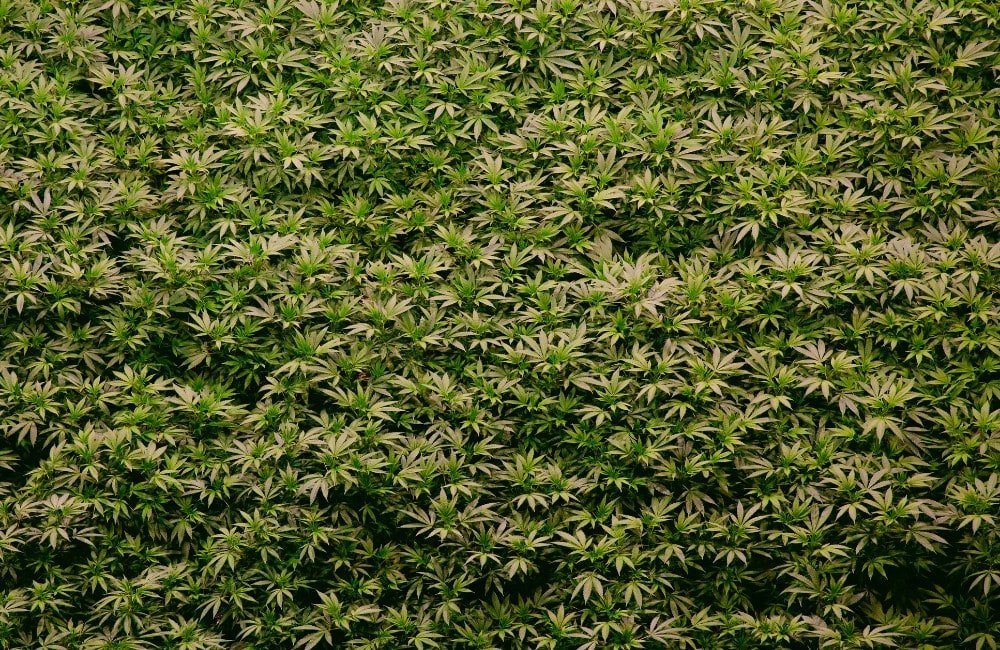
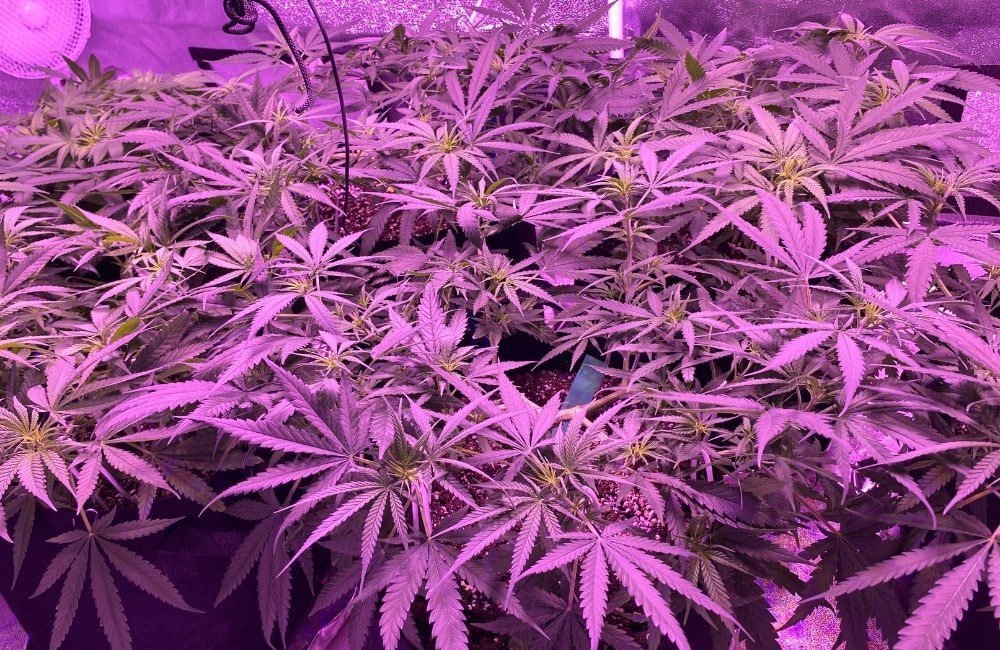
The acronym SOG stands for Sea Of Green. This evocative name perfectly describes the visual appearance of a mature grow room: a dense, uniform, and uninterrupted expanse of flowering buds that entirely covers the surface, hiding the floor, pots, and underlying structure from view.
The core principle of the Sea Of Green is space optimization through the number of plants, reducing the vegetative growth phase to an absolute minimum.
SOG vs. SCROG: Two Opposite Philosophies
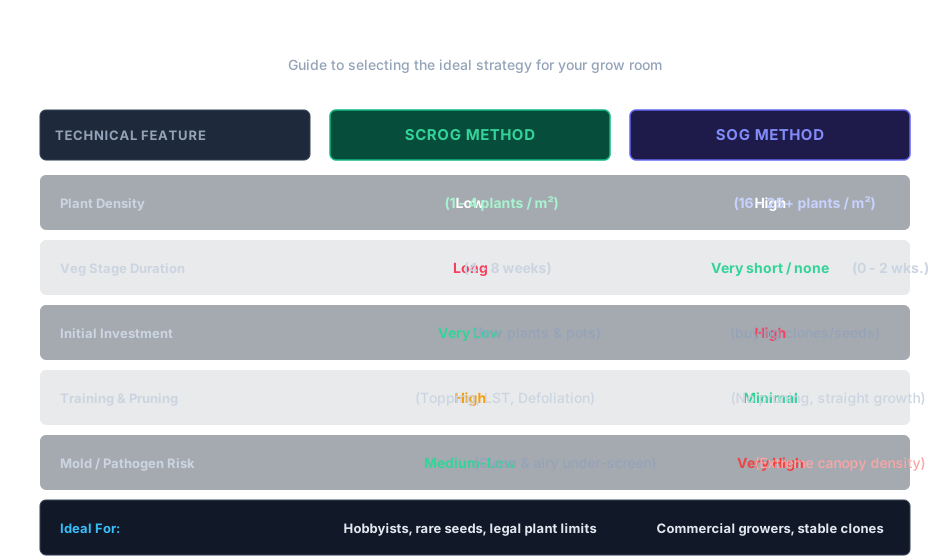
To fully understand SOG, it is helpful to compare it with its exact opposite, SCROG (Screen Of Green technique):
- In SCROG: You grow very few plants (often one or two per square meter), investing a lot of time (6-8 weeks) in pruning, bending (LST), and nets to make them branch out as much as possible before changing the photoperiod.
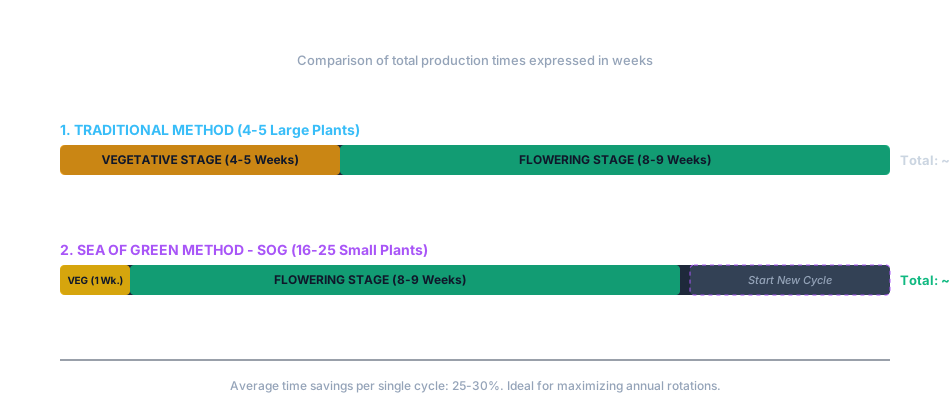
- In SOG: You do the exact opposite. You fill the space with a very high density of plants per square meter, letting them grow vertically with an extremely short vegetative period (from 0 to a maximum of 10-14 days). The goal is to push every single plant to produce a single, massive central main cola, reducing secondary branching to zero.
Breeder’s Note: SOG is by far the preferred technique for commercial growers and those working with clones (cuttings). Since cuttings share the exact same genetic age as the mother plant, they will all grow at the same speed and height, ensuring a perfectly leveled “sea of green.” However, it can still be successfully applied when starting from seed, provided you choose extremely stable and uniform genetics.
Why Choose Sea Of Green? Advantages and Economic Yields
The global success of SOG lies in a very simple equation: less vegetative time = faster cycles = energy savings and more harvests per year.
Drastic Savings on Time and Utility Bills
In a classic grow, keeping plants in the vegetative phase (with an 18/6 photoperiod) for a month or more involves significant electricity costs. With SOG, the “switch” to flowering (12/12) happens just a few days after the seedling emerges or the clone takes root. This shortens the overall cycle time by at least 3-4 weeks, allowing you to fit a whole extra grow cycle within the calendar year.
Maximizing Yield per Square Meter
While in a traditional indoor grow (perhaps using a 600W HPS lamp or a modern LED of equal intensity) the average production sits around 450-500g per square meter, the correct application of SOG allows you to break this barrier, pushing yields beyond 700g/m². This happens because the light energy is entirely intercepted by dominant apical buds, completely eliminating the production of “popcorn buds” (the lower, underdeveloped flowers that receive little light).
How to Correctly Apply SOG: Components and Technical Setup
Setting up a Sea Of Green requires superior technical planning compared to a classic crop. The plant density demands precise choices regarding lights, pots, and irrigation systems.
The Importance of Square Pots
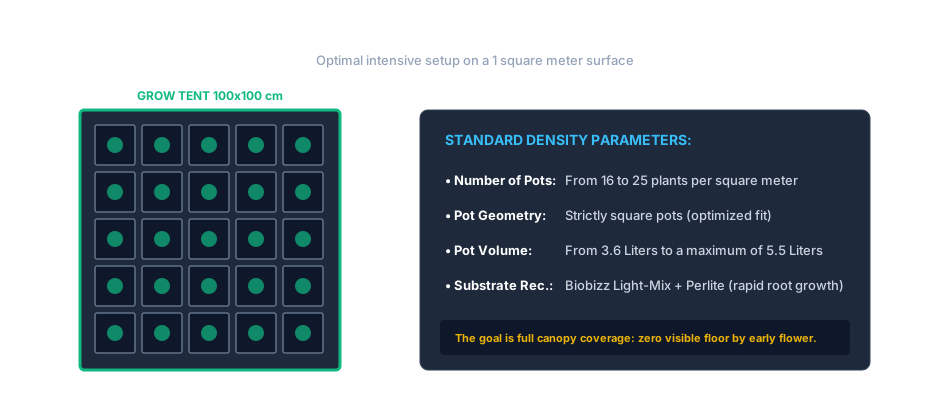
Forget round pots. In SOG, every centimeter counts. You use square pots exclusively, placed right against each other to create a compact block. The ideal pot volume ranges between 3.6 and 5.5 liters. A reduced volume limits lateral root development, helping contain the plant’s height and preventing it from becoming unmanageable.
Lighting: The Power of CMH/LEC Rays and LEDs
To penetrate such a dense jungle, you need a light with excellent penetration and a full spectrum. We highly recommend 315W CMH (Ceramic Metal Halide) / LEC lamps per square meter, or latest-generation bar LED grow lamps.
The 315W CMH emits an ideal spectrum very close to natural sunlight, including precious UV-B rays, which are fundamental for stimulating the production of trichomes and protective resin. In terms of yield, a 315W CMH equals an old 600W HPS, but halves electricity consumption and emits far less radiant heat.
Automated Irrigation: A Necessity, Not a Luxury
When you pack 25 plants into a single square meter, any internal maneuvering room disappears. It becomes physically impossible to slip an irrigation wand or a watering can between the stems without snapping branches.
Purchasing or DIY-building an automated drip irrigation system (with a submersible pump, a digital timer, and a network of individual drippers) is highly recommended. If the budget doesn’t allow for it, you will be forced to physically remove the plants from the grow box one by one to water them—a massive chore that increases the risk of stress and mechanical damage.
The Life Cycle in SOG: When to Make the “Switch” to 12/12?
Timing is everything. If you wait too long to change the photoperiod, the plants will grow too large, unleashing a ruthless war for light, choking each other out, and encouraging the onset of rot.
The golden rule of SOG dictates sending plants into flowering when they have occupied about 3/4 (75%) of the available horizontal space.
- If growing from well-rooted clones, the switch can happen almost immediately (after 1-3 days of stabilization).
- If growing from feminized seeds, let the seedlings develop for about 10-14 days (until they show their third or fourth set of stable leaves) and then switch immediately to 12 hours of light.
8 Golden Tips from the Annibale Seedshop Team for a Perfect SOG
If you have decided that Sea Of Green is the right technique for your needs, memorize and apply this list of 8 strategic recommendations developed directly within our genetic selection rooms:
Cultivate Exclusively Indoors:
Never attempt a SOG in an outdoor environment. Outdoors, you cannot control the photoperiod with millimeter precision, and external climate variations (rain, dew, stagnant night humidity) combined with extreme leaf crowding would destroy the harvest due to incurable fungal attacks.
Choose Super Airy Substrates:
Roots in a SOG must colonize the small root ball in record time. Use the best substrate composed of top-quality, highly oxygenated soils. Our absolute benchmark is Biobizz Light-Mix, enriched with extra perlite. Avoid soils that are too heavily loaded with nutrients (like All-Mix) in the very early stage to avoid risking root burn.
Leverage the Geometry of Square Pots:
Fit the pots tightly against one another to create a continuous surface. This prevents light from hitting the grow box floor, eliminating energy waste and concentrating all photons onto the upper leaf canopy.
Use Feminized Seeds (or Clones) Exclusively:
SOG does not tolerate regular seeds. If you were to notice a male plant mid-flowering, pulling it out from the center of the “sea of green” would destabilize the entire structure, leaving empty and inefficient gaps. Feminized seeds (or cuttings) safeguard you from this genetic nightmare, ensuring that every square centimeter produces only female flowers.
Aim for Maximum Genetic Stability (No Polycultures):
In a SOG, all plants must behave the same way. Absolutely avoid growing a pure Sativa next to a compact Indica within the same SOG system: the Sativa would stretch out of proportion, shading the Indica and ruining the uniformity of the crop. Choose a single stable strain, preferably Indica-dominant or compact commercial hybrids known for producing a massive central bud (e.g., Critical, Skunk, or Kush strains).
Boost Air Extraction and Manage Transpiration:
Twenty-five plants breathing together produce a massive amount of water vapor through leaf transpiration. This causes relative humidity (RH) levels to skyrocket to dangerous heights. It is imperative to install an oversized air extractor and have several oscillating fans (positioned both above the canopy and below the pot level) to keep the air in constant motion, eliminating stagnant humidity pockets.
Drop Humidity to 40% in Late Flowering:
Due to the density of the flowers, the risk of encountering Botrytis (gray mold) inside the massive central buds is very high. To protect your hard work, force the grow room humidity down to a fixed 40% during the final 3 or 4 weeks of flowering, using a professional electric dehumidifier if necessary.
Install a Preventative Support Net:
In the final weeks, the apical buds will become so heavy that they will no longer be able to support their own weight. Since stems grown in SOG remain relatively thin due to the very short vegetative stage, the branches will start to bend and fall over one another. The best remedy is to stretch a wide-mesh net (the same used for SCROG) over the plants during the first weeks of flowering. The net will act as an invisible scaffold, keeping every bud perfectly vertical under the lamp.

And that’s all regarding the Sea Of Green technique! We hope this technical guide helps you scale your indoor yields to never-before-seen heights. Keep studying with us: in the next chapter, we will analyze the exact opposite of this technique to understand how to dominate the space with very few plants!
A big greeting to all growers from the Annibale Seedshop Team!
Until next time!
Davide – CEO, Founder & Geneticist of Annibale Seedshop