Smart Outdoor Irrigation
Drip systems, mulch, water gel: how to water less while achieving higher yields and quality
Welcome to this new chapter of Annibale Seedshop’s blog dedicated to smart irrigation of cannabis plants in outdoor grows.
Today we’re talking about something far removed from indoor cultivation, something that almost all outdoor growers do by instinct, but that almost no one does truly well: watering plants in large outdoor grows.
Why not? Watering “only when the soil is dry” is not a correct technique, much less a strategy: it’s pure improvisation/agricultural approximation.
As of today, in 2026, with seasons that include:
- increasingly hotter summers with less rain
- water restrictions by municipalities (public administration) and governments (political administration)
- modern genetics that require more water, more frequently
- growers who cannot live 24 hours a day in their garden
And it’s here that it’s clear that, to intelligently irrigate large portions of outdoor land, a smart approach is needed… not buckets.
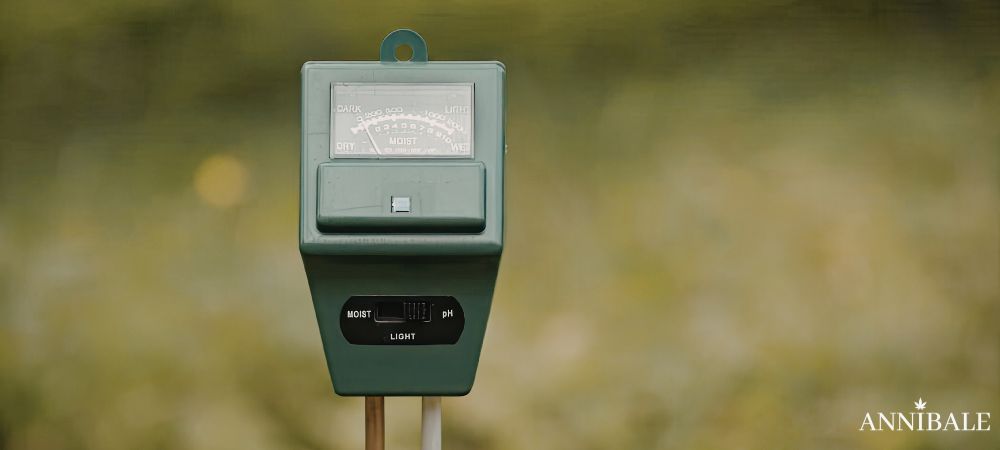
The Truth About Smart Cannabis Watering
70% of the problems growers encounter in outdoor grows stem primarily from:
- Too much water (over-watering)
- Too little water (drought)
- Water applied at the wrong time (under full, scorching sun, for example)
- Water applied incorrectly (without checking temperature, EC, and pH)
- Other minor factors (often related to the amount of water remaining in the soil, such as mold and pest problems)
And no, don’t try to say “last year was the fault of the sun and the dry season“: when disasters happen, it’s entirely the grower’s fault, who didn’t foresee them in time.
In fact, according to common research, the grower who causes water stress contributes to one of the main limiting factors for yield and root development in cannabis plants.
(Water stress effects on plant growth – ResearchGate)
What does “smart irrigation” mean for cannabis plants?
Smart irrigation for outdoor marijuana grows means:
- Watering only when really needed
- Localized irrigation (throughout the root system, not just the surface)
- Watering at the right time of day
- Less water and fertilizer waste
- Less stress for plants
- More oxygen available to the root system in the soil
- More stable growth
- Higher final yields
In short, smart irrigation is what makes you do less work, while making the plant happier.
Drip irrigation for outdoor cannabis grows
If you’re growing outdoors on a certain scale in 2026… and you’re not using a drip irrigation system…you’re playing your history on hard mode, but to no avail.
Benefits of Drip Irrigation
This unique large-scale irrigation technique:
- Distributes water directly to the roots
- Prevents unnecessary evaporation and the resulting crystallization of salts in the soil
- Maintains constant substrate moisture, keeping roots happy
- Better oxygenates the growing soil
- Reduces the water stress that plants experience with other, more primitive irrigation methods
- Reduces fungal diseases
- Helps reduce water consumption waste (up to 50% compared to more common techniques)
Drip irrigation is recognized as one of the most efficient systems for outdoor crops worldwide.
(Drip irrigation efficiency – FAO)
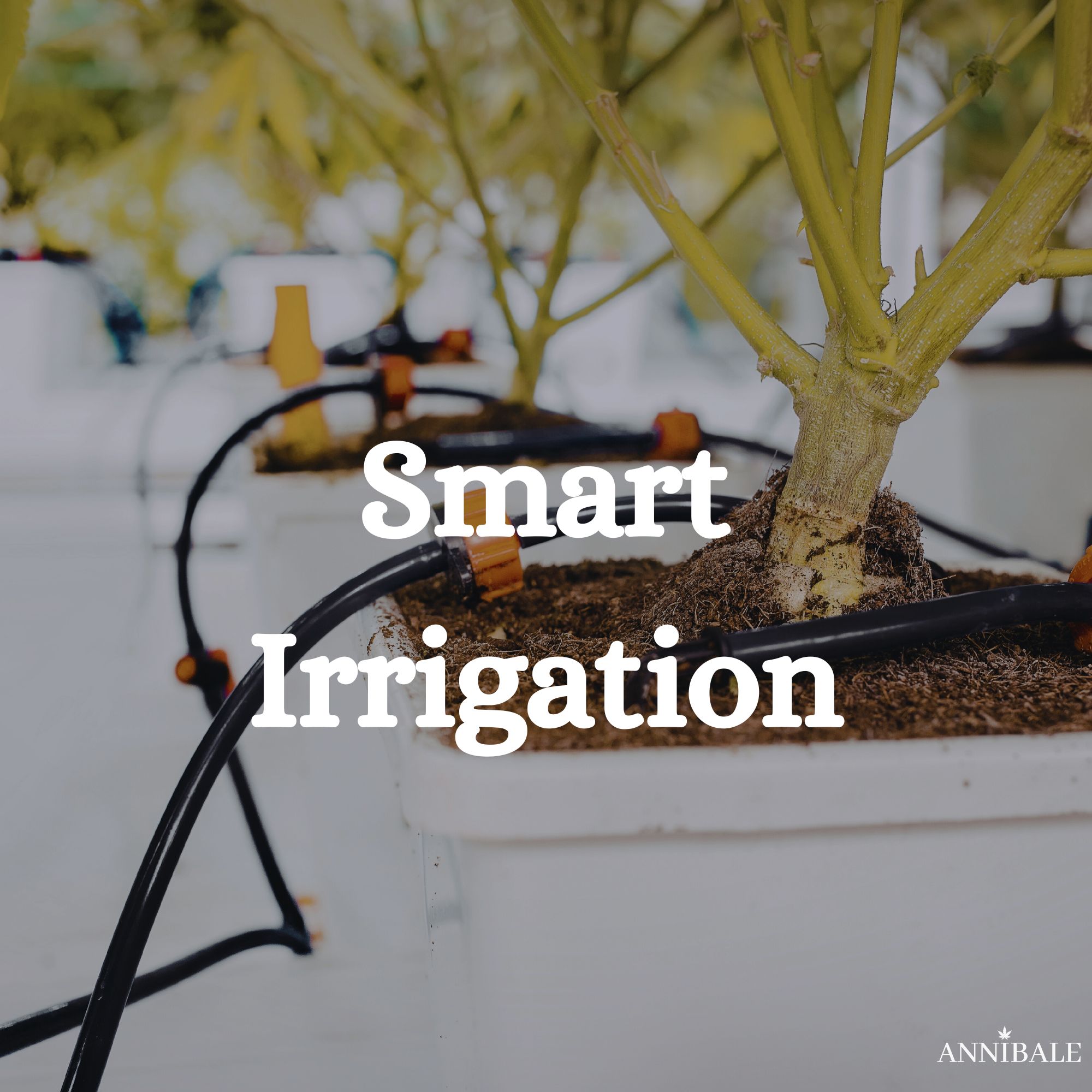
Drip irrigation system setup
You don’t need a NASA astronaut’s manual to set up a decent drip irrigation system yourself. In fact, you’ll only need:
- main support pipe (PVC)
- microtubes (also PVC)
- adjustable drippers (rigid plastic)
- tank or faucet
- timer (even an inexpensive one, like those for grow lights)
How much and when to drip water
Spring (small plants)
- 0.5–1 L of water per day
- a single application early in the morning, preferably at first light
Summer (medium-sized plants)
- 2–4 L of water per day
- 1–2 cycles: morning + late afternoon (at sunset, not before)
Full flowering
- 4–8 L of water per day
- 2 cycles
- Avoid watering in the evening/night to avoid mold such as botrytis
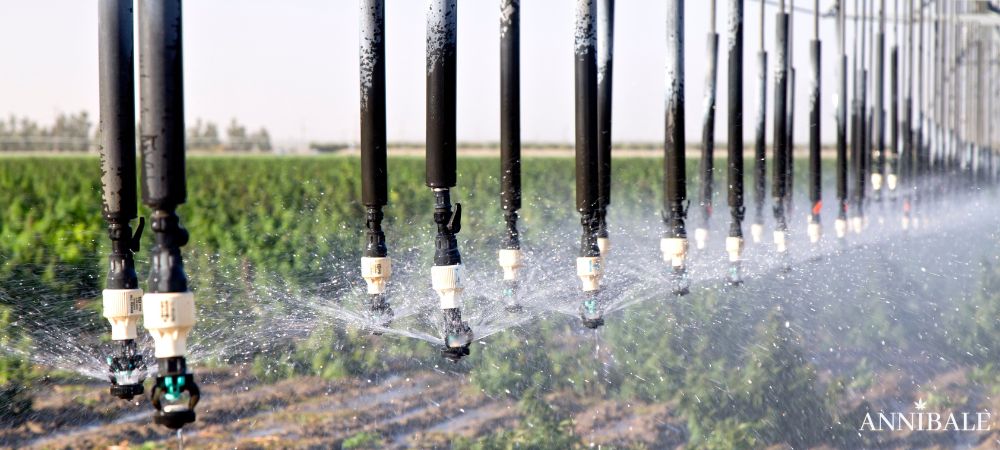
Soil Mulching (The Black Magic of Outdoors)
If you grow marijuana outdoors on a large scale and don’t mulch because “in my opinion it’s useless”…you’re wasting water like a drunken camel in the heart of the Sahara Desert!
What is mulching?
It is a layer of straw and inert, highly water-retaining material placed directly on the soil where the plant grows. This material:
- reduces soil evaporation and the resulting water loss
- maintains constant soil moisture
- protects the soil from the scorching summer heat
- nourishes the microbiome and creates the right conditions for the development of symbiotic molds
- improves the soil’s structure
- significantly reduces stress to the root system
Best materials (field-tested by Annibale’s team)
- straw
- hay
- dry leaves
- wood chips
- bark
- coconut fiber
- mulch fabric
How much does mulching the soil change the situation?
With proper mulching, done at the right time:
- You will benefit from 30% to 50% less water consumption
- Soil temperature will be consistently lower
- Root growth will be deeper and more developed
- Cannabis plants will suffer fewer nutrient deficiencies and less stress during cultivation
- Marijuana plants will grow visibly more vigorous
Research and studies have shown that mulching is recognized as an effective technique for conserving soil moisture in areas with little rainfall or arid and dry climates.
(Mulching soil moisture retention – ResearchGate)
Water gel (widely used by guerrilla growers)
Here we enter the survival growing section. In fact, water gels:
- absorb enormous amounts of water
- release it slowly
- reduce irrigation
- save marijuana plants in guerrilla grows in remote areas
When it makes sense to use them
Water gels are only really useful if:
- you’re growing guerrilla cannabis
- you can’t physically go to water frequently
- you’re growing weed in isolated areas
- you experience hot, dry summers
- you want a water “safety net” to protect your crop from destruction
Real Limitations of Gels
Let’s face it, water gels are not the solution. In fact:
- they don’t replace irrigation (manual or drip)
- they don’t work miracles once the plant has suffered water damage
- they don’t correct poor soil (drainage or pH)
- they only work if mixed well into the growing medium
Hydro-absorbent polymers are often used in agriculture to reduce water stress on the root system of plants.
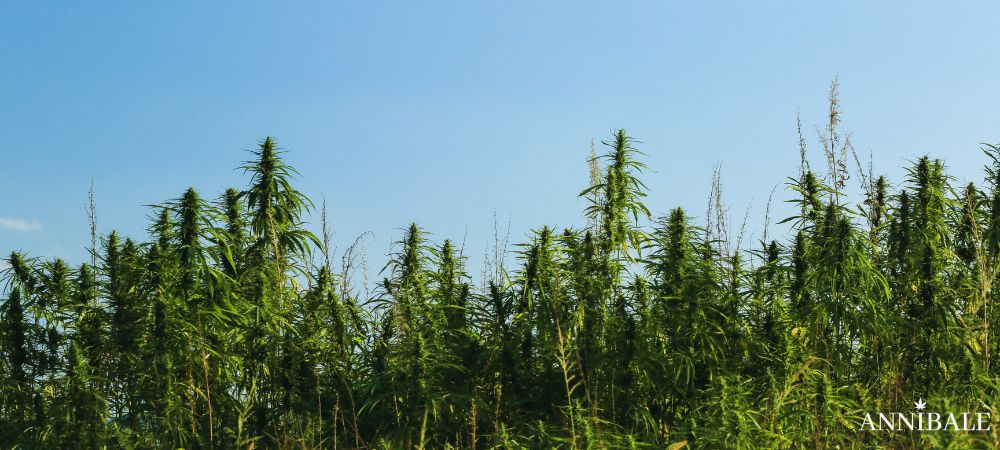
The right time to water (spoiler: it’s not midday)
Best watering time
Early morning (5:00–9:00)
→ maximum absorption
→ minimum evaporation
→ plant full of water in the substrate to cope with the heat of the day
Second useful time slot (especially in midsummer)
Late afternoon (6:00–8:00 PM)
→ replenishes water after any heat stress
→ avoid watering in the evening/night like the plague (mold)
5 classic mistakes we see every summer
- Watering little and often
→ shallow roots → weak plants - Watering at night
→ mold → fungi → botrytis - Wet the leaves
→ powdery mildew - No mulching
→ crazy evaporation - No drainage
→ rotten roots
Practical summary Conclusion
If you want to grow outdoors seriously:
- Drip irrigation + timer
- Always use mulch
- Water gel only if guerrilla
- Water in the morning
- Increase water gradually
- Never soak the soil
- Watch the leaves (not the outdoor calendar)
Smart irrigation: in conclusion…
In 2026, those who grow cannabis outdoors and know how to water correctly are winners.
Those who continue to water haphazardly, without following a guide:
- Waste resources
- Stress the plants
- Sick the roots
- Halve the final yield of marijuana buds
Don’t think that smart irrigation is for lazy nerds. It’s for growers who want serious, reliable harvests.
And this article on smart outdoor irrigation ends here. We hope this has been helpful, and we’ll see you in the next article!
Greetings from the Annibale Seedshop team!
Davide V, CEO, Founder & Geneticist