The Final Stage of the Cannabis Plant Flowering: Guide to the Finish Line
And here we are again for a new cultural and educational appointment on the final phase of cannabis flowering! In the previous chapters, we explored in detail how to best manage the vegetative phase and that incredible moment which is the initial early flowering stage, characterized by the plant stretch.
As you will have understood by now, flowering is not a single, flat period, but must be strictly divided into two distinct phases. This is because the environmental parameters, the indoor microclimate inside the grow room, and the nourishment that the cannabis plant requires change radically hand in hand with its anatomical development.
Today, therefore, we will delve into this extremely important finish line: the final phase of flowering, the moment when the true quality of your harvest is decided!

The Final Phase of Cannabis Flowering: Lowering Your Guard Is Forbidden
If you have reached this point, looking at your grow room you will notice that what were previously only promises of flowers are now small infiorescences that are slowly taking shape, weight, and a celestial scent. Most of the hard work and structural development of the plant is now behind you. But beware: this absolutely does not mean that you can lower your attention span or relax on the couch thinking that the game is done. There is still a lot of strategic work to be done, and missteps made in these weeks can ruin months of effort.
To produce marijuana buds that stand out from the crowd, in addition to the obvious and highly important genetic factor imprinted in the seeds you decide to grow, you will have to work hard, observe a lot, and study just as much. It is fundamental to reach this point of development with very clear ideas about what the plant needs during flowering, week after week.
Respecting its biological needs will reward you not only in terms of quantity on the scale, but above all in superior aromatic quality and potency. In this final phase, patience will become your greatest virtue: with each passing day, the shape will become massive and the scent of the buds will become increasingly inviting, almost irresistible.
Know, however, that knowing how to wait for the perfect harvest time, without being caught up in a hurry, makes all the difference in the world between having light flowers (poor in flavor and with few active ingredients) or an enviable harvest, rich in strong effects and unique flavors, capable of filling your personal stash for the entire year!

How Long Does the Final Phase of Flowering Last? The Timing of the Swelling
In general, we can say that the final flowering phase begins around the 4th or 6th week from the light switch, depending on the genetics you are growing. You will notice it by observing the plant: the vertical stretch stops completely and you will notice evident factors such as the visible swelling of the calyxes (the flowers “join” to form the main buds) and the appearance of the first pistils turning from candid white to orange or brick red.
This conclusive phase can last from 3–4 weeks for the fastest Indica-dominant varieties, up to 7–9 weeks (and sometimes even more) for the purest Sativa genetics or large commercial hybrids. During this period, the plants will no longer grow in height, with the exception of small spurts typical of certain Sativas (the phenomenon of foxtailing). All the plant’s energy is now 100% focused on flower development and the massive trichome production, which in nature serve the plant as a protective shield against UV rays and predators. Even underground the dynamic changes: the development of the roots never stops completely, but undergoes a drastic slowdown; the root system stops expanding and concentrates on maintaining water and mineral absorption.
On forums like ICMag, a trick is often discussed: giving less light in this final phase (for example, switching to a photoperiodo of 11 hours of light and 13 of darkness, or even 10/14 in the last two weeks) to induce the plant to mature a few days earlier compared to the classic 12/12 cycle. As you may have read in our previous articles, this cutting of light hours inevitably translates into a smaller final quantity of flowers produced, since you reduce the total photosynthetic energy. It is up to you to evaluate whether to sacrifice a few grams of weed to save a handful of days on the calendar and something on the electricity bill.

Nutrition and Environmental Parameters: The Transition Toward PK and Senescence
This is undoubtedly the most delicate phase regarding the nutritional needs of cannabis. If until mid-flowering the plant desperately needed a good dose of nitrogen to support the stretch and photosynthesis, now things invert: the demand for nitrogen drops drastically.
On the contrary, the plant develops an insatiable hunger for Phosphorus and Potassium in high doses, the two macroelements responsible for the cellular swelling of the flowers and the density of the buds. The simplest and most effective way to administer them is to choose a classic cannabis flowering booster, such as the very famous GH PK Booster, calibrating the dosages carefully so as not to overdo it.
In this phase, we witness a beautiful and natural phenomenon: senescence. The plant must begin to consume its own nitrogen resources stored in the larger leaves, which will inevitably begin to yellow and then fall off. Many growers get scared seeing the leaves turn yellow at the end of the cycle, but in reality, it is the sign that everything is going according to plan!
A weed that arrives at the cut still completely dark green is synonymous with an excessive accumulation of nitrogen. There is a small chemical myth to debunk that is often read around: many say that residual nitrogen releases carcinogenic cells directly into the combustion; the scientific reality is that the mineral nitrates remained trapped in the tissues alter the pyrolysis (the combustion of the bud).
A weed saturated with fertilizers will burn badly, spark continuously, produce a hard, black ash and, above all, will have a terrible, sour taste and will scratch annoyingly in the throat.
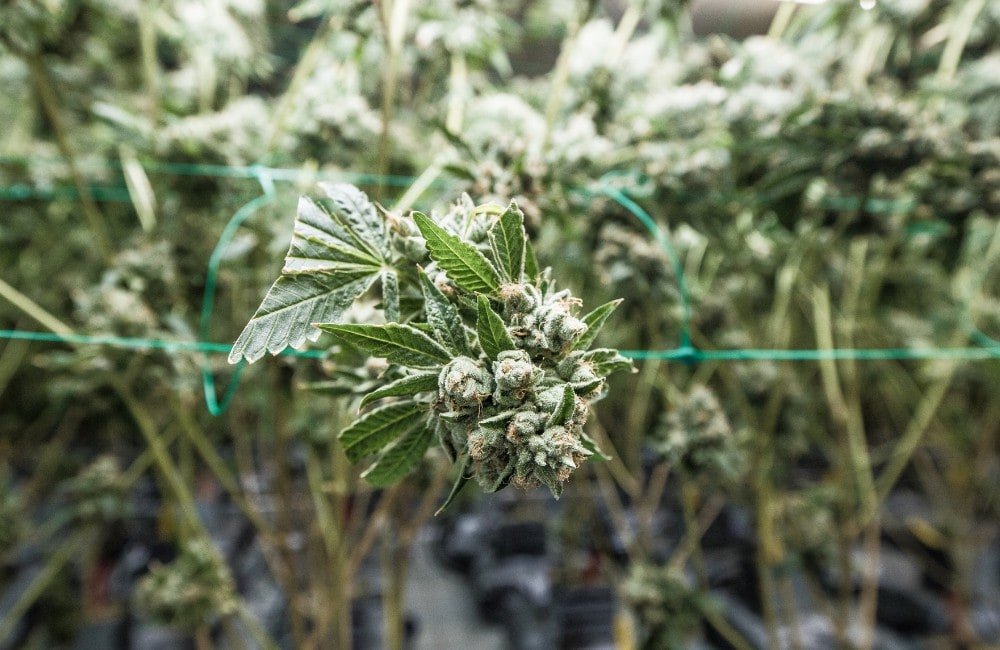
The solution to avoid this disaster is an adequate Flush, which is the final substrate flush. In the last two weeks of the plant’s life, all types of fertilizer are suspended, and you irrigate with pure water only.
Excellent options include demineralized water which you can easily find in any hardware or gardening store, or, if you want to save money and follow a more natural approach, rainwater, which has an electrical conductivity (EC) practically equal to zero and is fantastic for cleaning the soil from accumulated salts. During the flush, the pH of the water should be maintained between 5.8 and 6.2, while the EC must be as close to zero as possible.
Environmental parameters in this phase also change and require significantly lower values compared to the first part of flowering. As the buds become compact, heavy, and the resin seems to literally drip everywhere, the risk of humidity remaining trapped inside the flowers, creating mold outbreaks, rises to warning levels.
The ideal is to maintain cool temperatures, around a stable 16°C during the night and no more than 23-24°C during the day, with a maximum relative humidity of 45%, preferably pushing it toward 35% in the last two weeks. Cool night temperatures, among other things, stimulate the plant to destroy chlorophyll and enhance purple, blue, and dark tones (thanks to anthocyanins), making the buds spectacular to the eye as well.
The Moment of Harvest: How to Read the Plant’s True Signals
With your mouth watering and the scent invading the room, at this point you will surely be wondering: “Ok Annibale, but when is the best moment to harvest my buds?”. The most common and superficial answer you will find around refers to the cannabis pistils. Surely you have heard it said that when most of the hairs turn brown, it is time to cut.
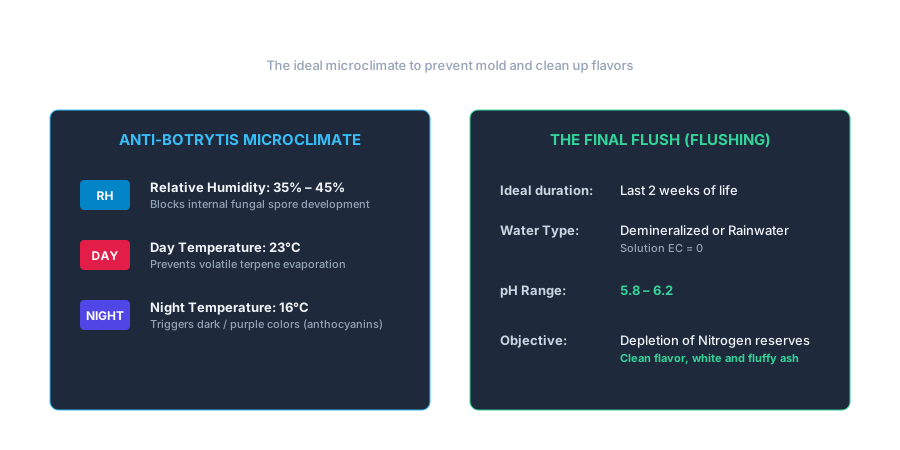
In reality, the true secret kept by professionals lies in the exact color of the trichomes, those microscopic mushroom-shaped glands that cover the flowers and resinous sugar leaves (and which, if separated by cold methods, give life to top-tier Hashish). It is inside there that the true chemical composition and magic of the plant are concentrated, since the active ingredients and terpenes are enclosed precisely in those microscopic natural capsules.
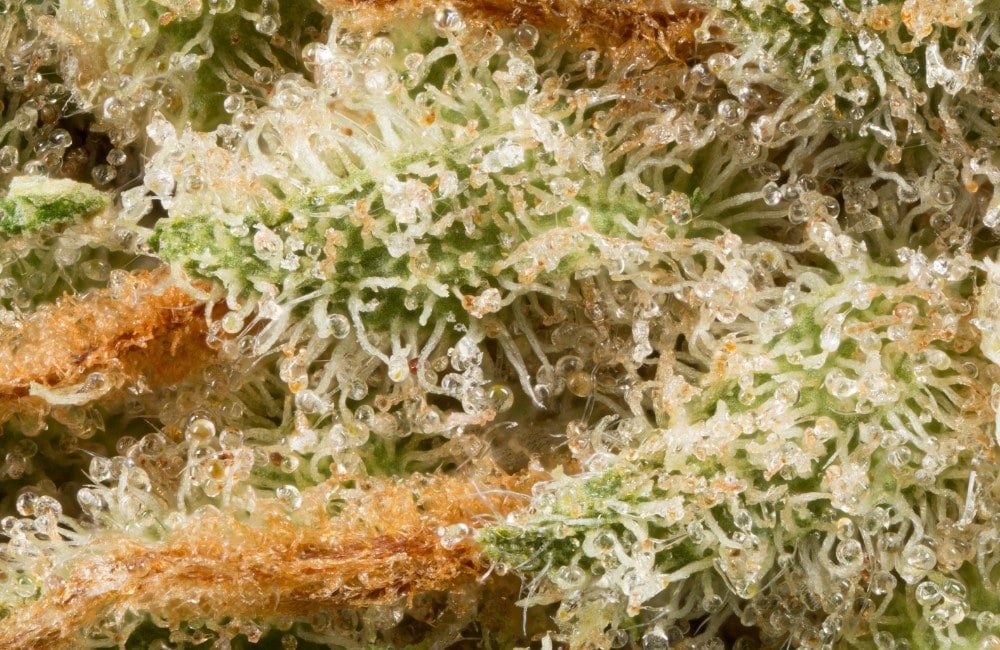
If you do not own a small pocket grow microscope (an inexpensive accessory that changes your life), you will necessarily have to refer to the color of the pistils as a general guideline. But if you can look closely with a lens or a microscope, you will notice the evolution:
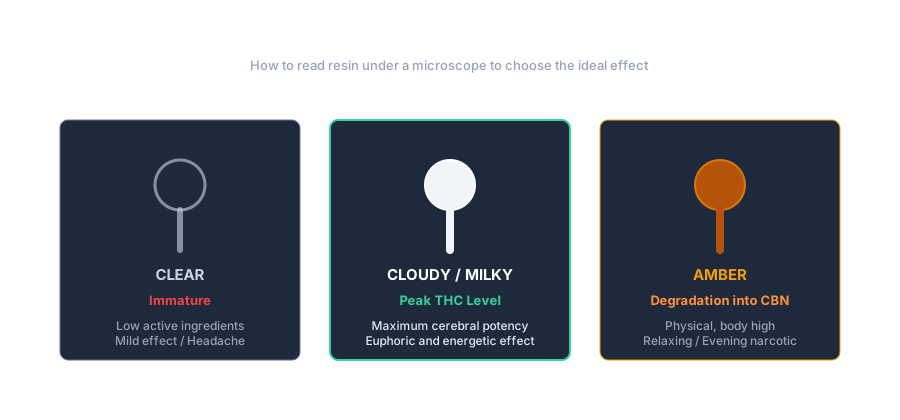
- Transparent Trichomes: The content is still immature, cannabinoids production is at the beginning, and the effect would be light and unpleasant, often causing headaches.
- Cloudy and Milky Trichomes: This is the moment of the maximum peak of THCA (the acid form of THC, before decarboxylation). A plant harvested with the vast majority of cloudy trichomes (around 90%) will offer the maximum cerebral potency, a clean, energizing, and euphoric effect.
- Amber Trichomes: When the peak of maximum maturation is exceeded, the THCA begins to degrade naturally through oxidation, transforming into CBN (Cannabinol). The trichomes assume a dark amber-brown color and the pistils become completely red-brown. CBN is not a mistake, on the contrary: it gives that typically physical, relaxing, bodily, and almost narcotic effect, excellent for the evening or for therapeutic use.
Personally, I strongly advise against harvesting before at least 90% of the trichomes have become completely cloudy/milky. As for the pistils, make sure that at least 70-80% have changed color or withered. Waiting for the right moment allows the terpenes and essential oils to complete their aromatic profile, giving you that dense, persistent, and well-rounded flavor that makes a well-cultivated bud unique.
Final Tips and Professional Considerations
In summary, the final phase of cannabis flowering is the decisive moment, the final exam in which continuing to meticulously respect every single growth parameter will allow you to crown an excellent job and ensure a precious, top-level supply for the whole year.
In recent years, in-depth studies have been conducted on how trichome biosynthesis occurs. Scientists and the most attentive growers have discovered that the cannabis plant, if subjected to certain controlled stresses in the very last weeks, reacts by increasing resin production as a defense mechanism against pest insects, dehydration, and atmospheric agents. This is why a strategic targeted defoliation or a thinning out of the remaining fan leaves in the last two weeks can prove very useful, not only to make the air circulate better against mold, but also to give a final input to trichome production.
Remember always, however, that if you want a plant covered in a thick and frozen white resin layer, the quality of the starting genetics does 80% of the work. Our Old Lemongrass F1 is a perfect contemporary example of this: a demonstration of how selected genes are essential to push resin production beyond all limits.
This brings to mind memorable legends like the famous White Widow, so named in the 90s precisely because at the end of flowering the flowers seemed literally covered by a mantle of shiny white snow. A variety that made history in every Amsterdam coffee shops and that still today remains an undisputed cult for those who demand only the maximum from resin. Good growing and an excellent choice of harvest time to everyone!

And that is all for today, stay tuned for our next articles on Lotus Curing: cannabis cold drying and curing!
Greetings from the Annibale Seedshop team!
Davide, CEO, Founder & Geneticist