Advanced Guide to Defoliation and Lollipopping Techniques in Cannabis
Maximizing a grow room’s yield is the goal of every indoor grower. After setting up the cultivation space and understanding the importance of the light spectrum—a dynamic we dissected in our strategic guide on Indoor Cultivation LED Lamps, which is fundamental to understanding how much energy drives photosynthesis—it is time to manipulate the very structure of the plant.
Canopy management techniques such as Sea of Green (SOG), Screen of Green (SCRoG), Main-Lining, and Topping lay the plant’s geometric foundations. However, to push production toward record levels by eliminating underdeveloped buds and concentrating energy on the main apicals, there are two essential surgical practices: Defoliation and Lollipopping.
Let’s analyze how to apply these techniques to obtain compact, waste-free harvests, integrating the latest scientific evidence and technical debates from historic forums.

Fruit Bouquet F1 – Annibale Genetics
What is Cannabis Defoliation?
Defoliation is a targeted pruning technique that consists of the strategic removal of a part of the foliar mass during precise phases of the plant’s life cycle. The main objective is the elimination of fan leaves, which are the largest leaves connected directly to the main stem or primary branches.
In modern genetics with high hybrid vigor, such as Fruit Bouquet F1 or Lemon Zkittly F1 by Annibale Genetics, foliar development can be so explosive that it creates a true impenetrable “shield” against light. By selectively removing these barriers, photon flows are able to reach the lower flowering sites, stimulating uniform calyx maturation and a higher density of trichomes throughout the entire plant.

Lemon Zkittly F1 – Annibale Genetics
Pros and Cons of Defoliation: The Technical Analysis
On international forums like ICMag, defoliation has long been at the center of heated debates: while on one hand leaves are the plant’s “solar panels,” on the other hand, their excessive density in an indoor environment creates harmful microclimates.
The Advantages (Pros)
- Light Penetration: It allows even the middle and lower buds to receive the necessary PPFD values to swell, standardizing the harvest.
- Prevention of Mold and Pathogens: By thinning out the foliar mass, stagnant relative humidity within the foliage is knocked down. The improvement in air circulation (transpirational pull) drastically reduces the risk of Botrytis (gray mold) and Powdery Mildew.
- Trimming Efficiency: Less useless foliage during the life cycle translates into drastically reduced trimming times at harvest.
- Reduction of the Shadow Effect: It optimizes the use of radiant energy emitted by your lighting system, avoiding the waste of lumens on the lower branches.
Disadvantages and Risks (Cons)
- Stress and Hormonal Slowdown: Excessive removal or removal carried out at the wrong time causes a shock from which the plant can take several days to recover, halting cellular development.
- Loss of Nutrient Reserves: Fan leaves act as a mobile reservoir for mobile elements (such as Nitrogen, Phosphorus, and Magnesium). Depriving the plant of these reserves too early can limit its ability to compensate for slight deficiencies in the substrate.
- Risk of Infection: Every cut exposes internal tissues to spores and bacteria. Operating in environments that are not perfectly sanitized can cause systemic infections in the plant’s vascular tissues.
How to Apply Defoliation: Timing and Method
Defoliation must not be an act of random removal, but a planned intervention based on the plant’s phenological phase.
Vegetative Phase
During the vegetative phase, you should only intervene on vigorous and healthy plants that have developed at least 5-6 nodes. Remove the fan leaves that cover the secondary axillary shoots. This process alters apical dominance, stimulating the lateral branches to grow at the same speed as the main stem, facilitating the creation of a flat cultivation.
Flowering Phase (The transitional method)
Most expert growers on THCFarmer apply strategic defoliation at two precise moments during flowering stage:
- Day 1 (Switch to 12/12): A cleanup is performed to prepare the plant for the initial stretch.
- Day 21 (End of the third week of flowering): This is the most critical moment. The plant has finished the structural development of the branches and is beginning to form the first clusters of pistils (true flowering). A decisive defoliation at this time (a technique known in the American scene as Schwazzing) exposes the calyxes directly to the photons of your lamp, maximizing the final weight of the inflorescences.
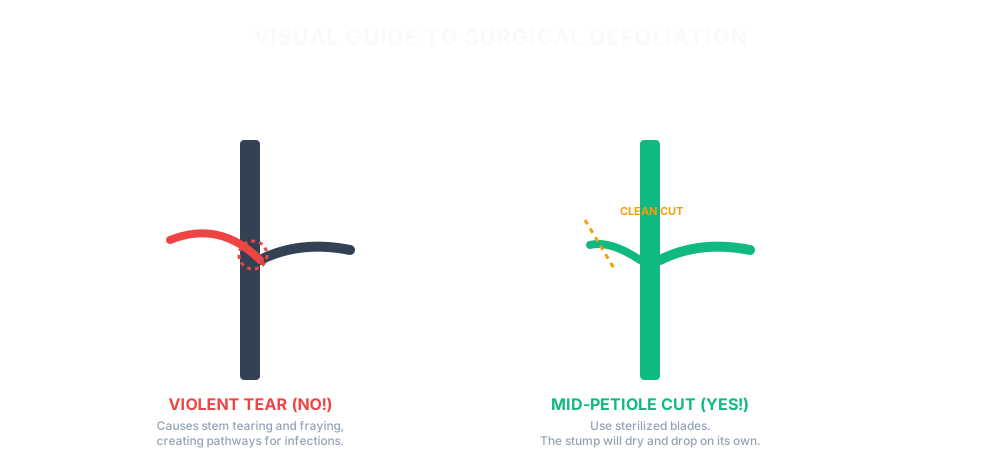
Golden rule of cutting: Never pull or tear leaves downward with your fingers. This movement can fray the stem’s cortical tissues, creating deep wounds. Always use sharp trimming scissors with straight tips, sterilized with isopropyl alcohol, making a clean cut at roughly the midpoint of the petiole (the leaf stalk).

Lemon Mandarine F1 – Annibale Genetics
The Lollipopping Technique: Goodbye to “Popcorn” Buds
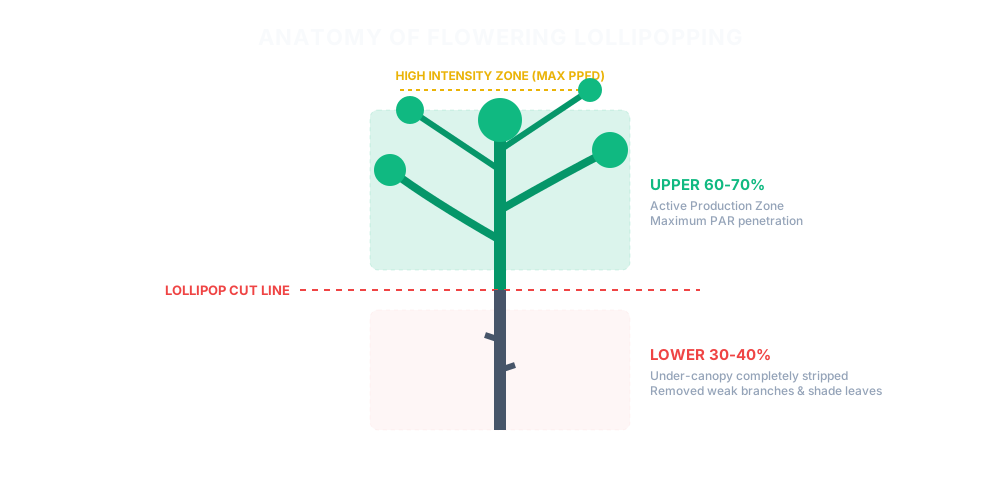
Lollipopping is a radical pruning technique targeting the lower part of the plant. The name derives from the characteristic shape the plant takes on after the intervention: a completely bare lower section (the stick) and a dense, lush upper canopy (the lollipop).
Why is it essential?
In indoor cultivation, light intensity decays rapidly as the distance from the light source increases (according to the inverse-square law). The light that manages to penetrate beyond the first 40-50 cm of foliar mass is insufficient to ensure efficient photosynthesis.
All secondary branches and flowering sites located in this “shadow zone” will never manage to fully develop, turning into so-called popcorn buds: small, airy flowers that are high in leaves and low in active ingredients. Lollipopping eliminates these parasitic sites at the root before they expend the plant’s energy reserves, redirecting carbohydrates and auxins toward the upper primary buds. Structurally imposing genetics like Lemon Mandarine F1 respond to this technique by converting the saved energy into dense apicals that are hard and heavy like golf balls.
Defoliation vs Lollipopping: Synergies and Strategies in SOG and SCRoG Systems
It is common to come across superficial guides that describe defoliation and lollipopping as distinctly separate or even mutually exclusive practices. On the contrary, in modern grow rooms, advanced growers combine the two techniques to maximize the spectral efficiency index of high-intensity lamps.
The fundamental difference lies in the area of intervention and the structural objective: defoliation works on the upper and middle parts of the plant to optimize light vectors, while lollipopping completely clears out the lower section to redistribute auxins.

Optimization in SOG and SCRoG Systems
- In Sea of Green (SOG): Having a large number of plants very close to each other in small pots, the vegetative cycle is short. Here, defoliation must be very light to avoid growth stalls, while targeted lollipopping on the first 2-3 lower internodes is vital to ensure airflow underneath the dense carpet of single buds.
- In Screen of Green (SCRoG): Here, the interaction is maximized. All ramifications that remain below the metal screen (mesh) must undergo total lollipopping. Conversely, the vegetative mass that develops above the screen is managed through periodic defoliation, allowing light to hit every single flowering site distributed planarly across the screen.
Genetic Impact and Organic Adaptation
The systematic application of these techniques influences the epigenetic response of the plants. If you are selecting mother plants for seed production, subjecting the parental strains to controlled stresses from defoliation and lollipopping allows you to identify phenotypes endowed with superior hormonal stability. Strains that tolerate constant cutting without showing signs of hermaphroditism or severe growth stalls pass a distinct structural resilience on to their offspring, a key factor for modern breeders.

FAQ: Frequently Asked Questions about Cannabis Defoliation and Lollipopping
How do I know if I have defoliated my plant too much?
If the plant completely halts apical development, the stems of the remaining petioles turn a deep purple-red color (a sign of transpiration stress or thermal shock), and the remaining leaves tend to curl downward, you overdid it. In the early stages, never remove more than 20-25% of the total foliar mass in a single session. Always allow the plant at least 4-7 days of recovery before intervening again.
Can I perform Lollipopping on Autoflowering plants?
On forums like Reddit and ICMag, the prevailing answer is: proceed with extreme caution. Autoflowering plants have a genetically preset vegetative cycle (usually 20-30 days) and do not have the biological time to recover from severe structural stress. A very light lollipopping on the lowest branches is tolerable only on exceptionally vigorous specimens, but generally speaking, LST (Low Stress Training) is preferred on autoflowers to avoid the risk of miniaturizing the harvest.
Does defoliation increase THC and terpene levels?
Indirectly, yes. Glandular trichomes also develop as a defensive barrier against UV rays and light intensity. By exposing intermediate flowering sites to a more intense and direct PAR flow (thanks to the removal of shadow-casting leaves), you stimulate the plant to produce a higher resin density, increasing the overall concentration of cannabinoids and the terpene profile of the mid-tier flowers.
Can I execute lollipopping in late flowering (e.g., at the 5th week)?
No, it is highly discouraged. Performing drastic pruning of entire branches or disrupting the lower structure beyond the third week of flowering shifts the plant’s energy toward healing tissues rather than producing floral biomass. Furthermore, late-stage hormonal stress is one of the main triggers for intersex hermaphroditism (the appearance of “bananas” or pollen sacs in the flowers).
What is the difference between the defoliation technique and Schwazzing?
Schwazzing is an extreme and aggressive form of defoliation. While standard defoliation involves a gradual and selective removal of only the leaves that cast shade, Schwazzing requires the removal of all the plant’s fan leaves at two distinct moments: the first day of flowering (12/12) and the twenty-first day. It is a high-yield technique that requires industrial grow rooms, heavy feeding, and perfect control of environmental parameters.

Berry Gum – Annibale Genetics
That is all for this article on the Defoliation and Lollipopping Technique in Cannabis cultivation, keep following us for our next article!
Greetings from the Annibale Seedshop Team!
Davide, CEO, Founder & Geneticist