The Art of Balance: The Ultimate Guide to pH and EC in Cannabis Cultivation
In cannabis cultivation, managing the chemical parameters of the nutrient solution such as pH and EC is not merely a good practice: it is the biochemical pillar underpinning the difference between a mediocre crop and a competition-grade harvest. Many novice growers believe that genetics or the power of the indoor grow lights are the only determining factors for success.
Agronomic reality, however, teaches us that without rigorous and conscious control of pH and EC, even the most elite and expensive genetics will express only a fraction of their genetic potential, rapidly succumbing to nutrient lockouts and systemic stress.
This comprehensive 360-degree treatise was born with the goal of dissecting the chemistry applied to cannabis, offering blog readers a definitive, exhaustive resource free of commercial myths. We will examine cellular mechanisms, soil interactions, advanced foliar diagnostics, and operational strategies to master these parameters without becoming a slave to them in terms of time.
pH: The Physiological “Gate” of Ionic Absorption
pH, or potential of hydrogen, is the logarithmic measurement of hydrogen ion concentration within a solution. Mathematically, it is defined as:
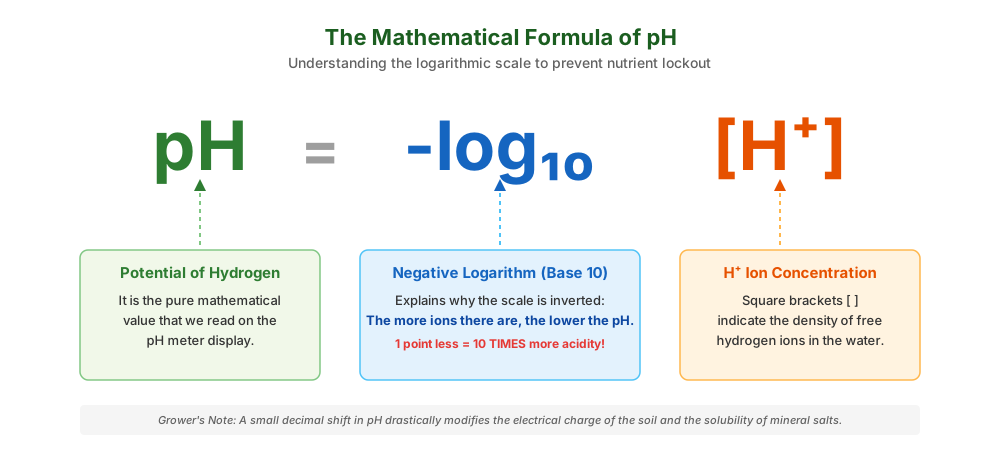
For the cannabis plant, this numerical value represents the actual molecular “gate” regulating access to the root system. Roots do not absorb fertilizers as if they were solid food; they absorb mineral elements dissolved in water in the form of electrically charged ions (anions and cations). The stability and solubility of these ions directly depend on the acidity or alkalinity level of the surrounding environment.
The Systemic Benefits of an Optimal pH
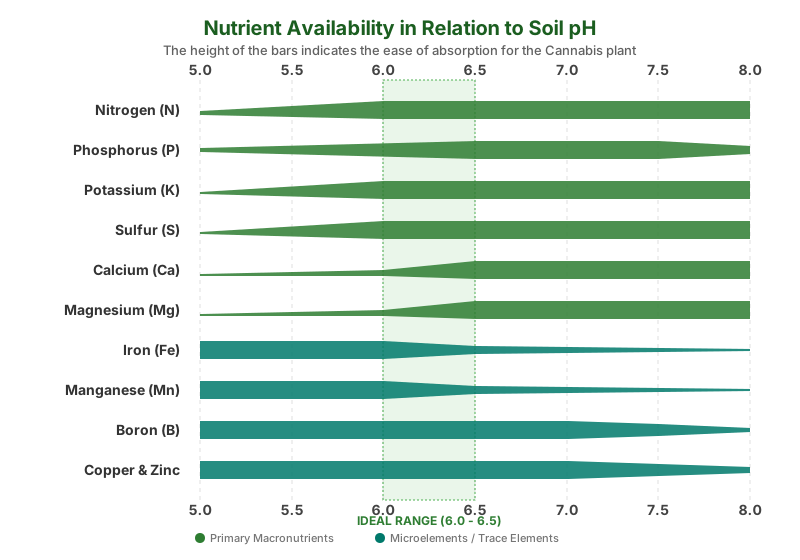
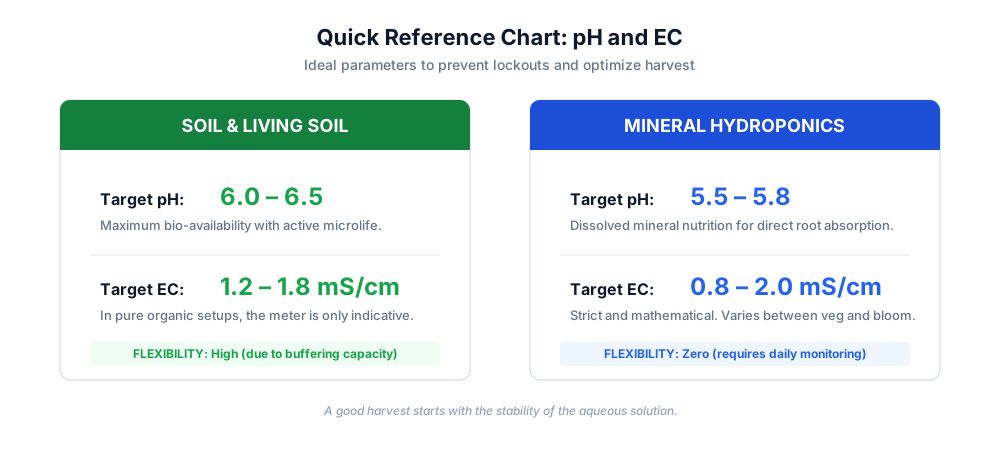
Maintaining the pH within the correct range (generally between 6.0 and 6.5 in soil and between 5.5 and 5.8 in hydroponic systems or coco coir) unlocks a cascading series of biological advantages:
- Maximum Ionic Bioavailability: Within the optimal range, the electrochemical attraction forces between minerals and soil particles (cation exchange capacity) allow elements to remain free and soluble in the soil water, ready to be assimilated.
- Cellular Energy Efficiency: When the pH is correct, the proton pumps of the root cells do not have to work under stress to balance the internal electrical gradient. The plant saves energy (ATP) which it can redirect toward photosynthesis, structural development, and the synthesis of resins and terpenes.
- Prosperity of Symbiotic Micro-life: An environment with a stable pH allows beneficial bacteria (such as lactic acid bacteria or LAB) and mycorrhizal fungi to multiply, creating a natural immune barrier around the roots and improving the breakdown of organic matter.
The Chemistry of “Nutrient Lockout” (pH-Induced Blockage)
What happens when the pH goes off track? The phenomenon of nutrient lockout occurs. This is not a physical lack of fertilizers in the pot, but rather their chemical unavailability. Minerals change their molecular form, binding to one another and precipitating at the bottom of the substrate as insoluble solids, similar to limescale.
- The Alkaline Barrier (pH above 7.0): In alkaline soil, hydroxide ions abound. This environment forces crucial micronutrients such as Iron (Fe), Manganese (Mn), Zinc (Zn), and Boron (B) to bind with oxygen, forming insoluble oxides. Furthermore, Phosphorus (P) binds to Calcium, giving rise to calcium phosphate, a compound the plant cannot absorb. The plant exhibits iron chlorosis and a halt in flower development.
- The Acid Barrier (pH below 5.5): In excessively acidic soil, the overabundance of ions saturates the root exchange sites. Primary macronutrients like Nitrogen (N), Potassium (K), Calcium (Ca), and Magnesium (Mg) become chemically unavailable. Additionally, extreme acidity makes elements like Aluminum soluble in toxic concentrations, destroying the root hairs responsible for water absorption.
The Myth of Trichoderma at pH 9
In the cultivation landscape, it is sometimes claimed that certain beneficial fungi, such as Trichoderma, can operate with maximum efficiency even at extreme pH levels like 9.0. This is a flawed and dangerous interpretation of microbiology.
While it is true that Trichoderma is an extraordinarily resilient organism capable of surviving in adverse conditions and alkaline soils, its true biocontrol activity and root stimulation occur through the secretion of enzymes (cellulases and chitinases). These enzymes have a protein structure that denatures (deforms and loses effectiveness) outside the optimal range of 5.5 to 6.8. Relying on an alkaline pH hoping that micro-life will solve the problem means condemning the plant to a systemic lockout, inhibiting the action of those very beneficial fungi.
Advanced Diagnostics: Knowing How to “Read” the Leaves
An experienced grower doesn’t just look at whether a leaf is green or yellow; they analyze its topography, the progression of symptoms, and tissue texture. Fluctuations and pH lockouts generate an unmistakable visual map on the plant.
Mobile Elements vs. Immobile Elements
To perform a correct differential diagnosis, we must divide nutrients into two fundamental biological categories:
- Mobile Elements (Nitrogen, Phosphorus, Potassium, Magnesium): The plant can store these elements and, if necessary, translocate them from old tissues to young ones. Consequently, actual deficiencies of these elements always start from the large, basal leaves.
- Immobile Elements (Calcium, Iron, Sulfur, Manganese): Once fixed in the cell walls, they cannot be redistributed. Induced deficiencies of these elements manifest immediately on young, apical leaves and new shoots.
Plants Grown at the Correct pH vs. Plants in Lockout
The plant’s morphology instantly reflects the chemical state of the substrate:
- The Healthy Specimen (Controlled pH): Features turgid leaves, angled upward at approximately 45° relative to the main stem (a sign of ideal osmotic pressure). The color is a uniform forest green, with no tonal variations between the veins and the leaf blade. Internodes are regular, and the branch bark is flexible yet robust.
- The Specimen in pH Lockout: Displays a “tired” or flaccid appearance, often mistaken for under- or over-watering (the leaves “weep” but the stem remains rigid). Anomalous curling of leaf margins, downward clawing, and, above all, a leopard-spot discoloration that follows no linear logic can be observed.
Common Deficiencies Caused by pH Fluctuations
Interveinal Chlorosis from Magnesium/Iron Lockout
When the soil pH rises above 7.0, the leaf begins to lose chlorophyll in the spaces between the veins, which instead remain a dark, pronounced green. If the symptom starts from the bottom, the plant is suffering from a Magnesium deficiency; if it starts from the apex, it is Iron. Adding more mineral fertilizer at this stage saturates the soil with unusable salts, spiking the EC and drastically worsening the original lockout.
Apical Necrosis from Calcium Lockout
If the soil pH drops below 6.0, Calcium absorption grinds to a halt. Young leaves show small dark, necrotic spots, resembling cigarette burns, concentrated near the edges and tip. New shoots grow deformed, crumpled, and brittle. This does not indicate that the soil lacks calcium, but rather that the acidity is preventing the proper transpiration of this element through the xylem.
EC (Electrical Conductivity): The Nutritional Load and Osmosis
EC (Electrical Conductivity) measures a solution’s capacity to conduct an electric current. Since pure mineral salts dissolved in water split into positive and negative ions, the higher the concentration of fertilizer in the water, the higher the EC value recorded by the meter (expressed in millisiemens per centimeter).
The Root Osmotic Dynamics
The movement of nutrients from the soil into the root cell is governed by the law of osmosis. Water naturally moves from a lower salt concentration solution (hypotonic) to a higher concentration one (hypertonic).
- Optimal EC: The soil EC is slightly lower than or balanced with the plant’s internal EC. The roots absorb water and nutrients without pressure stress.
- The Risk of Overdosing (EC too high): If the grower overdoes the fertilizers, the EC of the solution in the pot climbs to extreme levels (e.g., above 2.5 mS/cm). Osmotic pressure reverses: the soil becomes more concentrated than the inside of the plant, and water is literally “extracted” from the roots back into the soil to balance the concentration. This phenomenon, known as cellular plasmolysis or salt burn, causes immediate drying of the leaf tips, which appear burned, brittle, and hooked downward.
- The Risk of Underfeeding (EC too low): Water that is too pure (such as non-remineralized reverse osmosis water) or an exhausted soil with an EC close to zero forces the plant into stunted growth. Cell walls remain weak, lateral branch production drops to zero, and the plant enters generalized chlorosis, depleting its energy reserves before even entering the flowering stage.
The EC Paradox in the “Living Soil” and Organic Method
A common mistake among growers transitioning from mineral hydroponics to organic cultivation is the obsessive use of the EC meter in the reservoir. In pure organic growing, which utilizes organic amendments, compost teas, kelp meal, and Fish-Mix, the EC meter can provide seemingly deceptive readings.
Complex organic molecules (such as fish amino acids or molasses sugars) are stable, non-ionized molecules. When dissolved in water, they do not conduct electricity: the instrument will register a very low EC. However, that liquid is potentially extremely rich in nutrients. It will be the job of the soil food web (the bacteria and fungi of the Living Soil) to digest those molecules, mineralizing them and gradually converting them into charged ions over the course of days.
In organic cultivation, EC serves primarily to monitor the stability of the starting water and to verify that the pot’s runoff is not accumulating residues, rather than determining the exact dose of nutrients to feed.
Product Chemistry and Water Treatment
The preparation of the nutrient solution begins with the correct handling of tap water. Every added element modifies the chemical structure of the water, conditioning its long-term stability.
Ascorbic Acid (Vitamin C) as a Strategic Dechlorinator
Municipal water contains chlorine or chloramines, added to eliminate the bacterial load. Although adult plants tolerate minimal doses of chlorine, these substances are sworn enemies of those who grow organically or use inoculants of beneficial microorganisms like lactic acid bacteria (LAB). Chlorine acts as a sterilizer, decimating the pot’s bacterial flora.
Ascorbic Acid is an extraordinarily efficient reducing agent. When introduced into water, it triggers an immediate oxidation-reduction reaction that converts free chlorine and chloramines into chloride ions, which are totally harmless to micro-life, and dehydroascorbic acid.
- Dosage: Just a few milligrams (the tip of a knife for 10 liters of water) are enough to neutralize chlorine in less than a minute.
- Please note: Ascorbic acid slightly reduces the pH, but its stability as a corrector is minimal; its primary purpose must remain water purification, not acidity management.
Lowering the pH: Domestic Acids vs. Professional Acids
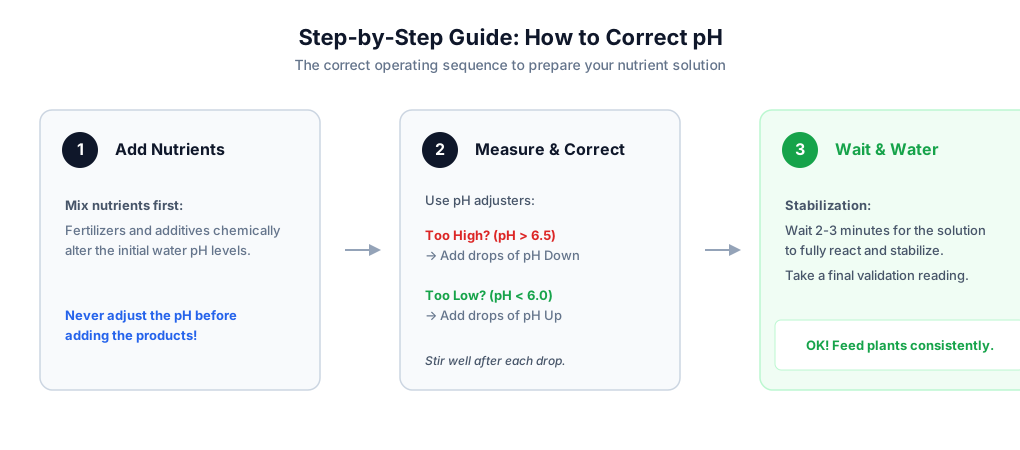
When it comes to reducing the pH of the solution, the choice of molecule determines the stability of the value over time.
Citric Acid, Vinegar, and Fruit Juices (Not recommended for systemic use)
These compounds are weak, short-chain organic acids. Although they lower the pH immediately inside the bucket, they introduce a high amount of easily assimilable carbon into the liquid. Bacteria present in the soil or air view citric acid or acetic acid as an energy food source and consume it voraciously within a few hours.
The Consequence: Once the microbes have “eaten” the acid, the pH of the solution in the soil undergoes a violent rebound effect, spiking right back up. This continuous rise and fall of the pH stresses the root hairs, wearing down the plant.
Phosphoric and Nitric Acid (Recommended)
These are strong mineral acids. Phosphoric Acid, once introduced into water, dissociates, releasing phosphate ions that remain stable over time and cannot be degraded by micro-life. The pH remains fixed at the set value for days. Furthermore, it provides a share of pure phosphorus directly usable by the plant during flowering. For the vegetative phase, Nitric Acid represents an excellent alternative as it supplies nitric nitrogen.
Professional Formulations (e.g., Green House Feeding)
High-end professional products, such as the powder corrector from Green House Feeding, use solid mineral acids or buffered complexes. Their formulation is designed to resist natural fluctuations caused by carbonates in tap water, keeping the range stable even inside reservoirs equipped with wavemaker pumps for over 72 hours.
Raising the pH: Avoid Sodium Bicarbonate
Sodium Bicarbonate (Highly Discouraged)
It is the most common home remedy, but it poses a serious danger to soil structure. Sodium bicarbonate introduces large amounts of Sodium. Cannabis has a very low tolerance for sodium: it competes directly with Potassium at the cellular channel level, leading to potassium deficiencies and destroying the physical structure of the medium (causing clay dispersion, compacting the soil, and suffocating the roots).
Potassium Hydroxide (Professional pH+)
The correct choice for raising the pH is Potassium Hydroxide. When it dissociates in water, it releases the potassium ion, which is one of the three primary macronutrients of cannabis (fundamental for flower development, stomatal regulation, and starch transport). In this way, you not only correct the chemical parameter but also feed the plant with an essential and safe element.
Thermodynamics of the Nutrient Solution
The temperature of the water we use for irrigation or to prepare our compost teas exerts direct control over gas physics and the biology of cell membranes.
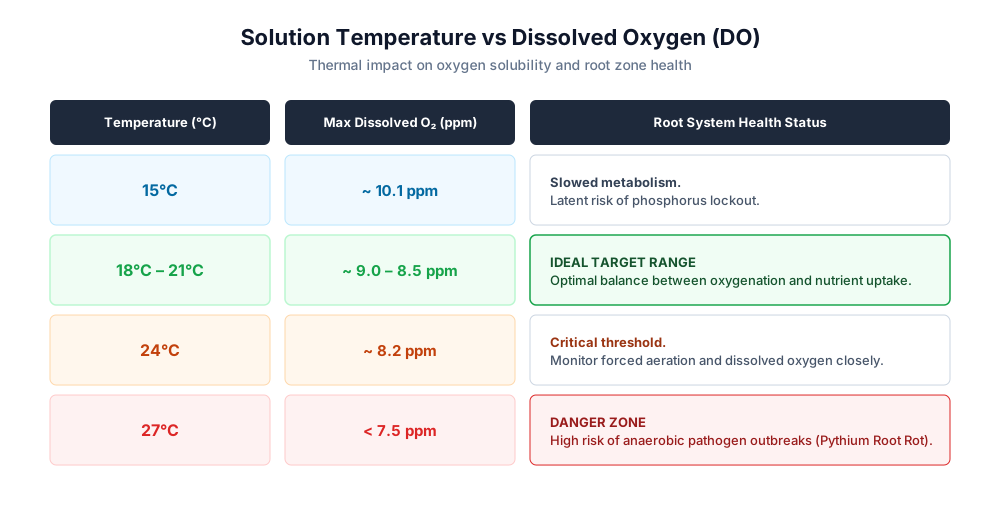
The Optimal Range: 18°C – 22°C
This thermal interval is not an arbitrary choice but responds to precise physical and biological laws.
The Danger of Cold Water (Below 15°C)
Irrigating with ice-cold water causes an immediate thermal shock to the root system. The lipid membranes of root cells stiffen, blocking internal protein transporters. Water absorption drops, and Phosphorus assimilation is instantly zeroed out. If cold water is administered during late flowering, the plant can halt flower development for several days.
The Danger of Hot Water (Above 24°C)
The main issue with hot water lies in the law of gas solubility: the higher the temperature of the liquid, the less gas can remain dissolved in it.
Water at 26°C retains a dramatically lower fraction of Dissolved Oxygen compared to water at 19°C. Without oxygen in the solution, the roots enter hypoxia (suffocation). This weakened state allows spore-forming pathogenic fungi like Pythium (root rot) to attack the root system, destroying it in less than 48 hours.
Environmental Dynamics: Indoor vs. Outdoor
- Indoor Cultivation: If you want to grow in a grow room, the water temperature must be artificially stabilized. If the reservoir sits directly on a cold concrete floor in winter, it suffers thermal loss; if it is near lamp ballasts in summer, it overheats. Using small aquarium heaters or storing water in the room itself for 24 hours solves the problem.
- Outdoor Cultivation (The Summer Factor): If you want to learn to grow Cannabis Outdoor during the summer months (especially in hot areas prone to thermal spikes, like the plains and hills of Piedmont), water tanks or buckets for compost tea left exposed to direct sunlight can exceed 30°C in the afternoon. The Strategy: Containers must always be placed in total shade. An effective trick consists of wrapping the bucket with a white reflective tarp or placing tightly sealed bottles of frozen water into the liquid to lower the temperature before watering, preserving the life of the administered beneficial bacteria.
Time Optimization: How to Avoid Constant pH Measuring
Measuring and correcting every single watering can with a digital pH meter requires consistency and time. There are three established agronomic strategies to reduce this workload without compromising the health of the plantation.
Leveraging the Soil’s Buffer Capacity
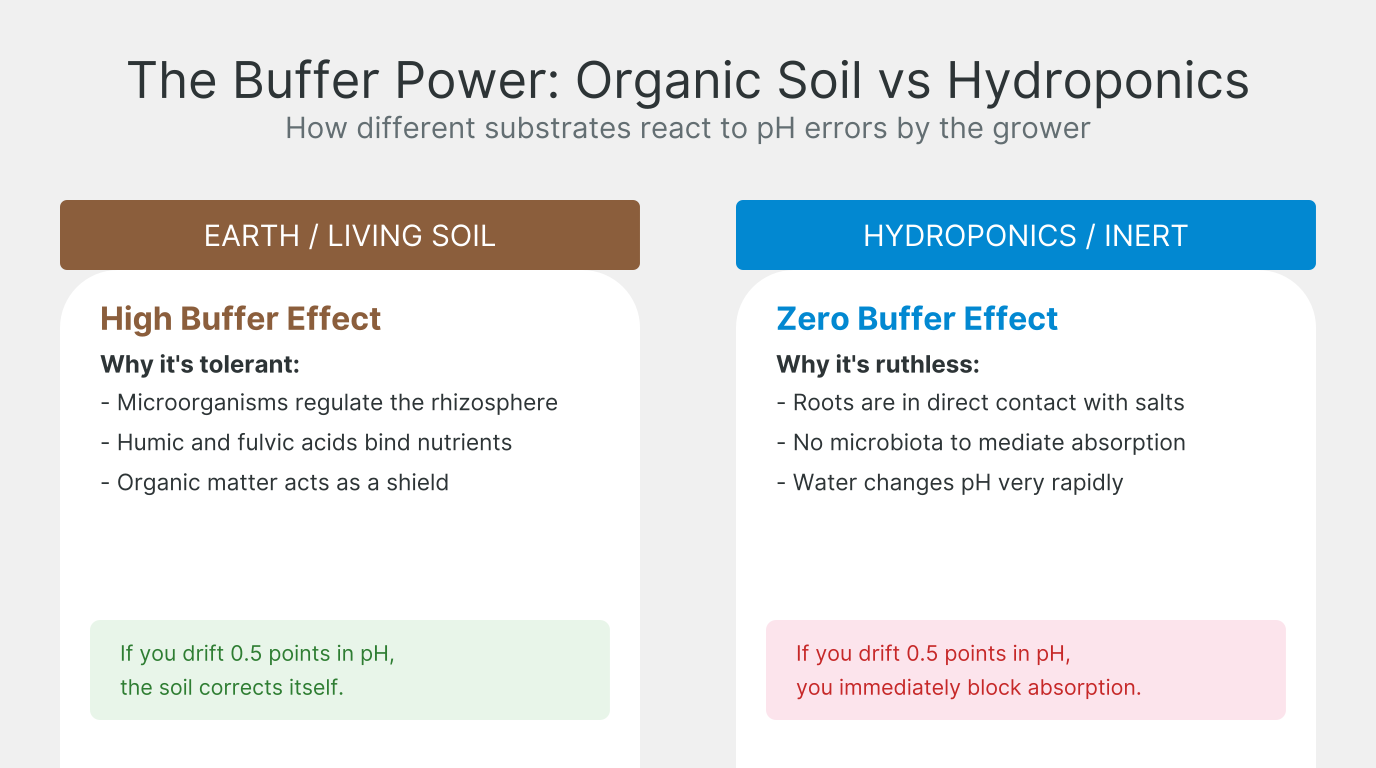
Soil is not an inert substrate like rockwool. A soil rich in organic matter, clays, and especially Calcium Carbonate possesses a high buffer capacity. This means the soil is capable of neutralizing excess ions introduced with the water, autonomously stabilizing the pH in the root zone (rhizosphere).
If you grow in an excellent Living Soil, it is not necessary to correct the water to the second decimal place if the starting value falls between 6.8 and 7.6. The micro-life and complex soil microbiota will absorb the fluctuation without trauma to the plant.
Developing Fixed “Pre-Calculated” Proportions
Tap water at one’s home generally has a constant chemical composition throughout the seasons (same hardness and same baseline alkalinity).
Run an accurate test for a week: measure what fixed dose of fertilizer (e.g., Fish-Mix) and what exact milliliters of phosphoric acid are needed to bring your 10-liter bucket to the perfect pH of 6.2.
Once you find the exact proportion (e.g., 10 ml of fertilizer + 1.5 ml of acid), you can replicate the recipe with your eyes closed using graduated syringes, reducing the use of the pH meter to a single weekly check.
The Preventive Dechlorination Technique
Fresh tap water is saturated with dissolved carbon dioxide (CO2) due to pipe pressure. CO2 forms carbonic acid in water, keeping the pH artificially lower.
If you measure the pH immediately, you will get a distorted reading. By letting the water rest in an open bucket for 12–24 hours, the CO2 naturally evaporates, the chlorine disperses, and the pH rises, stabilizing at its true thermodynamic value. Correcting the pH of already degassed (dechlorinated) water prevents the value from shifting once poured into the pot.
Run-Off Analysis: Checking the Substrate
To truly understand the chemical situation inside the pot, monitoring the parameters of the incoming liquid is not enough; it is fundamental to analyze the water that drains from the bottom of the pot after watering, known as run-off.
Run-Off Measurement Protocol
- Irrigate the plant slowly with a solution of known pH and EC (e.g., pH 6.3, EC 1.2 mS/cm) until you see about 10–15% of the total water drain from the bottom of the pot.
- Collect the first clean runoff liquid inside a sterile cup (avoid collecting water that has been in contact with dry residues in the saucer).
- Dip the digital testers and compare the values with those of the initial solution.
Data Interpretation
- Case A: Incoming pH 6.3 -> Outgoing pH 5.5. The substrate is becoming dangerously acidic. This happens when there is a salt buildup due to unabsorbed mineral fertilizers. The roots are accumulating toxicity. Solution: Flush the soil with pure water at pH 6.5 until the run-off returns to normal values.
- Case B: Incoming EC 1.4 mS/cm -> Outgoing EC 2.8 mS/cm. The EC has doubled. The plant is not consuming the fertilizers you are providing, and evaporation is concentrating salts in the soil, exposing the plant to an imminent osmotic block (over-fertilization). Solution: Cut fertilizer doses in half for the next two waterings, increasing the water volume to promote the flushing of excess salts.
Mineral, Living Soil, and Hydroponics: Three Worlds Compared
To fully understand the impact of pH and EC, we must apply these parameters to the three main cannabis cultivation systems. The exact same numerical value can represent perfect stability in one system or an imminent disaster in another.
1. Mineral in Pots (Soil or Lightened Substrates)
It is the classic approach of “direct chemical nutrition”. The grower uses peat and perlite-based substrates that have a decent cation exchange capacity (CEC), but nutrients are supplied via immediately available chelated mineral salts.
- pH Management (Range: 6.0 – 6.5): The substrate offers a temporary parachute (buffer capacity), but mineral salt accumulation tends to acidify the soil over time. Fluctuations are frequent if you do not alternate feedings with waterings of only water at a corrected pH.
- EC Management (Crucial): Here, EC is your compass. Because salts accumulate in the soil pores with each watering, monitoring the run-off EC is the only way to avoid over-fertilization. If the incoming EC is 1.4 and it exits at 2.5, the soil is saturating and needs a flush.
2. Organic and Living Soil in Pots
In this system, you are not directly feeding the root, but you are feeding the soil (the micro-life). The substrate is a complex, self-sufficient biological network rich in humus, compost, microbial charges, and slow-release organic amendments.
- pH Management (Range: 6.2 – 6.8 – Highly Flexible): It is the most tolerant system. The humic-clay complex and microorganism activity create an immense buffer effect. Organic acids secreted by roots and fungi regulate the rhizosphere pH with millimeter precision. Correcting the water is only necessary if the starting water is extremely alkaline (above 7.8).
- EC Management (Marginal/Indicative): As we have seen, the EC meter loses most of its power here. Complex organic molecules do not conduct electricity until they are mineralized by bacteria. Measuring EC in organic solutions only serves to verify that the starting water is not saturated with limescale or heavy metals.
3. Mineral in Hydroponics (DWC, NFT, Aeroponics)
Here we eliminate the substrate entirely. Roots are immersed directly in oxygenated water or suspended in the air and hit by a constant flow of nutrient solution. Zero soil, zero parachute, zero errors allowed.
- pH Management (Range: 5.5 – 5.8 – Rigid and Strict): Lacking the substrate’s buffer capacity, the pH is incredibly unstable. Even a minimal variation in plant transpiration or nitric nitrogen absorption causes the pH in the reservoir to fluctuate. A pH rising to 6.2 in hydroponics immediately blocks iron and phosphorus absorption, showing deficiencies on leaves in less than 24 hours.
- EC Management (Vital/Mathematical): Every 0.1 variation in EC counts. The hydroponic grower checks the EC daily: if the reservoir EC drops, it means the plant is eating more than it drinks (you can increase fertilizers); if the EC rises, the plant is drinking water and rejecting salts (the solution is too strong, you must dilute it).
The Great Taboo: Why “Organic Hydroponics” is a Biological Failure
Many growers dream of combining the aromatic purity of organic with the explosive growth speed of hydroponics. However, home-level bioponics (pure organic hydroponics) clashes with biological and physical laws that make it nearly impossible and highly unsuccessful.
Here are the scientific reasons why organic nutrients and pure hydroponic systems cannot coexist:
Absence of Physical Matrix for the Microbiome
To be assimilated by the plant, organic fertilizers need billions of bacteria and fungi to break down proteins and organic complexes into mineral ions. In soil, these microbes establish themselves on humus and clay particles. In the pure water of hydroponics, there is no stable physical matrix to host these colonies. Microbes float in the reservoir, die due to a lack of anchorage, and create an unstable biomass.
Putrefaction, Slime, and Root Asphyxia
Organic molecules (such as blood meal, fish hydrolysate, or vinasse) introduced into a hydroponic reservoir do not dissolve like mineral salts but remain in suspension. Within a few hours, under the effect of the reservoir temperature (often around 20°C) and light, these substances begin to putrefate instead of mineralizing.
The result is the formation of a slime (a viscous, grayish sludge) that:
- Coats the roots, creating an impermeable barrier that prevents oxygen and nutrient absorption.
- Clogs pumps, tubes, drippers, and air stones of hydroponic systems, blocking the entire installation.
Ammonium Toxicity and the Development of Anaerobic Pathogens
In soil, the nitrogen cycle occurs gradually. In water-based organic systems, proteins rapidly break down into ammonia and ammonium. In a liquid environment, if the conversion into nitrates by nitrating bacteria is not lightning-fast (which is impossible without giant aquarium biofilters), ammonium reaches lethal toxicity levels for cannabis roots. Furthermore, this stagnant organic soup becomes the ideal breeding ground for the worst root pathogens, such as Pythium and Fusarium, which thrive in decomposition.
Blindness of Control Instruments
In an organic hydroponic system, you completely lose control of your only two safety indicators: pH and EC. The pH will fluctuate violently and schizophrenically due to continuous bacterial fermentations in the reservoir, requiring hourly corrections. The EC meter becomes useless because it won’t be able to tell you how much of that poured organic fertilizer is actually ready for the plant and how much is still complex, non-ionized matter.
The Agronomic Verdict: If you want the speed of hydroponics, you must accept the mathematical precision of synthetic mineral salts. If you want the purity and complexity of organic, you must give the roots a home made of soil, compost, and micro-life. Attempting to merge the two worlds without industrial bio-filtration systems simply sentences your plants to root rot.

Grower FAQ’s: 10 Technical Answers on pH and EC in Cannabis Cultivation
My digital pH meter fluctuates continuously and does not stabilize. What does it depend on?
The glass electrode of the pH meter is likely dehydrated or dirty. Digital sensors must never be stored dry or in distilled water. Always pour a few drops of specific storage solution (KCl – Potassium Chloride) inside the cap. If the tool is old, fertilizer residues might have formed an invisible film: clean the probe gently with a soft-bristled brush and specific cleaning liquid, then leave it submerged in KCl for two hours before recalibrating.
Can I use pure rainwater for the entire life of the plant?
Rainwater is an excellent biological resource because it has an EC of zero and contains no chlorine. However, precisely due to the total absence of dissolved minerals, it is chemically unstable and lacks Calcium and Magnesium. If you use pure rainwater without replenishing it with a professional Cal-Mag supplement (until reaching a starting EC of 0.4 mS/cm), the plant will display severe structural deficiencies within the first three weeks of growth. Furthermore, lacking carbonates, any added fertilizer will cause the pH to crash to destructive acidic levels.
I grow in Living Soil: if the water pH is 8.0, must I correct it?
Yes. Although Living Soil has an exceptional buffer capacity, constantly irrigating with highly alkaline water at pH 8.0 will progressively saturate the carbonates present in the soil. Over the weeks, the buffer capacity will be depleted, and the soil pH will inevitably rise above 7.0, locking out iron and phosphorus absorption right at the crucial moment of flowering. Use phosphoric acid to bring the water to at least 6.5–6.8; you will make the task easier for the soil micro-life.
I applied Super-Cropping and now the leaves show brown spots. Is it the pH’s fault?
Not necessarily. Super-Cropping is a bending technique that causes a controlled micro-fracture of the stem. During the first 24–48 hours after bending, the xylem channels that transport Calcium to the upper leaves are temporarily squeezed. This mechanical blockage can generate a transient, localized Calcium deficiency on the leaves above the bend, manifesting as necrotic brown spots. Once the plant repairs the stem, creating the classic bony “callus,” the flow resumes regularly. Do not alter pH parameters if the rest of the plant is healthy.
Why does reverse osmosis water show a strange and unstable pH?
Water produced by a reverse osmosis (RO) system is devoid of salts and dissolved solids, meaning it has zero buffer capacity (carbonate alkalinity close to zero). When you submerge the pH meter in pure osmosis water, the device will struggle to find a stable reading because even the minimal amount of CO2 absorbed from the surrounding air is enough to make the value swing drastically. The golden rule: Measure and correct the pH only after adding fertilizers or the Cal-Mag supplement to the osmosis water.
If I encounter a pH lockout, should I “Flush” (wash) the pot?
A complete root flush (pouring a volume of water into the pot equal to three times the container’s capacity) is a drastic intervention that should only be performed in extreme cases—specifically, when the run-off EC is more than double the input value and the plant shows obvious necrotic burns. If the lockout is mild or moderate, it is much more effective and less stressful to simply correct the pH of the next two waterings, allowing the soil to rebalance progressively without suffocating the roots with massive flooding.
Can white wine vinegar replace professional pH-?
Only in an absolute emergency and for a single application. Vinegar contains acetic acid, a highly volatile organic molecule. In addition to the problem of the sharp upward pH rebound due to bacterial consumption, high concentrations of acetic acid possess strong herbicidal and antimicrobial properties. Continued use of vinegar in the pot will end up altering the beneficial soil microflora, compromising root health.
What is the visual difference between a high EC burn and a Potassium deficiency?
The symptoms may look similar to an untrained eye, but they present clear geometric differences:
EC Burn (Overfertilization): Initially affects only the very tips of the leaves across the entire plant. The tip turns dark brown, almost black, dries out, and curls rigidly downward into a “claw” shape.
Potassium Deficiency: Starts from the outer margins of the lower leaves. The leaf edge yellows (marginal chlorosis) and subsequently necrotizes into a rust color, but the leaf tends to remain flat or curl upward, progressively expanding inward across the blade.
Can I measure pH and EC using litmus paper or analog prong testers?
Analog dual-prong testers that are pushed directly into the soil without batteries are completely inadequate for professional cultivation: they measure conductivity very crudely and are affected by soil moisture, providing faulty readings. Litmus papers offer too vague a color precision (variations of 0.5 or 1.0 pH points), whereas in cannabis, the difference between pH 6.2 and pH 6.8 determines the absorption or lockout of crucial elements. Investing in good quality digital testers is a mandatory step.
I prepared Compost Tea but the smell is unpleasant. Can I use it by checking the pH?
Absolutely not. A quality compost tea, aerobically extracted with an efficient air pump, must emit a pleasant smell of forest floor, wet earth, or sweet molasses. If the tea gives off a pungent odor reminiscent of sewage, rotten eggs, or ammonia, it means oxygen has dropped below critical levels and the solution has become anaerobic. Harmful pathogens and toxic organic acids have developed in this liquid.
Pouring this product into the pot, even if you artificially correct the pH, will cause the destruction of healthy soil micro-life and expose the plant to lethal root infections. Discard the liquid and sanitize the bucket.
Conclusions: Constant Human Observation Beats Instrumentation
Mastering pH and EC parameters does not mean turning your grow space into an aseptic, soulless chemistry lab; rather, it means understanding the invisible rules governing the energy exchange between the earth and the roots.
Digital tools are great allies, but your capacity for observation remains the winning weapon: the alignment of leaves in the morning, the intensity of green in new shoots, and the texture of the bark will tell you if the path chosen is correct long before any digital reading. Successful cultivation is an exercise in consistency and precision: keep your parameters stable, respect the soil biology, and your plants will reward you with a bountiful, extraordinarily high-quality harvest.
And this guide-article on pH and EC in cannabis cultivation ends here. We hope this article has been useful for your next grow. See you at the next update!
Greetings from the Annibale Seedshop Team!
Davide V, CEO, Founder & Geneticist