Weed Trichomes: What They Are, Their Function, and How to Increase Them!
Welcome everyone to this new chapter of our blog regarding what they are, what function they perform, and how to increase trichome production in Cannabis flowers! After exploring the History, Taste, and Effects of Grandaddy Purple (GDP), fasten your seatbelts for this new article by Annibale Seedshop on these extraordinary, indispensable elements!
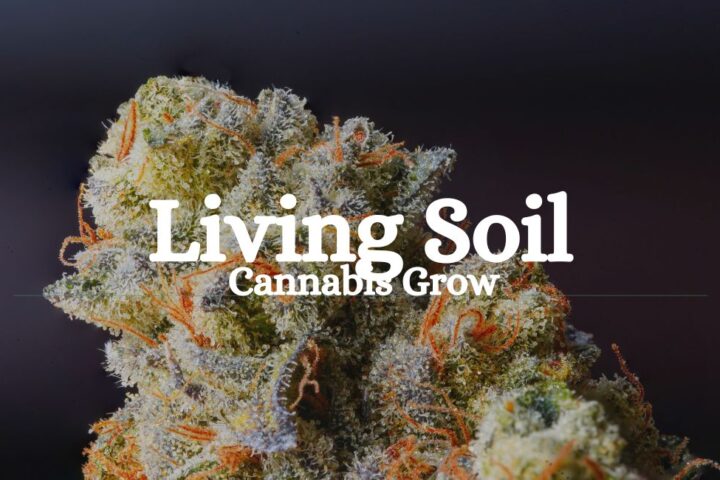
If there is one element that separates a mediocre inflorescence from a “Top Shelf” quality bud (the highest tier on the market), it is surely the carpet of shiny crystals covering it. Those tiny “hairs” that make the flowers look frozen or sugar-coated are the trichomes.
For commercial growers and resin enthusiasts, maximizing the density and maturation of these glands is the ultimate goal. More healthy trichomes mean more aromas, more flavor, and a distinctly superior potency.

What Are Trichomes and What Is Their Botanical Function?
The word “trichome” comes from the Greek tríchōma, which literally means “growth of hair.” In botany, they are epidermal outgrowths found on many plant species, but in cannabis, they assume a unique complexity.
From an evolutionary perspective, the plant does not produce resin to get humans high, but as a biochemical and mechanical defense system:
- UV-B Shield: The resin acts as a literal sunscreen. It protects the plant’s cellular tissues and photosynthetic complexes from damage caused by destructive ultraviolet radiation.
- Pest Barrier: The sticky texture physically traps small insects, while the bitter taste due to the high concentration of terpenes and cannabinoid acids acts as a strong repellent for herbivores and chewing insects.
- Thermal and Water Insulation: Trichomes reduce foliar transpiration, protecting the plant from wind-induced dehydration and preserving internal moisture in hot climates or at high altitudes.
The Three Main Types of Trichomes on Cannabis
Not all trichomes are created equal. Three primary categories can be distinguished on the plant:
- Bulbous Trichomes: The smallest (10-30 microns). They are distributed across the entire surface of the plant but are invisible to the naked eye.
- Capitate-Sessile Trichomes: Larger than bulbous ones, they feature a globular head resting directly on the epidermal cells without a true stalk.
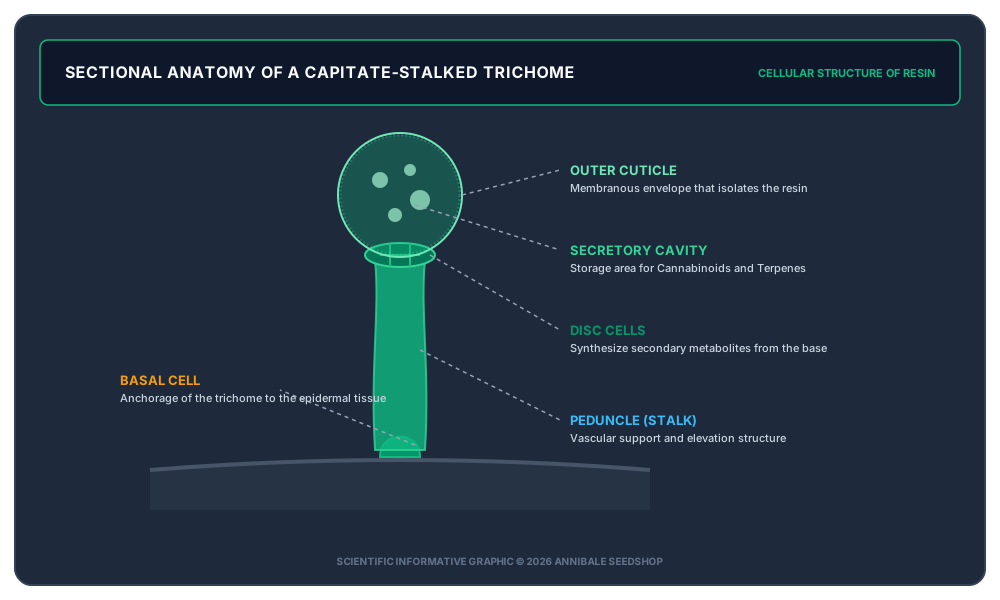
- Capitate-Stalked Trichomes: These are the true “factories” of cannabinoids and terpenes. They have a mushroom-like structure, with a long stalk (peduncle) and a large spherical head. They are densely concentrated on the calyxes of female flowers and on “sugar leaves” (the small resinous leaves growing inside the buds).
To understand exactly how these chemical micro-factories are structured, let’s analyze their internal anatomy.
The Debate on International Forums: How to Maximize Resin?
If you ask ten different growers on ICMag, THCFarmer, or the r/microgrowery subreddit how to double the layer of trichomes, you will get conflicting answers. Let’s analyze the real strategies that have emerged from the comparison between modern agronomic science and field experience (verified bro-science).
Radiation Stress: Integrating UV Spectrums (UVA and UVB)
In the ICMag communities, supplementing with UV lamps is considered the absolute most effective method. Since the trichome acts as a shield against UV-B rays, controlled exposure to these frequencies forces the plant to produce more resin to defend itself.
- The technique: Use supplemental UV LED bars or CMH (LEC) lamps equipped with ultraviolet emission during the final 3-4 weeks of flowering.
- The Consensus: It works perfectly, but requires caution: an excess of UV-B can burn the plant’s apical cells and degrade already existing THC.
Controlled Water Stress (Drought Stress)
On THCFarmer, many professional growers apply the strategic drought technique in the final days before harvest. By drastically reducing water delivery, the plant enters emergency mode and accelerates the secretion of oily resin to seal its pores and slow down evaporation.
The technique: Completely suspend watering in the final 48-72 hours before cutting, letting the medium dry out enough to cause very slight (but non-destructive) leaf wilting.
Radical Temperature Drop (Thermal Shock)
It is well known that cold preserves volatile terpenes by preventing their evaporation into the grow room air. However, Reddit growers highlight another factor: inducing a sharp temperature drop between day and night symbolizes the imminent arrival of winter.
The technique: In the last two weeks of flowering, drop nighttime temperatures down to 14-16°C. This stimulates the production of anthocyanins (which color the flowers purple and black) and increases the thickness of the trichome cuticle.
The Myth of 48 Hours of Total Darkness
One of the most discussed practices on the internet consists of completely turning off the lights for the final 48 hours before harvest.
- The theory: Cannabis produces cannabinoids and terpenes primarily at night; solar or artificial light partially degrades these compounds during the day. Prolonged darkness would supposedly allow for a final peak accumulation.
- The reality of the data: Laboratory tests performed on mirrored clones show minimal variations in THC levels, but a noticeable increase in the concentration of the most volatile terpenes (such as the monoterpene myrcene).
The Life Cycle of Trichomes: When to Harvest?
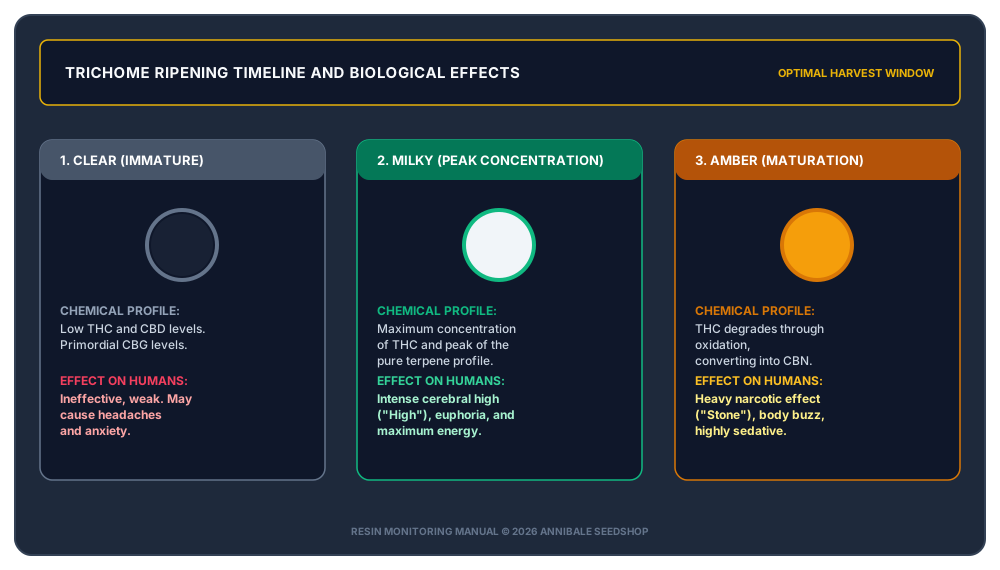
Trichomes are the true biological clock of cannabis. By changing color, they indicate the internal chemical degradation status of cannabinoids, allowing the grower to customize the weed’s final effect.
5 Mistakes to Avoid So You Don’t Compromise Trichome Quality
Increasing the number of trichomes is useless if you then destroy them or cause them to degrade before consumption. Here are the 5 fatal mistakes to absolutely avoid:
1. Rough Handling of Buds (Mechanical Damage)
The outer cuticle of the trichome head is extremely fragile. Continually touching fresh flowers with your fingers breaks the stalks and ruptures the glands, releasing the oils into the air. The resin oxidizes instantly and ends up stuck to your hands instead of staying on the bud. Always use nitrile gloves and handle the branches exclusively by the main stems.
2. Direct and Violent Ventilation on Flowers
The air inside the grow room must circulate constantly but indirectly. Pointing a high-power oscillating fan directly at the buds causes the premature evaporation of the lighter terpenes (such as limonene and pinene), leaving the weed dry and flavorless.
3. Excessive Temperatures in the Grow Room (Above 26°C)
Heat is the worst enemy of resin. Above 25-26°C, many terpenes begin to boil and evaporate spontaneously. If you want to grow indoors in the summer without an air conditioner, you risk harvesting flowers that look resinous but are chemically hollowed out of their original aromatic fingerprint.
4. Drying Too Fast (The Hay Factor)
If you dry your branches in an environment that is too dry and hot, the internal moisture will leave too quickly. This process traps chlorophyll inside the plant tissues without giving the trichomes time to complete the chemical stabilization of the cannabinoids. The result will be weed that smells like cut hay and provides a harsh smoke. Ideal drying lasts at least 10-14 days at 18°C and 55% relative humidity.
5. Exposure to Direct Light During Curing
UV rays and visible light break down THC molecules, rapidly converting them into CBN, eliminating the energizing psychoactive effect in favor of a heavily sedating and tiring effect. Always store your flowers in dark glass jars (or airtight stainless steel jars) placed in a completely dark closet.

5 FAQs about Cannabis Trichomes
Do buds with an orange coloration indicate the presence of amber trichomes?
No. The orange or brown filaments covering the flowers are pistils (the plant’s female reproductive organs). The discoloration of the pistils is a generic sign of maturity or pollination, but it does not reflect the chemical state of the resin. The only way to verify the condition of the trichomes is to look at the clear or milky glands through a jeweler’s loupe or a pocket microscope at a minimum of 60x magnification.
Does washing buds after harvest (Bud Washing) remove or damage trichomes?
If performed correctly in cold water, bud washing (used to remove dust, debris, or insects after outdoor grows) does not damage trichomes. Cannabis resin is hydrophobic (it does not dissolve in water) and is very elastic at low temperatures. However, the water must not be hot, and the flowers must not undergo violent mechanical friction.
Do “Sugar Booster” additives really increase the number of trichomes?
Products based on carbohydrates, molasses, and sugars do not directly increase the number of trichomes genetically predetermined by the plant. However, they play a fundamental role: they feed the beneficial soil microflora (mycorrhizae and bacteria), improving nutrient uptake and providing immediate energy to the plant to sustain the synthesis of secondary metabolites inside the trichome disc cells.
Why do trichomes on the leaves turn amber much earlier than those on the flowers?
Trichomes located on the outer leaves are biologically older and are constantly exposed to higher light intensity and ventilation compared to those protected inside the flower’s calyx. To decide the exact moment of harvest, always ignore the trichomes on the leaves and base your analysis exclusively on the trichomes located directly on the body of the central flower calyxes.
Is there a genetic limit to trichome production?
Yes. Genetics define the maximum resin ceiling that a specific plant can produce. If you are growing an old or unselected strain, no amount of UV lamps or water stress techniques will make it turn completely white with resin. The first fundamental step to obtaining ultra-resinous harvests always remains the purchase of high-quality seeds with genetic stability, like those selected in the Annibale Seedshop catalog.

Conclusions…
Cannabis trichomes are crucial for the potency, aroma, and quality of the buds. Understanding their life cycle and implementing tricks to enhance their production during the flowering phase can lead to exceptional results.
Light management, balanced nutrition, environmental control, pruning techniques, and the use of specific additives can all help maximize trichome formation. Finally, it is important to note that the purchase and use of cannabis must comply with local laws and that the illegal market entails significant risks.
And this article on Cannabis trichomes and how to increase them ends here. Hoping to have been of help, see you in the next article!
Greetings from the Annibale Seedshop Team!
Davide V, CEO, Founder & Geneticist