Lactic Acid Bacteria (LAB): The Power of Probiotics in Organic Agriculture and Cannabis Cultivation
If Living Soil represents the infrastructure of a successful organic grow, Lactic Acid Bacteria (LAB) are the specialized workers optimizing its every single gear. Derived from the ancient practices of Korean Natural Farming (KNF), lactic acid bacteria have become a true “cheat code” in the journals of top-tier growers worldwide due to their ability to completely revolutionize plant health at almost zero cost.
After diving into Living Soil and Compost Tea in organic marijuana cultivation, today we are breaking down everything you need to know about LAB!
What Exactly Are LAB?
LAB are a diverse group of beneficial microorganisms, dominated primarily by the Lactobacillus genus (including L. acidophilus, L. plantarum, and L. casei).
Facultative Anaerobic Bacteria: This means they thrive in the absence of oxygen, yet they can survive and actively work in aerobic environments as well, such as leaf surfaces or the top layers of soil.
Their defining characteristic is the ability to ferment carbohydrates (sugars), converting them into lactic acid. This byproduct drastically lowers the pH of the surrounding environment, creating an insurmountable chemical barrier for the vast majority of harmful pathogens.
The Benefits of LAB in Cannabis Cultivation
Implementing LAB systematically into your routine provides versatile benefits that directly impact the yield, potency, and overall quality of your final buds:
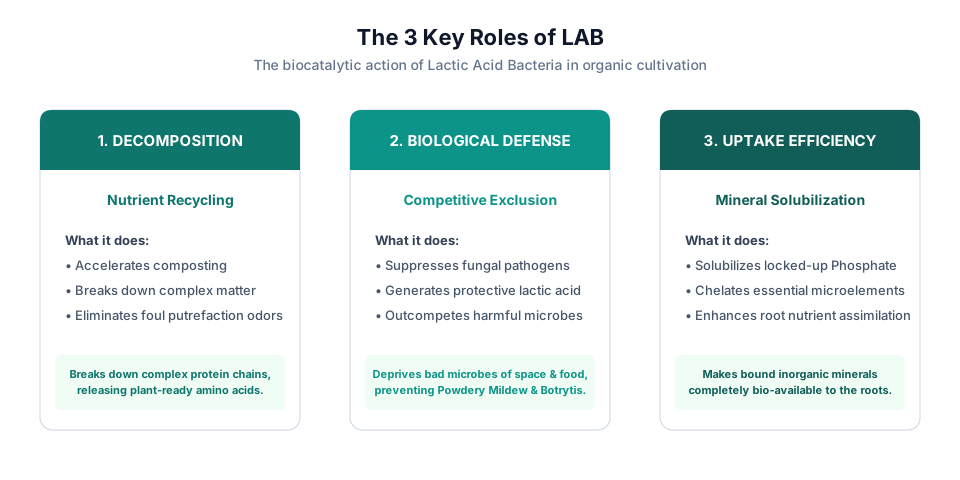
- Phosphorus Solubilization and Chelation: Phosphorus is notoriously lazy in soil, frequently locked up in insoluble complexes. LAB secrete organic acids that break these bonds, making phosphorus instantly bioavailable to the plant—especially during the peak mid-to-late flowering stretch.
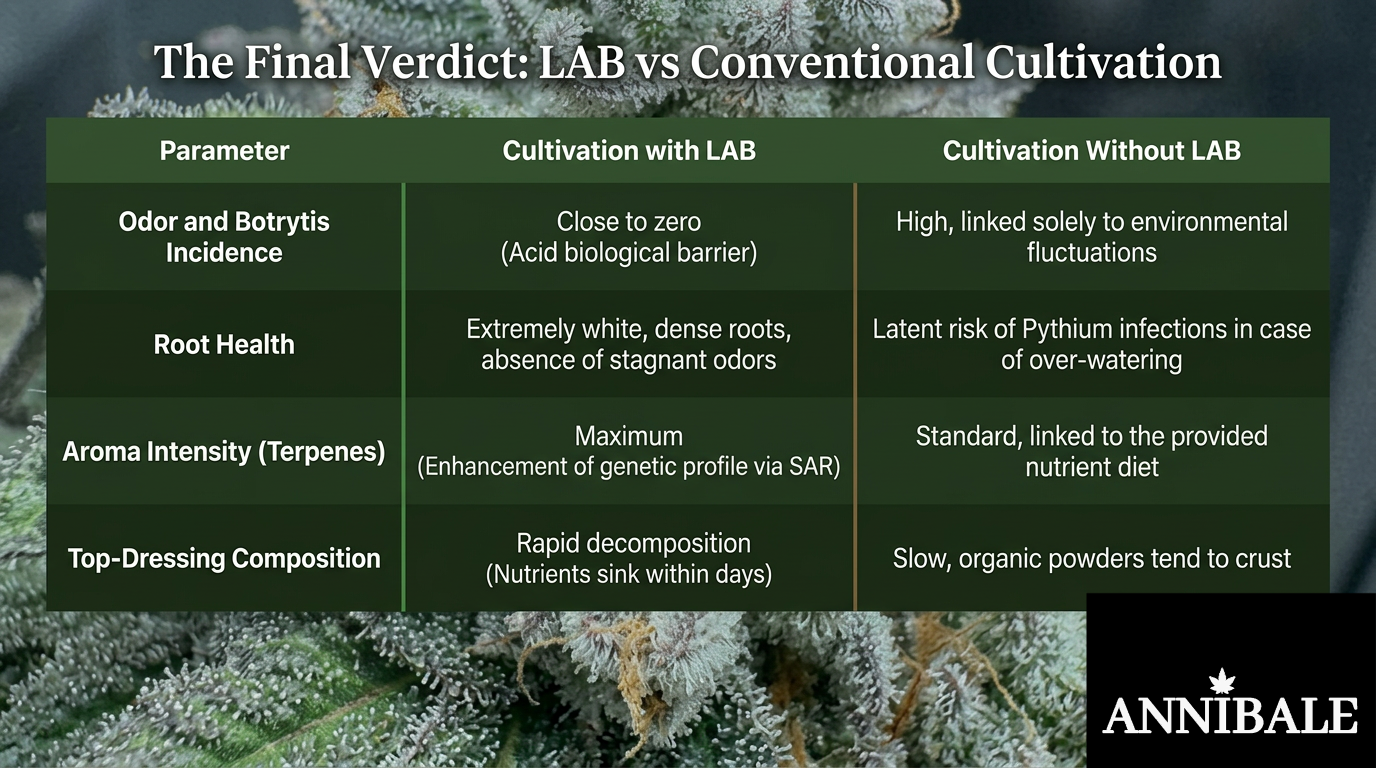
- Systemic Pathogen Prevention (Competitive Exclusion): When sprayed on foliage or applied to the root zone, LAB physically occupy every millimeter of available space. If a Powdery Mildew or Botrytis (Gray Mold) spore lands on a leaf, it will find absolutely no physical space to anchor down and no nutrients to feed on. Furthermore, the acidic environment generated by the serum deactivates fungal spores on contact.
- Induction of Systemic Acquired Resistance (SAR): The controlled presence of these bacteria triggers the plant’s cellular receptors, simulating a micro-attack. The cannabis plant responds by firing up its immune system (SAR), resulting in a more rigid cell structure and, most importantly, a massive boost in trichome, resin, and terpene production as a natural protective shield.
- Lightning-Fast Organic Matter Decomposition: If you practice No-Till or utilize mulching, LAB accelerate the breakdown of old root networks and top-dressings. They convert organic material into digestible humus in record time, preventing root rot and soil compaction/asphyxiation.
How Do They Interact with the Plant?
The interaction occurs on two main battlegrounds: the Phyllosphere (above-ground aerial surfaces) and the Rhizosphere (the root system). In the rhizosphere, LAB work in close symbiosis with mycorrhizal fungi and the roots themselves. They consume the complex sugars released by root exudates and return the favor by producing enzymes, vitamins (especially B vitamins), and growth hormones (auxins). They also clear the surrounding area of dead root cells, which would otherwise become an ideal hunting ground for the dreaded Pythium (root rot).
3 Ways to Produce LAB (From Classics to Forum Insiders)
Method 1: The Traditional KNF Protocol (Rice Wash Water and Milk)
This is the original method, considered the gold standard on forums like ICMag for its purity and long-term stability.
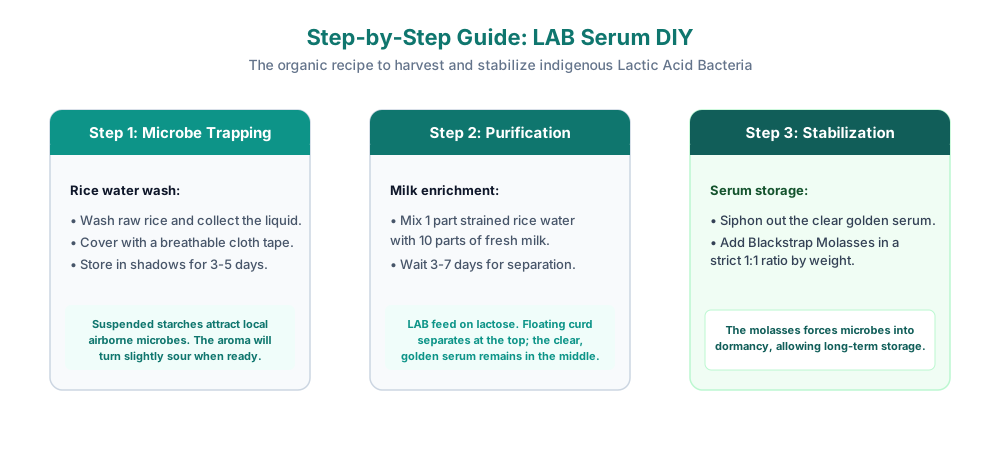
Phase 1: The Capture (Wash)
- Wash 100g of organic rice in 500ml of dechlorinated water.
- Strain the water (which should look cloudy and starchy) and pour it into a glass jar, filling it only halfway.
- Cover the opening with a breathable cloth secured by a rubber band.
- Store it in the dark at 20-25°C for 3-5 days. It is ready when you notice a slight separation in the liquid and a mild, sour/honey-like aroma.
Phase 2: The Multiplication (The Milk Bath)
- Strain the liquid to remove any remaining sediment.
- Take 1 part of this fermented rice water and add it to 10 parts of fresh whole milk (raw or non-UHT pasteurized milk works best). The LAB will aggressively feed on the lactose.
- Insider Pro-Tip: If you want to speed up the process, use 1 part milk (~30%) to 2 parts rice starch water (~70%) to achieve full separation in just 48 hours!
Phase 3: The Separation
- Let it sit for 3-7 days at room temperature. The mixture will distinctly separate.
- A solid, gelatinous curd layer will form on top (this is excellent for your compost pile or worm bin).
- In the middle, you will find a clear, light-yellow liquid: this is your pure LAB serum. Carefully extract it using a syringe or a siphon.
Method 2: The Quick Yogurt and Salt Hack
A shortcut born in urban growing communities on Reddit for those who want to skip the wild capture timeline by utilizing pre-isolated, highly stable commercial strains.
- Step 1: Grab a tub of plain, organic, unsweetened whole-milk yogurt, or even better, plain Milk Kefir—which is known to harbor a much wider spectrum of Lactobacillus strains.
- Step 2: Dissolve 2 heaping tablespoons of yogurt into 1 liter of lukewarm (~30°C), strictly dechlorinated water. Stir until fully dissolved.
- Step 3: Add a microscopic pinch of non-iodized whole sea salt (roughly 0.5 grams). The Forum Logic: Advanced technical threads highlight that infinitesimal doses of sodium chloride act as a selective agent: it halts putrefying bacteria right in their tracks without disrupting the lactobacilli, which are highly halo-tolerant.
- Step 4: Let the blend ferment in a loosely sealed container for 36-48 hours. Strain the resulting serum meticulously through a ultra-fine nylon mesh or cheesecloth to remove any fat clumps that could otherwise clog leaf stomata or sprayer nozzles.
Method 3: The Forums’ “Veganic” Secret: Rejuvelac
Pulled straight from advanced threads on 100% Veganic cultivation (organic growing without any animal or dairy derivatives), this method extracts incredibly aggressive, clean, wild LAB directly from sprouted grains.
- Step 1: Take 100g of whole, organic quinoa, barley, or buckwheat grains. Rinse them thoroughly and soak them in water for 24 hours.
- Step 2: Drain them and leave them in a damp jar in the dark until you see the absolute first signs of sprouting roots (typically 24-48 hours).
- Step 3: Place the sprouted grains into a large glass jar and add 1 liter of filtered, dechlorinated water. Cover with a breathable cloth.
- Step 4: Let it ferment at room temperature for 2 to 3 days. The liquid will turn cloudy, slightly fizzy, and develop a distinctly sharp, sweet-and-sour aroma reminiscent of lemonade or a sour wheat beer.
- The Payoff: This plant-based serum is absolutely bursting with highly resilient native LAB, digestive enzymes (amylase and hydrolase), and bioavailable vitamins. Strain out the liquid and use it exactly like KNF serum.
How to Store LAB Correctly
Pure LAB serum is biologically volatile: if left at room temperature as a raw liquid, the bacteria will rapidly consume any residual food sources, turn on each other, and die off within days.
Osmotic Hibernation (The Molasses Method)
To store the serum long-term without refrigeration, weigh your extracted liquid and add an equal amount by weight of organic blackstrap molasses or raw cane sugar (1:1 Ratio). Stir vigorously until completely dissolved. The extreme density of the sugar creates osmotic pressure that forces the bacteria into dormancy, pausing their metabolism.
Storage: Pour the mixture into dark glass bottles. Do not fill them completely to the brim, and leave the caps slightly loose for the first two weeks to allow any minor gas off-gassing to escape safely. Stored in a cool, dark place, this stabilized serum maintains its peak viability for 6-12 months.
How to Use Them and Correct Dosages
Homemade LAB are incredibly concentrated cultures. Inaccurate dosing can heavily throw off the biological acidity of your substrate.
Foliar Treatment
Pathogen Prevention & Terpene Boost
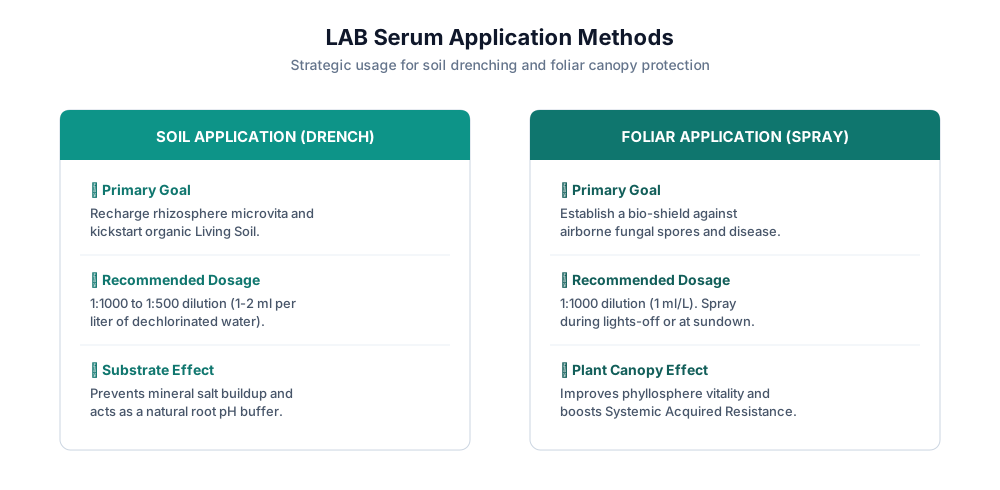
- Dosage: 1-2 ml of stabilized LAB serum per liter of water.
- Application: Mist finely over the entire plant (covering both tops and undersides of leaves) strictly during lights-off (indoor grow) or at sunset (outdoor cultivation). Direct exposure to intense UV rays or hot grow lights will instantly kill the bacteria. Apply every 7-10 days throughout the vegetative stage.
- CRITICAL RULE: Stop all foliar applications by week 3 or 4 of flowering to avoid trapped moisture and sticky sugar residues inside dense, compact bud structures.
Watering and Soil Care
Rhizosphere & Mulch Acceleration
- Dosage: 2-5 ml per liter of water.
- Application: Water the substrate thoroughly after every transplanting phase to drastically minimize root shock, or apply once a month to lock in microbial dominance. If you run a mulch layer, spray the LAB dilution directly onto the straw/cover crop to turbocharge its decomposition into active humus.
10 FAQs on Lactic Acid Bacteria (LAB) in Cultivation
My DIY LAB serum has a white film forming on the surface, should I throw it away?
No. If the film is white, opaque, and resembles a light web or the dust on aged cheese, you are looking at beneficial wild yeasts (often Saccharomyces) or aerobic LAB strains. This is completely normal. However, if the mold turns black, green, bright blue, or fuzzy, toss it out immediately—the culture has been compromised by competing pathogens.
What should a properly fermented LAB serum smell like?
It should have a clean, distinctly sweet-and-sour profile, closely mimicking fresh yogurt, whey, sauerkraut, or in the case of Method 3, a crisp artisanal sour beer. If it smells like raw sewage, rotting meat, or sulfur/rotten eggs, putrefying bacteria have won the battle. Toss it out far away from your grow space.
Can I tank-mix LAB with hydrogen peroxide (H2O2)?
Absolutely not. Hydrogen peroxide is a powerful, non-discriminatory oxidative sterilizer. It will wipe out your beneficial LAB just as fast as it destroys pathogens. If you must use H2O2 to sanitize a reservoir or flush a system, wait at least 48-72 hours before re-inoculating with your LAB serum.
Do LAB compete with Mycorrhizae in a Living Soil setup?
No, they operate in perfect synergy. Mycorrhizal fungi focus on the structural, deep physical architecture of the root zone by building hyphal networks, while LAB dominate the liquid and chemical dynamics of the rhizosphere, breaking down organic matter that mycorrhizae cannot process directly.
Can I apply LAB with every single watering?
It is not recommended. Because they are heavy producers of lactic acid, constant and aggressive application with every watering can eventually overwhelm the natural buffering capacity of your soil, dropping the rhizosphere pH too low. An application every 2 to 3 weeks is more than enough to maintain a thriving, dominant population.
Is there a difference between homemade LAB and industrial probiotics bought from a pharmacy?
Commercial products generally contain a single, isolated strain stabilized under sterile laboratory conditions (monocomponent cultures). Homemade LAB produced via KNF or Rejuvelac are “wild”—they harbor a diverse consortium of locally adapted, co-operating strains that frequently show far greater resilience and climate adaptation both indoors and out.
Can I mix LAB in the same reservoir with organic liquid fertilizers?
Yes, but you must use the mixture within a few hours. LAB will immediately begin fermenting the complex sugars and amino acids present in organic liquids (such as beet vinasse or organic nitrogen meals). If left sitting for days, the fermentation will create massive gas buildup and alter the intended nutrient profile of the fertilizer.
Does using LAB attract ants or fungus gnats due to the molasses used for preservation?
At the recommended dilutions (1-2 ml/L), the residual sugar content entering the garden is far too microscopic to act as an attractant for pests. If you remain concerned, simply use raw, unstabilized serum kept in the refrigerator (which must be used up within 2 weeks).
Can I use LAB to clean and sanitize the walls of my Grow Room?
Yes! This is a phenomenal tactic widely discussed on ICMag. Spraying a slightly higher concentration (10 ml/L) onto grow room walls and floors between cycles allows beneficial bacteria to colonize the physical environment, effectively preventing latent mold spores from establishing a foothold in damp corners.
I use Reverse Osmosis (RO) water; is it good for brewing LAB?
RO water is excellent because it ensures zero chlorine contamination, but it lacks essential trace minerals. To keep your bacteria highly active during fermentation, always add a microscopic pinch of rock dust or unprocessed sea salt to RO water to supply the core micronutrients they need to build metabolic enzymes.
And that wraps up our deep dive into LAB (Lactic Acid Bacteria) in cannabis cultivation! We hope this guide serves your garden well on your next run. See you in the next breakdown!
Best regards,
The Annibale Seedshop Team!
Davide V, CEO, Founder & Geneticist