Cannabis Plant Maturation: When to Harvest the Plant?
The magical moment that every cannabis grower eagerly awaits has finally arrived: maturation is complete. Yet, this is also the moment when the greatest doubts arise about the perfect instant to harvest.
After seeing how to manage the final weeks of flowering and the indoor environmental parameters of the grow room, today we will focus entirely on the harvest. We will discover how and when to harvest the buds to maximize the potency, weight, and aromatic spectrum of your hard work.

What Is the Cannabis Harvest?
The cannabis harvest is the crowning achievement of the efforts made throughout the plant’s entire life cycle. If you are approaching this world for the first time, it is worth clarifying that it is impossible to obtain buds comparable to those of Dutch coffeeshops without thoroughly studying the basics of cultivation.
In the final weeks of flowering, the plants must have consumed almost all of the nutrients accumulated in the soil. This biological phenomenon manifests visually through the progressive yellowing of the fan leaves (the larger leaves that act as solar panels for the plant). When the plant flushes out its nutrients, it means you will get a clean, full-bodied herb with a smooth flavor capable of lingering on your taste buds for a long time.
To guide the plant toward this proper maturation, it is fundamental to follow these rules:
- Stopping Fertilizers: Suspend the supply of nutrients (especially nitrogen) during the last 3-4 weeks of flowering.
- The Indoor Flush: In indoor grows, a well-executed substrate flush accelerates the absorption of the plant’s residual chemical reserves.
- The Outdoor Cycle: In outdoor grows, this process happens completely naturally thanks to the first autumn rains of September and October, which wash away the minerals present in the soil.
How to Harvest Cannabis at the End of Maturation?
Many theories orbit around the harvesting stage. Let’s look at the correct practices and the false myths to debunk in order to operate at your best.
The Myth of the Prolonged Dark Period
Many guides recommend harvesting plants exclusively in complete darkness, or subjecting the plant to 24, 48, or even 72 hours of total darkness before harvest, claiming that this increases resin or active ingredients.
We on the Annibale Team consider these beliefs to be urban legends: harvesting can easily be done in broad daylight without any loss of quality. The cannabis plant should respond to the most natural light cycle possible, benefiting until the very last moment from the light spectrum and, if possible, UV-B rays.
The Step-by-Step Harvesting Technique
- Final Defoliation: It is recommended to remove all fan leaves during the final two weeks of flowering preceding the harvest. This allows light to penetrate deeply into the remaining foliage, increasing the volume and quality of the lower flowers.
- Water Management: In the final days before harvesting, carefully avoid watering. Leaving the soil dry will speed up the subsequent drying process. Also, remember to administer only demineralized water in the final 2-3 weeks of flowering.
- Clean Tools: Hemp stems are thick and fibrous, which is why it is fundamental to use sturdy scissors or shears with perfectly sharp blades.
- Whole-Plant Drying: We at Annibale Seedshop prefer to cut the plant at the base and hang it completely upside down. A whole plant undergoes a slower and more gradual drying process, which is optimal for preserving aromas and volatile essential oils intact. If, on the other hand, you urgently need to speed up the process by a couple of days, you can proceed by separating and hanging individual branches.

When to Harvest Cannabis: The Two Maturity Indices
Determining the perfect moment to harvest Cannabis buds is an extremely delicate matter. There is no universal “standard time”: every phenotype and every genetic line responds to its own biological clock dictated by DNA. Expecting all plants to mature on the same days would be like thinking all humans reach maturity at the exact same instant.
To understand when the buds are ready, growers use two primary visual indices:
1. Pistil Oxidation (Commercial Method)
This method consists of observing with the naked eye the small filaments (pistils) that stand out from the calyxes. When about 70-80% of the pistils have changed color, darkening or curling in, the plant is considered ready for harvest. This is the less accurate index, but it remains the most widely used in commercial cultivation due to its speed of assessment.
2. Trichome Color (Professional Method)
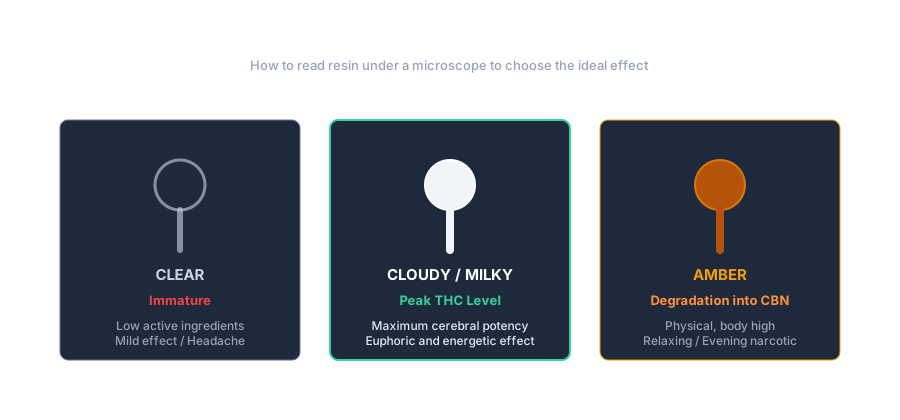
Trichome analysis is the most scientific and accurate practice of all, adopted by professional growers. To perform it, you need to equip yourself with a small pocket microscope with a zoom between 30x and 60x. Trichomes pass through three distinct colors during their maturation:
- Clear / Transparent: The trichomes are still young and developing; the active ingredients are not fully formed. This represents an immature harvest.
- Cloudy / Milky: When the active ingredients reach their peak concentration, the trichomes lose transparency and become an opaque white. Harvesting in this stage yields the strongest, most immediate, and intense effect (cerebral high).
- Amber: If you extend the wait by a few days, the active ingredients slowly begin to degrade, and the trichomes take on an amber-brown color. A harvest with a high percentage of amber trichomes offers a decidedly more relaxing, physical, and long-lasting effect (body stone), due to a higher conversion and presence of CBD.
Drying: Preserving Quality
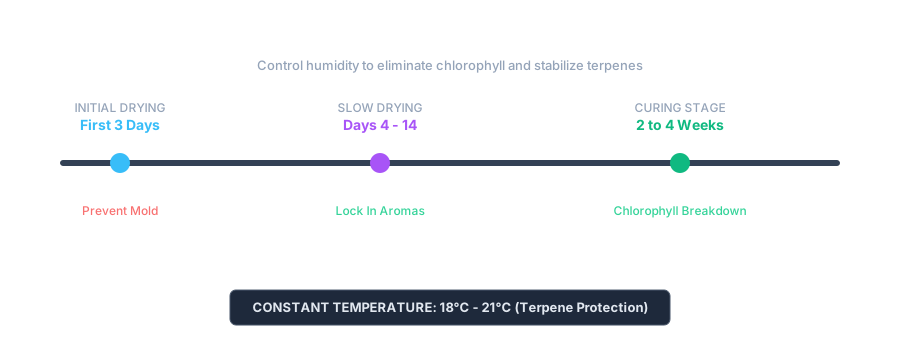
The drying stage is a crucial phase for keeping the organoleptic properties of the flowers intact. Excellent genetics can be completely ruined by incorrect drying. The environmental parameters to record and keep constantly under control are:
- Humidity in the first 3 days: It must strictly be maintained between 45% and 55% to prevent the risk of sudden mold.
- Subsequent Humidity: It can be raised to around 60-65% to slow down the process, allowing the most volatile aromas to bind into the flower.
- Stable Temperature: It must strictly hover between 18°C and 21°C to avoid thermal degradation of terpenes, flavonoids, and active ingredients.

Cannabis Curing: The Cult of the Cure
Curing stage is the aging process that follows drying. While it is not a mandatory step, it is a true cult for anyone wishing to transform good flowers into a product of absolute excellence.
Curing allows for the slow elimination of residual chlorophyll trapped within the innermost tissues of the flowers, which would otherwise impart a harsh taste of cut grass and make combustion difficult.
- Jar Phase: Place the dried buds inside glass jars or airtight vacuum containers.
- The Return of Moisture: After a few hours, you will notice that the flowers—which seemed dry before being jarred—will feel soft and damp again. This happens because the moisture and chlorophyll remaining in the core of the stem are moving outward.
- Air Exchange: During the first week, open the containers 2-3 times a day for a couple of minutes to let excess moisture evaporate. From the second week onward, opening can be reduced to once a day, and later to once every 2 or 3 days.
After about a month of proper aging, the sugar maturation process will be complete. The buds will have developed a strong, intense, and characteristic aromatic profile, and they will be ready to be safely stored for many months. The internal relative humidity within the jars during this phase must steadily stabilize between 58% and 63%.
(If you are interested in the art of curing, discover also the Lotus curing Cannabis technique—cold drying and curing!)

Annibale Team Tips
- Handle with Care: Avoid touching the flowers excessively with bare hands, especially when they are dry. The delicate trichome glands can break with extreme ease, compromising the final quality of the resin.
- Use Gloves: During harvesting and bud cleaning operations (trimming), always wear nitrile gloves to prevent the abundant resin from sticking your fingers to the scissors.
- No Rush: Haste is the grower’s worst enemy in the final stages. Respect the plant’s biological timing so as not to ruin months of hard work.
- Aim for the Top: Although curing requires time and patience, we highly recommend it to anyone seeking the ultimate therapeutic and flavor expression from their flowers. After all… isn’t a well-ripened mango infinitely better than an unripe one?

That’s all about cannabis maturation and when to harvest it. We hope this helped you discover a bit more about how and when to harvest Cannabis! Read our next article on “Cannabis Flowering Week by Week” and stay tuned!
See you soon, greetings from the Annibale Team!
Davide, CEO Founder & Geneticist