Common Molds in Cannabis Cultivation: A Diagnostic Guide
Welcome everyone to this new post on our blog dedicated to protecting your favorite genetics! After analyzing in detail how to correctly clone cannabis plants, fasten your seatbelts: the Annibale Seedshop staff takes you today into the microscopic and dangerous world of fungal pathogens.

The Invisible Threat: Introduction to Molds
The appearance of fungal spores inside a grow room or in an outdoor cultivation is not simply aesthetic damage: it is a silent killer. Molds act by rapidly degrading plant tissues, metabolizing sugars, and destroying the structure of trichomes.
In addition to wasting months of hard work and compromising the aromatic quality of the resin, cannabis contaminated by molds represents a serious health risk for the consumer. This is due to the production of stable mycotoxins that resist even high temperatures.
To help you identify and isolate the problem immediately, we have summarized the main attack vectors in this laboratory infographic.

Environmental Causes: How Molds Take Over
Fungi do not appear out of nowhere; their spores are constantly suspended in the air waiting for the perfect environmental trigger. The four critical factors that every grower must maintain absolute scientific control over are:
- High Relative Humidity (RH): Exceeding the threshold limit of 60-70% during the late flowering stage creates a humid microclimate inside the compact buds, offering the spores the free water required to germinate.
- Lack of Ventilation (Stagnant Air): Without dynamic internal recirculation, dangerous “pockets of humid air” are created around the leaves. The plant’s transpiration saturates the foliar boundary layer, accelerating the establishment of mycelia.
- Inadequate Thermal Fluctuations: Sharp temperature swings between the lights-on and lights-off phases (greater than 6-8°C) bring the environment to the dew point. Moisture condenses into physical micro-drops directly on the inflorescences, acting as an incubator for Botrytis.
- Incorrect Management of the Lighting Space: Using systems that generate unbalanced radiant heat or dense shadow zones prevents thermal homogeneity in the grow room, favoring the development of epiphytic fungi like Powdery Mildew (Oidio) in less illuminated areas.
IPM Protocol: 5 Golden Rules to Prevent Infections
Integrated Pest Management (IPM) is the only true efficient weapon against fungal pathogens. Once the mycelium is visible to the human eye, the internal structural damage has unfortunately already occurred.
1. Rigorous Management of the VPD (Vapor Pressure Deficit)
Do not limit yourself to monitoring fixed humidity. Calibrate your environmental controllers to maintain the VPD between 1.2 and 1.6 kPa during flowering, ensuring that relative humidity strictly stays between 40% and 50% in the final 4 weeks before harvest.
2. Airflow Architecture
Position oscillating fans so that air constantly caresses the lower part of the stem and the top of the cultivation, eliminating stagnant zones without directing violent and direct airflows onto the plants (avoiding windburn).
3. Strategic Defoliation and Lollipoping
Remove unproductive lower leaf tiers and thin out the inside of the grow at the beginning of flowering. This not only maximizes energy toward the main buds but also drastically increases airflow.
4. Supplementation of Organic Silicon (Potassium Silicate)
Administering silicon during the vegetative phase strengthens the cell walls of the leaf epidermis, creating a hard mechanical barrier that makes it difficult for the germ tubes of spores to penetrate.
5. Laboratory Hygiene and Prophylaxis
Use HEPA filters in the air intake to block external spores. Always sterilize shears with isopropyl alcohol between plants, and never enter the grow room wearing clothes worn outside.

The Harsh Compromise of the Cure: When to Intervene?
If you encounter an active contamination inside your grow room, the timeliness of your action determines the survival of the rest of the crop. However, we must be clear and honest: internal fungal tissue cannot be removed or “cured” inside a mature flower.
Emergency Guidelines:
- Instant Isolation: Temporarily turn off the fans before touching the infected plant to prevent vibrations from dispersing millions of volatile spores into the rest of the environment.
- Surgical Removal Below the Infected Area: Cut away the diseased part, including at least 5-10 cm of apparently healthy tissue underneath. The mycelium extends inside the stem long before manifesting on the outside. Enclose the infected part in a sealed bag before moving it.
- Organic Emergency Treatments: In case of Powdery Mildew in the vegetative phase or early flowering, it is possible to apply formulations based on Bacillus subtilis or water and potassium bicarbonate, which can alter the pH of the leaf surface, halting the replication of the fungus. Avoid any systemic chemical fungicide on stored or maturing flowers.
Health Risks: Why Moldy Cannabis Is Dangerous
Consuming contaminated inflorescences doesn’t just ruin the flavor; it puts the human biological system at serious risk.
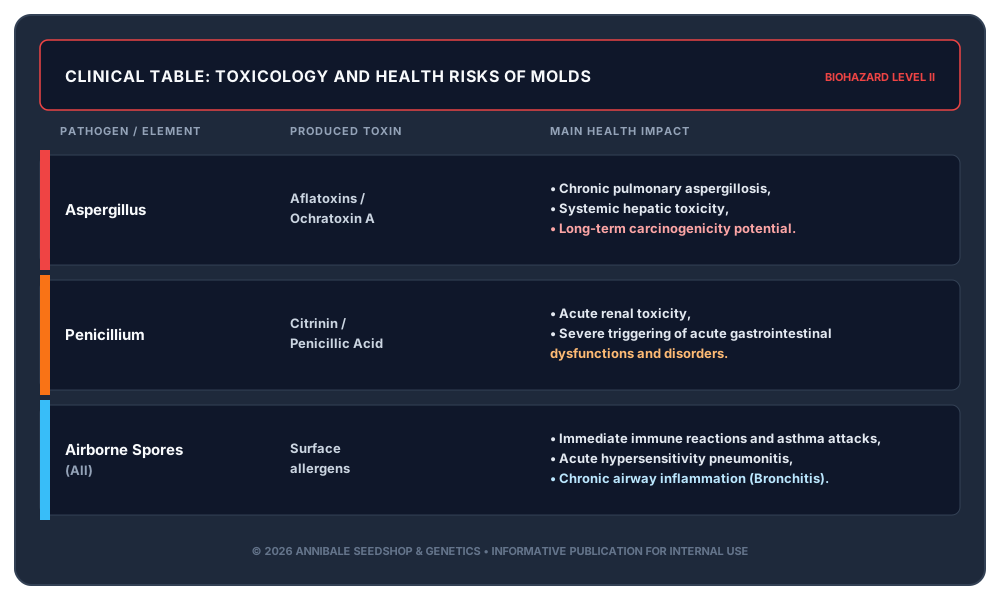
Warning: The process of combustion or vaporization does not destroy mycotoxins, which are chemically stable molecules at high temperatures. Inhaling live spores in immunocompromised or allergic individuals can give rise to deep lung infections that are extremely complex to eradicate with standard therapies.
Final Considerations…
Mold management separates amateur growers from industry professionals. Preserving the purity of cannabis means protecting the health of those who consume it and highlighting the original terpene profile of the genetics.
Monitor stable parameters, act ahead of time with prevention, and if a flower is compromised, have the courage to discard it: quality and safety come first. Consuming cannabis contaminated by molds can cause serious health problems, therefore it is essential to pay attention to product quality and ensure you obtain cannabis from reliable and controlled sources.

And this manual on the Main Molds in Cannabis Cultivation comes to an end. Hoping to have been of help, see you in the next article!
Best regards from the Annibale Seedshop Team!
Davide V, CEO, Founder & Geneticist