Cannabis Nutrient Deficiencies and Symptoms of Ill Health: Technical Guide 2026
Welcome to this cornerstone chapter of our Cultivation Manual, brought to you by the Annibale Seedshop & Genetics team. After analyzing the dangers and instrumental diagnostics of over-fertilization, we turn the coin over to address the opposite problem, which is just as destructive to commercial and therapeutic yields: nutrient deficiencies.
In the biological landscape of 2026, crop optimization leaves no room for guesswork. Recognizing a mineral deficit before it turns into a structural loss of biomass is what separates an amateur grower from a Master Grower. Cannabis is an extremely fast-growing plant; a deficiency left untreated within 48-72 hours can compromise internodal development, alter the hormonal profile, and drastically reduce cannabinoid synthesis.

The Physiology of Deficiencies: Mobile vs. Immobile Nutrients
To correctly diagnose a deficiency, the first golden rule shared across industry forums and niche laboratories concerns the mobility of chemical elements within the plant’s vascular tissues (xylem and phloem).
Mobile Nutrients (Nitrogen, Phosphorus, Potassium, Magnesium)
The plant, in an extreme survival effort, is capable of drawing these elements from its older parts to pump them toward the new upper shoots (apices), which are deemed vital for the continuation of the species.
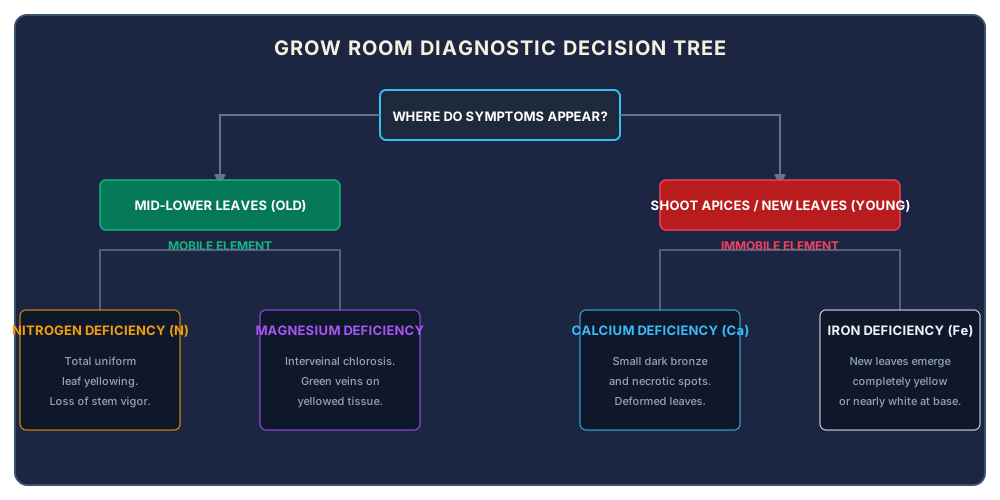
- Where to look for symptoms: Mobile nutrient deficiencies always manifest starting from the oldest, lowest leaves of the plant.
- Progression: The basal leaves turn yellow or show necrosis, while the top of the plant temporarily continues to look green and healthy.
Immobile Nutrients (Calcium, Iron, Sulfur)
These structural elements, once assimilated and fixed into cell walls, remain locked in place. The plant lacks the biochemical ability to translocate them to new growth zones.
- Where to look for symptoms: Immobile nutrient deficiencies manifest immediately on young leaves, new shoots, and the upper apices.
- Progression: The base of the plant remains green, while new growth emerges deformed, chlorotic, or spotted.
5 Negative Effects of Deficiencies on Harvest Quality
An insufficient feeding regimen does not simply result in a smaller plant; it destroys the qualitative and excellence parameters of the inflorescences:
- Stunted Structural Development: A lack of building-block elements reduces cell division. Stems remain thin, fragile, and unable to support the weight of the buds during late flowering.
- Chlorosis and Loss of Photosynthetic Efficiency: When leaves fade and lose chlorophyll, the plant loses its “power plant.” The ability to convert light (photons) into sugars plummets vertically.
- Thin, Loose, and Resinless Flowers: Without the correct supply of macroelements during the flowering phase, calyxes fail to swell. The buds turn out light, airy, lacking substance, and with a drastically lower trichome density.
- Collapse of the Plant Immune System: A malnourished plant stops producing secondary metabolites (such as terpenes and flavonoids) that act as a natural defensive barrier. The result is total vulnerability to attacks by mites, thrips, and root fungi (Fusarium).
- Compromised Organoleptic Profile: Nutrient deficits alter enzymatic synthesis. Even if subjected to a perfect final flush (flushing), deficient cannabis develops dull, hay-like aromas, devoid of those sharp terpene notes characteristic of pedigree genetics.

Visual Pathological Atlas of the Cannabis Leaf
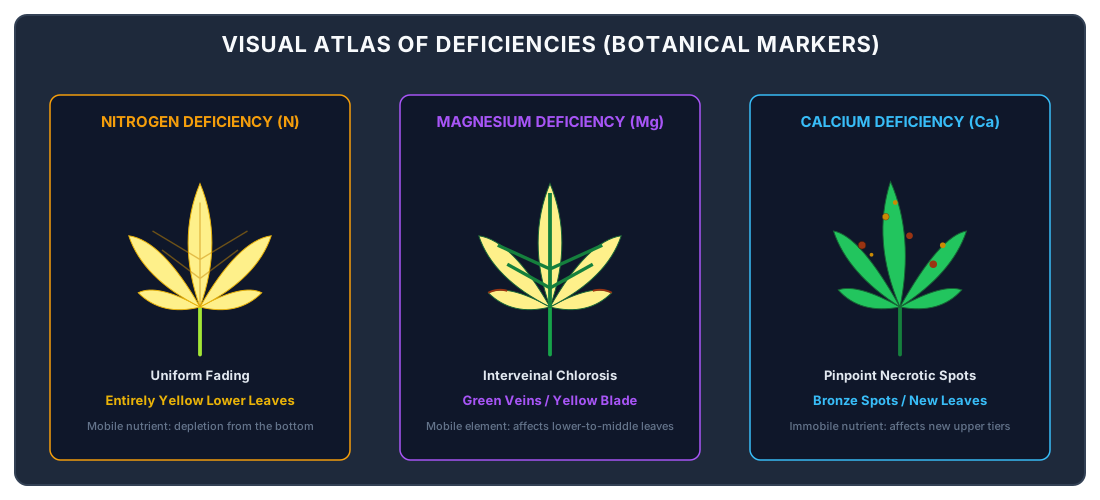
Let’s move on to the microscopic analysis of the three most common deficiency markers in indoor and outdoor cultivation. Carefully observe the color alterations and the geometry of the spots broken down below.
Nitrogen Deficiency (N) – Mobile Element
Visual symptoms: Begins with a uniform fading of the lower leaves, shifting from lime green to pale yellow. The leaf veins lose color along with the blade. In advanced stages, the leaf dries up and falls off spontaneously.
Magnesium Deficiency (Mg) – Mobile Element
Visual symptoms: Showcases classic interveinal chlorosis. The main veins of the leaf remain a dark, sharp green, while the space between them progressively yellows. Later, rust-colored necrotic spots appear on the edges.
Calcium Deficiency (Ca) – Immobile Element
Visual symptoms: Affects the upper part of the plant. It presents as micro-necrotic spots of a brown, bronze, or golden color, primarily concentrated on young leaves. Leaf tips may curl abnormally and show signs of glassy brittleness.
Nutrient Lockout: The False Deficiency
A frequent strategic mistake is identifying a visual deficiency and rushing to add more fertilizer to the reservoir or pot. In most cases in 2026, the deficiency is not caused by a lack of elements in the substrate, but by a biochemical blockade known as Nutrient Lockout.
If the pH of the soil or irrigation water drifts outside optimal ranges, the roots lose their electrolytic ability to bind to fertilizer ions. For example, if you water in soil with a pH below 5.5, Magnesium and Calcium become chemically unavailable: the plant will display a deficiency even if the soil is literally saturated with them. Feeding more fertilizer in this situation will spike the EC to toxic levels, causing a nutrient burn on top of the pre-existing deficiency.
Diagnostic Protocol: Mobile vs. Immobile
To map out deficits in the garden without making interpretation errors, use this logical flowchart structured on professional agronomic evidence:
Solutions and Cures: Organic and Mineral Protocols
Once the actual deficiency is confirmed (and you have verified that the runoff pH is correct), you can apply two distinct therapeutic strategies depending on your grow room’s cultivation philosophy.
Natural and Organic Cures (Regenerative Approach)
Ideal for organic soil grows (living soil) and for preserving the rhizosphere microbiology intact.
- Addition of Compost and Worm Castings (Humus): Applying a top-dressing layer of fresh worm castings supplies humic and fulvic acids, restoring slow-release Nitrogen reserves without aggressive impacts on the roots.
- Use of Rock Dust and Guano: Bat or seabird guano guarantees a boost of bio-available organic Phosphorus, perfect for correcting mid-flowering deficits.
- Botanical Teas and Liquid Ferments: Aerated compost teas or homemade stinging nettle ferments act as micro-biotic supplements. They colonize the soil with mycorrhizal fungi and beneficial bacteria (PGPR), increasing the cation exchange capacity (CEC) of the roots and unlocking inert minerals trapped in the soil.
Technical and Chemical Cures (Targeted Emergency Intervention)
Mandatory in hydroponic systems, coco coir, or when the deficit is severe and risks killing the plant within a few hours.
- Chelated Mineral Mono-Nutrients: Utilizing targeted liquid supplements (such as specific Cal-Mag formulas or Iron chelates) allows you to correct the deficit instantly. Chelated minerals are electrically stable and are absorbed by the roots in record time.
- Foliar Feeding: This is the most effective secret weapon for emergency recovery. Spraying an extremely diluted mineral nutrient solution directly onto the underside of the leaves (where the stomata reside) allows the plant to assimilate nutrients, completely bypassing a locked root system.
Annibale’s Tip: Always perform foliar feeding with the lights off or during the early hours of dawn (outdoors) to avoid the magnifying glass effect, which would burn the leaves, and to take advantage of the natural maximum opening of the stomata.
Conclusions: The Perfect Diet According to Annibale Seedshop
Solving nutrient deficiencies in cannabis is not about overfeeding the plant, but tuning into its biochemical flows. Remember that leaves affected by advanced necrosis or chlorosis will never turn completely green again: the success of your cure is measured by observing the health of the new growth tiers that develop after the intervention.
Maintain constant monitoring of your runoff EC, respect pH ranges, and treat fertilizers as precision instruments, not cheap miracle solutions.
And this post on Common Symptoms of Fertilizer Deficiencies in cannabis cultivation comes to an end. Hoping to have been of help, see you in the next article!
Best regards from the Annibale Seedshop Team!
Davide V, CEO, Founder & Geneticist