Complete Guide to Outdoor Cannabis Cultivation
Welcome everyone to this massive new chapter of our blog, brought to you by Annibale Seedshop & Genetics. If you have already gone through our indoor germination manuals and mastered the millimetric art of structuring the perfect living substrate, get ready: today, we are tearing down the walls of the grow room. We are stepping out into the open air, where nature dictates the rules and the sun reigns as the undisputed king of biological energy.
Outdoor Cannabis cultivation is not simply a matter of “planting a seed in a field and hoping for the best.” It is a macroscopic science—a dynamic interaction between climatology, soil chemistry, soil microbiology, and resilient genetics. This cornerstone guide is designed to dissect every single millimeter of the outdoor biological cycle, blending our direct experience with the debates and scientific data emerging from the world’s largest and most demanding underground communities: ICMag, THCFarmer, Reddit (r/outdoorgrowing), and the historic pages of High Times.
Get comfortable. Whether you are an urban balcony grower or a guerrilla cultivator in the most remote woods, this is your passport to a record-breaking outdoor harvest.

Sunlight vs Artificial Flow: The Physics of Natural Full-Spectrum
No matter how far modern engineering has come—as documented in our in-depth guide on Indoor Cultivation LED Lamps—no man-made diode will ever match the quantum perfection of the sun.
The Quality of the Solar Spectrum
The sun does not limit its emission to the Photosynthetically Active Radiation (PAR) band. It bathes plants in a continuous spectrum that includes critical frequencies such as UV-A, UV-B, and far-red (Far-Red).
- UV-B Radiation: Functions as an immunomodulator and a beneficial stress factor. The Cannabis plant reacts to ultraviolet radiation by thickening its cell walls and increasing resin production in the glandular trichomes. The resin acts as a natural “sunscreen” to protect developing seeds, concentrating percentages of cannabinoids and volatile terpenes that are difficult to replicate indoors without specialist CMH or LEC bulbs.
- Infrared and Hormonal Push: The natural transition of the seasons changes the angle of incidence of the sun’s rays, enriching the spectrum with red and far-red frequencies toward the end of summer. This communicates to the plant, via phytochromes, that it is time to trigger a clear hormonal shift toward explosive flowering.
The Economic Factor and Biomassa
Indoors, every single millimeter of light penetration is paid for on the electricity bill. Outdoors, solar energy is completely free and does not suffer from the geometric intensity drop-off that forces indoor growers to strip away lower branches. Out in the open, a plant with unrestricted root space can penetrate deep into the ground, build stalks as thick as trees, and easily exceed 3 meters in height, converting free photons into kilograms of dry flowers per individual specimen.
Climatology, Latitudes, and the Global Photoperiod Calendar
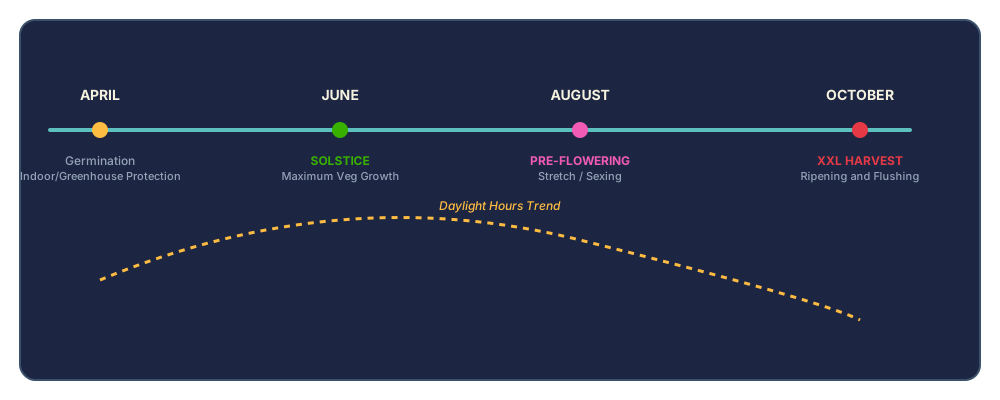
The success of an outdoor cycle is written in the astronomical clock of your latitude. Cannabis is a short-day photoperiod plant: it vegetates when light hours exceed a certain critical hormonal threshold (generally 14-16 hours) and transitions to flowering when the nights lengthen, stabilizing around a biological cycle of 12 hours of uninterrupted darkness.
The Outdoor Calendar Across Macro-Regions
- Central-Southern Europe and the Mediterranean Area: A grower’s paradise. The season opens between mid-April and early May, once the risk of late frosts is completely gone. Plants enjoy long, hot, dry summers—perfect for pushing long-flowering photoperiod strains (stretching into late October or early November for Sativa-dominant genetics).
- Northern Europe and Alpine Regions: Here, time is the enemy. Spring arrives late (late May) and autumn knocks on the door as early as the beginning of September with constant rains and drastic temperature drops. In these microclimates, ICMag growers prefer fast autoflowering varieties or photoperiod “Fast Version” hybrids capable of maturing before botrytis destroys the flowers.
- Tropical and Equatorial Regions: In these zones, the photoperiod remains stable close to 12 hours of constant light year-round. Native photoperiod plants tend to flower almost immediately after a very brief vegetative phase. To grow giant trees at these latitudes, cultivators must implement supplemental artificial lighting in the field to artificially extend the vegetative phase before inducing natural flowering.
Soil Science: Creating Regenerative Super-Soil
If there is one topic where the historic threads of THCFarmer and specialized sub-Reddits show absolute convergence, it is this: the soil is the plant’s digestive system. Using synthetic liquid chemical fertilizers outdoors is an outdated approach that leaches nutrients into the groundwater and kills native microflora. The gold standard in recent years is organic, regenerative Super-Soil.
The Role of the Soil Food Web
Creating living soil means feeding the earth so that the earth itself feeds the plant osmotically, self-regulating the pH without any need for acidifying chemical adjusters.
- Mycorrhizal Fungi (e.g., Glomus intraradices): Mycorrhizae establish a cellular symbiosis with Cannabis roots, extending the effective surface area of the root system by up to 700%. They unlock phosphorus bound to soil minerals, making it immediately bioavailable during flowering.
- Rhizospheric Bacteria: They break down complex organic matter, releasing readily assimilable nitrogen and secreting natural substances that stimulate the plant’s Systemic Acquired Resistance (SAR) against diseases.
Elite Recipe for a Professional Outdoor Substrate
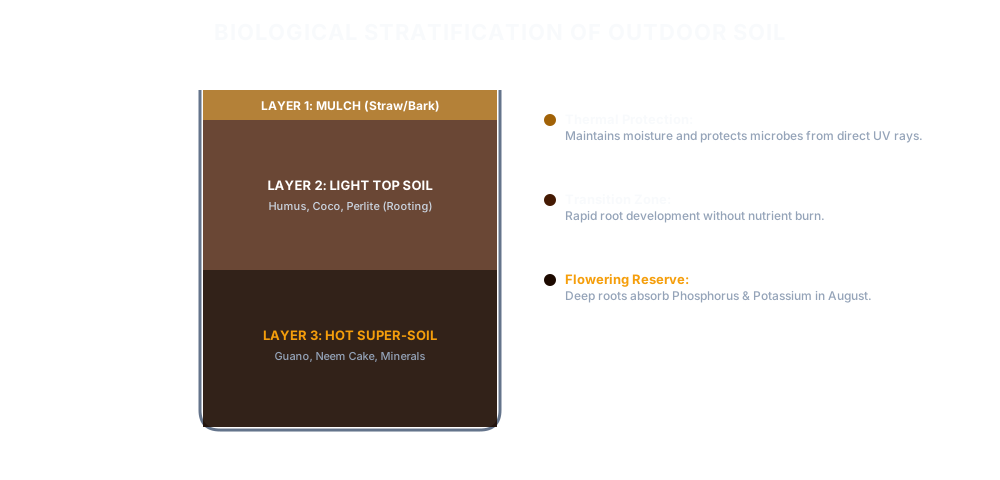
To prepare a super-soil to be layered in large fabric pots (Smart Pots from 50 to 100 liters) or directly into holes dug in open ground, the organic base must be rich and balanced:
- Structural Base (60%): Composed of equal parts blonde sphagnum peat moss, sterilized coco coir (to ensure aeration and moisture retention), and coarse-grained expanded perlite.
- Primary Organic Nutrition (20%): High-quality, pure worm castings (humus). Earthworm humus provides live enzymes as well as humic and fulvic acids that stabilize the soil’s Cation Exchange Capacity (CEC).
- Slow-Release Amendments (20%): A synergistic mix consisting of: Neem Cake/Meal: Performs a dual action; it feeds the soil and acts as a powerful preventive systemic defense against nematodes and root-gnat larvae; Bat Guano (High Phosphorus): Indispensable for future flower development; Siliceous or Basaltic Rock Dust: Supplies silicon, which is fundamental to strengthening the cell walls of the stalks so they can withstand strong summer winds and the heavy weight of the buds; Alfalfa Meal: Contains triacontanol, a potent, entirely natural growth hormone that accelerates cellular development.
Environmental Comparison: Outdoor vs Indoor vs Greenhouse
The choice of cultivation method defines the structural boundaries of your harvest. There is no absolute superior method, but there is an ideal solution for your specific resources.
Pure Outdoor
The original organic method. The advantages lie in the elimination of energy costs for lighting and climate control, combined with an immense potential yield per plant. The main disadvantage is total exposure to weather events: summer hailstorms, extreme heatwaves, windstorms, or early rainy autumns can jeopardize months of hard work in just a few days. Furthermore, privacy requires meticulous management of visual and olfactory barriers to avoid unwanted attention.
Indoor (Grow Room)
Growing indoor offers absolute microscopic control over every single parameter: photoperiod precise to the minute, calibrated light spectrum, constant temperatures, millimetric humidity, and continuous ventilation. This level of isolation eliminates weather risks and maximizes the aesthetic density of the flower, but comes at the cost of a significant initial investment and ongoing fixed electricity costs, while drastically limiting the vertical geometric development of the plants.
Greenhouse
The true evolutionary synthesis of both philosophies. The greenhouse captures the free photonic power of the sun while filtering it through polycarbonate panels or diffusing plastic films that physically protect plants from rain, hail, and heavy winds. In advanced technological variants (Light Deprivation), greenhouses allow growers to artificially black out plants using automated tarps, making it possible to induce flowering in the middle of June or July and achieve multiple outdoor harvests within the same calendar year.

Integrated Pest Management (IPM) and Companion Planting
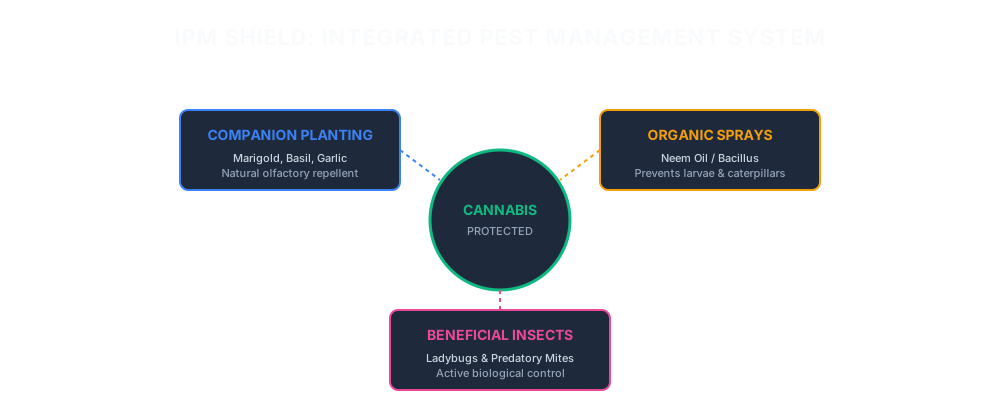
Outdoors, a sterile grow room does not exist. Your garden will become part of an ecosystem populated by insects, arthropods, birds, and fungi. The mindset of the modern grower does not involve chemical eradication with synthetic insecticides (which are highly toxic to the end consumer and destructive to bees); instead, it focuses on implementing a rigorous Integrated Pest Management (IPM) strategy.
Beneficial Companion Planting
Following the ecological trends widely discussed on Reddit, growing companion plants within the same perimeter as Cannabis creates an impressive natural defensive barrier:
- Basil and Mint: They emit intense essential oils that confuse the olfactory systems of devastating pests like thrips, whiteflies, and the infamous red spider mite.
- Tagete (Marigold): Its roots secrete chemical compounds that repel soil nematodes, while its bright orange flowers attract syrphid flies (hoverflies) in droves, whose larvae are ferocious predators of aphids.
- Garlic: Planted near the base of the Cannabis, it acts as a powerful, natural preventive antifungal agent against root infections.
Professional-Grade Organic Preventive Treatments
Prevention must be set up on a weekly schedule throughout the entire vegetative phase, stopping definitively only at the appearance of the first structured flowers:
- Water-Soluble Neem Oil (Cold-Pressed): Neem oil contains azadirachtin, a natural active ingredient that disrupts the hormonal systems of chewing pests, preventing them from reproducing and molting.
- Bacillus thuringiensis (var. kurstaki): A fundamental entomopathogenic bacterium. Sprayed onto the foliar mass, it selectively eliminates caterpillar larvae before they can bore into the stalks or buds in late summer, preventing the subsequent onset of bud rot and botrytis.
In-Depth Analysis of Strains Suited for the Outdoors
Genetic selection represents over 50% of the final success of an outdoor plantation. Each strain possesses specific evolutionary traits tailored to distinct microclimatic patterns.
Nepal Jam (Ace Seeds)
- Cannabinoid Profile: High THC concentration with a moderate, relaxing presence of CBD.
- Aromatic Profile: Deep notes of wet earth, fine wood, and oriental spices.
- Cultivation Dynamics: A Sativa hybrid of extraordinary compactness. It develops thick leaves with narrow fingers, showing exceptional tolerance to cool mountain climates and high-altitude winds. It has an innate resistance to morning frosts and finishes maturing between late September and early October.
- Why it thrives outdoors: Nepal Jam is the ideal choice for those growing at high elevations or in hilly areas exposed to abrupt autumn temperature drops.
Moroccan Beldia (Ace Seeds)
- Cannabinoid Profile: A balanced, even ratio between THC and CBD, inheriting the classic profiles of traditional landrace hashish.
- Aromatic Profile: Sweet, honeyed, with spicy hints of medicinal herbs and cedar wood.
- Cultivation Dynamics: This landrace variety is genetically programmed to survive under conditions of extreme water scarcity. It features an exceptionally early flowering cycle, triggering as soon as it senses slight shifts in the summer solar tilt, pulling harvests forward to late August or early September.
- Why it thrives outdoors: Moroccan Beldia is perfect for arid, hot, dry southern regions. Its precociousness allows it to completely dodge autumn rains.
Holland’s Hope (Dutch Passion)
- Cannabinoid Profile: Moderate THC concentration with low CBD levels; delivers a classic, relaxing body stone.
- Aromatic Profile: Earthy, musky, with undertones of tart wild berries.
- Cultivation Dynamics: Developed specifically in the 1980s for the cold, wet climate of the Netherlands. It is a structurally robust, Indica-dominant plant with wide leaves and short, thick stalks that withstand high physical stress.
- Why it thrives outdoors: Holland’s Hope is an absolute insurance policy against gray mold. Its infiorescences manage to complete maturation even in the presence of high humidity levels and frequent rainfall.
Durban Poison
- Cannabinoid Profile: Very high levels of pure THC, almost devoid of CBD. Delivers a cerebral, energetic, and stimulating effect.
- Aromatic Profile: One of a kind; dominant notes of anise, licorice, fresh citrus, and sharp spices.
- Cultivation Dynamics: A pure Sativa native to South Africa. It develops a massive structure with long, vigorous lateral branches. Despite its Sativa nature, it possesses a surprisingly fast flowering time for its category, wrapping up its cycle by late September.
- Why it thrives outdoors: Durban Poison excels in temperate and warm climates, excellently tolerating summer heat spikes while delivering massive commercial yields thanks to the sheer length of its main colas.
Frisian Dew (Dutch Passion)
- Cannabinoid Profile: A balanced profile offering physical relaxation paired with a pleasant mental clarity.
- Aromatic Profile: Sweet, fruity, with hints of caramel and wild pine.
- Cultivation Dynamics: A masterpiece of outdoor genetic engineering. It showcases phenotypes with gorgeous violet and purple hues across the calyxes. It features an imposing structure and requires very little nutritional attention, tolerating poor soils well.
- Why it thrives outdoors: Frisian Dew is considered one of the toughest plants in existence against the temperate and cold climates of Northern Europe, enduring autumn weather swings beautifully without slowing down its bloom.

(Moroccan Beldia – Khalifa Genetics)
Harvesting in the Rain and Field Safety: Underground Tips
As the season draws to a close between September and October, forums like ICMag fill up with emergency threads. Your management of the final two weeks before harvest determines the actual success of the entire cycle.
Managing the Flush (Flushing)
Outdoors, flushing (watering with pure water to force the plant to consume its stored nutrient reserves in the leaves, improving the bud’s flavor and burn) can be tricky due to unpredictable rains. If your super-soil was structured in a purely organic way, a drastic flush isn’t strictly necessary: the soil microflora will naturally reduce nutrient uptake as ground temperatures drop.
Rain Emergencies and Mold
If weather forecasts signal uninterrupted, torrential rain just days away from the trichomes’ ideal maturity point, expert growers on THCFarmer almost unanimously advise pulling the harvest a few days early. Allowing dense, compact flowers to soak up cold rainwater late in the season, without subsequent sun to dry them out quickly, means facing an almost certain risk of losing the entire crop to botrytis in less than 48 hours.
Security and Traceability
For those grow a guerrilla setup in the woods or remote plots, the golden rule is maximum discretion. Do not create beaten paths by walking over the exact same grass every time you visit the site, camouflage your pots with native vegetation, and install robust support systems to prevent your plants from being knocked down by late-summer storms.
FAQ: Frequently Asked Questions about Outdoor Cannabis Cultivation
When is the exact moment to transplant plants into open ground outdoors?
The baseline parameter is not the calendar, but the minimum temperature of the soil and air. Never transplant outdoors as long as nighttime temperatures consistently drop below 12-14°C. Excessive cold in the early stages permanently stunts the root system, miniaturizing the plant. Many growers start germination indoors under small CFL lamps or LEDs for the first 2-3 weeks, bringing already robust seedlings outside that are ready to handle the elements.
How can I protect outdoor plants from extreme summer heatwaves (35°C+)?
With climate change, intense heatwaves have become a concrete danger. Cannabis roots suffer tremendously when the soil overheats. To protect them, apply a layer of organic mulch (straw or pine bark) at least 5-8 cm thick across the soil surface to keep the substrate cool. If you are growing in pots on a balcony, absolutely avoid black plastic pots; choose white fabric Smart Pots instead, and elevate them off the ground to prevent direct conductive heat transfer from the flooring.
Are autoflowering varieties better than photoperiod ones for outdoor cultivation?
It depends entirely on your microclimate and space requirements. Autoflowers are exceptional for those living in areas with short summers and very humid autumns, as they complete their cycle in about 70-80 days from germination. This allows you to harvest in mid-July, at the peak of summer, completely avoiding autumn molds. On the flip side, photoperiod strains offer an immensely superior quantitative yield, along with an aromatic and structural complexity that autoflowers still struggle to fully match.
How do I know when my outdoor plant has started flowering?
At European latitudes, the visible transition generally occurs between the beginning and middle of August. You will notice a structural change at the tips of the branches: leaves will start growing closer together, taking on a “rosette” appearance, and the first white filaments (pistils) will emerge from the small calyxes located at the internodes. From this point forward, the plant will progressively reduce vegetative growth to focus all its resources on building floral biomass.
Is it really necessary to adjust water pH when growing outdoors in super-soil?
No, and that is precisely one of the greatest advantages of organic super-soil. The humic complexes stored in the worm castings and the symbiotic action of mycorrhizal fungi act as a formidable natural buffer. As long as your irrigation water stays within acceptable standard values (between 6.2 and 7.8), the soil microflora is perfectly capable of autonomously adjusting the pH in the rhizosphere, optimizing nutrient uptake without any need for corrective chemical acids (like phosphoric or nitric-based pH Down).

If you are having trouble choosing which outdoor seeds to buy, feel free to reach out to our 24/7 support line without hesitation!
Conclusions…
Outdoor cannabis cultivation offers unique opportunities to harness solar energy and the natural environment. By taking fundamental requirements into account, choosing the best locations and times to plant, weighing the differences compared to indoor and greenhouse growing, and selecting the most suitable cannabis seeds, you can achieve high-quality cannabis harvests in the great outdoors.
And that is all for this article on how to grow Cannabis outdoors. Hoping to have been of help, we will see you in the next article!
Greetings from the Annibale Seedshop Team, and good luck on your outdoor cannabis cultivation adventure!
Davide V, CEO, Founder & Geneticist