Cannabis Curing and Aging Technique
Welcome everyone to this new installment of the advanced cultivation manual by Annibale Seedshop. Today, we will focus on a phase that is as crucial as it is often underestimated: the curing and aging of Cannabis.
If you have religiously followed our instructions in the previous chapter dedicated to Marijuana drying stage, you will have buds in your hands that are dry on the surface but ready to unleash their true chemical and organoleptic potential. Curing is not just a collector’s whim, but the final biochemical act that transforms ordinary weed into a true connoisseur’s delicacy.

What Is Curing and Why It Radically Changes the Product
Many growers, especially beginners, think that once the branches snap with a clean “crack,” the job is done. Anxious to test the fruit of months of hard work, they grind a bud and light up. The result? Often a harsh, bitter smoke that scratches the throat and leaves a persistent aftertaste of hay or cut grass, even though the scent of the live plant was exceptional.
This happens because the bud still contains large amounts of chlorophyll, starches, and mineral salts trapped within the internal plant tissues. Curing (or curing) is exactly for this: initiating a controlled process of anaerobic decomposition and sugar breakdown.
The Chemical Benefits of Aging:
- Chlorophyll Degradation: Beneficial enzymes and bacteria consume the chlorophyll present in the buds. By eliminating this pigment, that harsh, “green” taste disappears, making way for the strain’s true terpene profile.
- Terpene and Flavonoid Fixing: Volatile aromatic molecules stabilize within the resinous matrix of the trichomes, intensifying the flavor and aroma with each passing week.
- Cannabinoid Evolution: During curing, cannabinoids continue a slow synthesis and partial decarboxylation. This makes the action spectrum of THC and other compounds cleaner, more potent, and longer-lasting, reducing the smoke-induced anxiety often associated with uncured products.
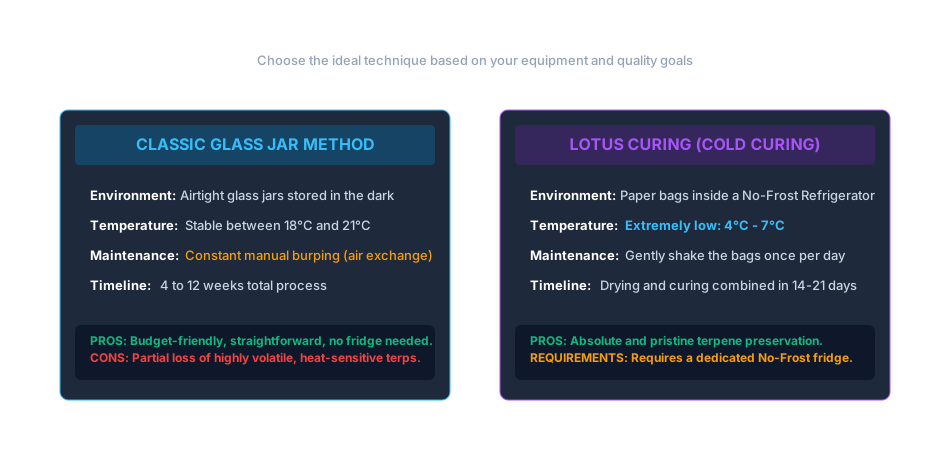
The Classic Method: Aging in Glass Jars
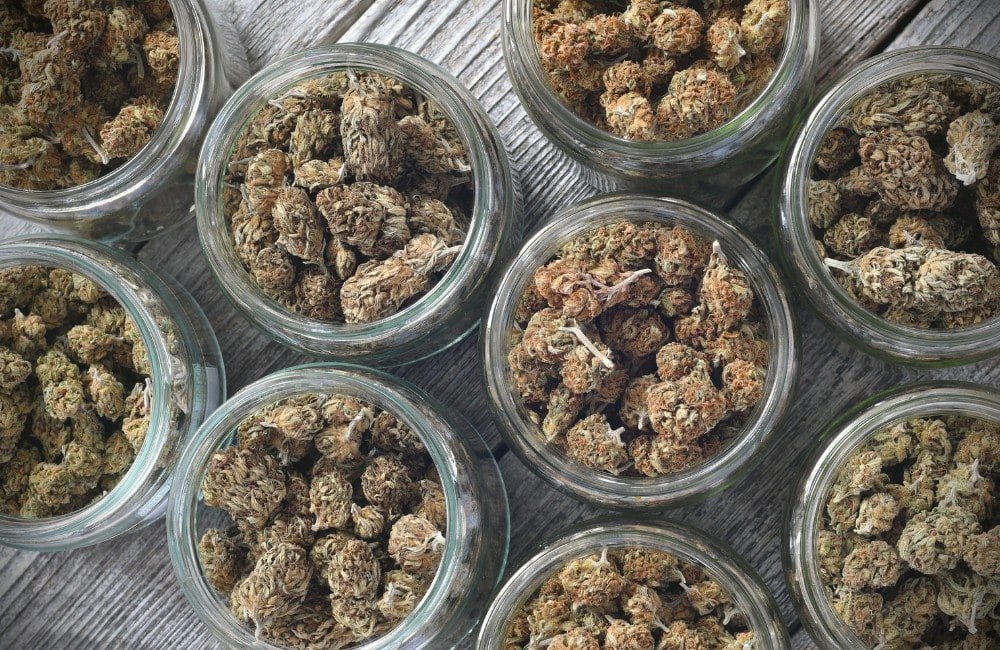
The traditional method, tested by generations of growers, involves using glass jars with an airtight clamp or screw lid (like Mason Jars). Glass is an inert material that does not release chemical residues and allows for constant visual monitoring.
The 3/4 Rule and Room to Maneuver
Jars must never be filled to the brim. Compressing the buds means crushing the trichomes and creating zones without airflow—the perfect environment for mold proliferation. Fill the jars to a maximum of 3/4 of their volume. For example, a classic 1-liter jar can comfortably and safely accommodate about 24-30 grams of dried buds.
The Burping Protocol
Classic curing requires consistency. The residual moisture hidden in the heart of the flowers will gradually rise to the outside, softening the bud again. To evacuate this saturated air, you must follow a strict schedule:
- Week 1 (The Critical Phase): Open the jars 3 times a day for about 2 minutes per session. Visually inspect the buds and shake the jar gently to prevent them from clumping together.
- Week 2: Reduce openings to 1 or 2 times a day, shortening the time to 1 minute.
- Weeks 3 and 4: It will be enough to open the jars once every 2 or 3 days for just 30 seconds.
- Beyond the First Month: If the parameters are stable, the jar can remain sealed, opening it only once a week for a routine check.
The New Frontier of Curing: Lotus Curing (Cold Curing)
For elite commercial growers and lovers of maximum organoleptic purity, there is a cutting-edge technique born to solve the number one problem of aging: the evaporation of precious terpenes.
The lightest monoterpenes (such as myrcene and limonene) begin to volatilize at temperatures above 20°C. If the environment where you perform classic curing is too hot, you will inevitably lose a large percentage of the original aromatic spectrum. Lotus Curing solves this problem by moving the entire drying and curing process inside a controlled refrigerated environment (a dedicated refrigerator).
How Lotus Curing Works Step-by-Step:
- Obsessive Trimming: Immediately after cutting, perform a deep cleaning of the buds (wet trimming), completely removing every single non-resinous leaf.
- The Use of Paper Bags: Instead of using glass, place the damp buds inside clean brown paper bags (classic bread bags), without packing them together. The paper acts as an osmotic membrane, absorbing the moisture released by the flowers and slowly releasing it into the refrigerator environment.
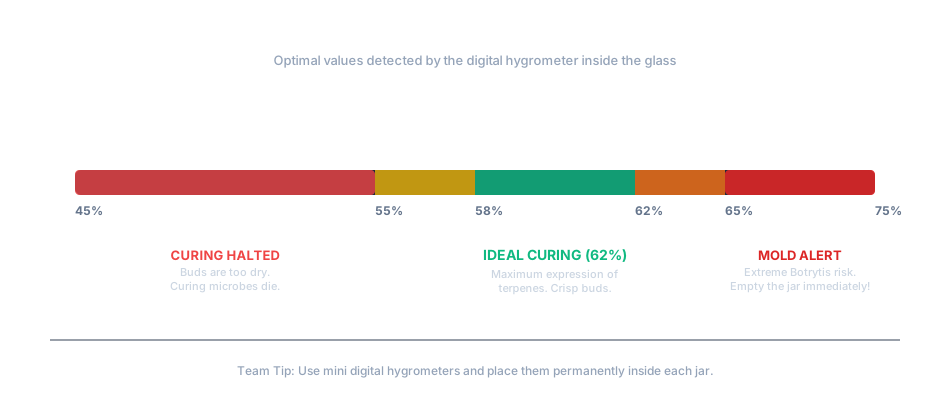
- Refrigerator Setup: The refrigerator should preferably be a No-Frost model (a system that continuously dehumidifies the air). Internal parameters must be locked between 4°C and 7°C, with a stable internal relative humidity around 55% – 62%.
- Mechanical Action: Once a day, take the bags out and shake them very gently to redistribute the buds and promote even drying. The process lasts from 14 to 21 days. The flowers will turn out perfectly cold-cured, keeping vivid colors intact (greens remain bright, purples intense) and a terpene load doubled compared to the traditional method.
Troubleshooting and Long-Term Storage
Even with the utmost care, something can go wrong due to climate instability or imperfect initial drying. Here is how to intervene promptly:
- Buds Too Damp (>65% RH): If the hygrometer rises beyond warning levels or you smell ammonia, remove the flowers from the jar immediately. Spread them out on a cardboard tray in a dark, ventilated place for 24-48 hours before putting them back under glass. Ignoring this signal means losing the entire harvest to gray mold.
- Buds Too Dry (<55% RH): If you overdid the drying and humidity drops below 55%, the biological curing process stops permanently because the beneficial bacteria die. You can try to revitalize the flowers by placing two-way humidity control packs (regulated at 62%) inside the jar, which release pure moisture without altering flavors. Avoid old grandmas’ remedies like orange peels or fresh leaves, which introduce harmful fungal spores.
- Long-Term Storage (>6 months): If you achieved a bountiful harvest and want to keep it unaltered for over a year, the best method after a proper two-month cure is vacuum-seal freezing. Seal the flowers in specialized bags with the air removed and place them in the freezer. When you decide to use them, let the bag thaw completely at room temperature before opening it, to prevent external condensation from wetting the frozen flowers.

The Golden Tips from Annibale Seedshop
- Obsessive Hygiene: Handle the flowers as little as possible. Use disposable nitrile gloves or wash your hands thoroughly. Skin bacteria or dirt residues can alter the jar’s enzymatic processes.
- Constant Light Monitoring: Jars must absolutely be kept in the dark. Sunlight or UV rays destroy the chemical bonds of THC, rapidly converting it into CBN (a non-psychoactive but heavily sleep-inducing cannabinoid). Use dedicated cabinets or dark/Miron glass jars.
- Do Not Rush: Treat your weed like a fine wine. A month of curing is the bare minimum, but it is between the second and third month that the qualitative peaks of flavor will blow you away.
That’s all regarding Cannabis curing, or weed aging. We hope it allowed you to discover more about the fascinating technique of cannabis curing.
Now that you know how to store and cure Marijuana, read our next article on the “Sea of Green technique” and stay tuned!
See you soon, greetings from the Annibale Team!
Davide, CEO, Founder & Geneticist