Moroccan Beldia represents the botanical recovery of one of the most important lineages in the history of hashish production in the Rif. This 100% pure landrace is the traditional Moroccan variety used for centuries to produce the legendary “Kif”.
Unlike modern hybrid varieties recently introduced in Morocco, Beldia stands out for an extremely fast life cycle and semi-autoflowering behavior, developed through generations of adaptation to arid conditions and late spring planting. It is a technical genetic line, essential for breeders and those wishing to preserve a pure lineage before its definitive extinction in the wild.
Moroccan Beldia Feminized in brief
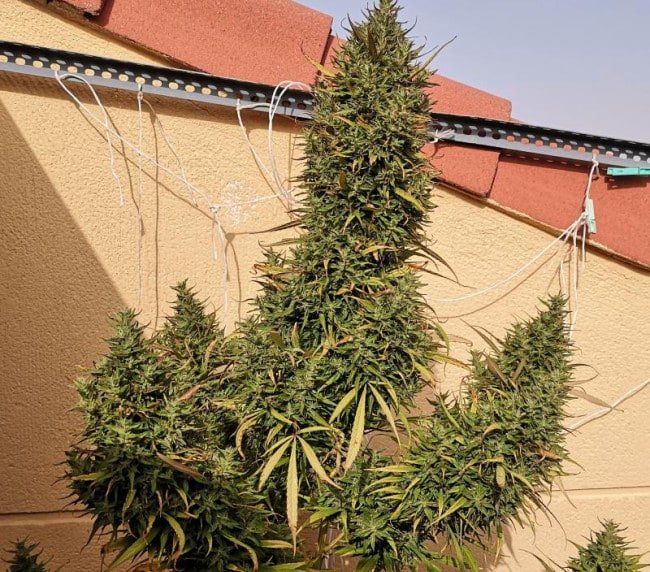
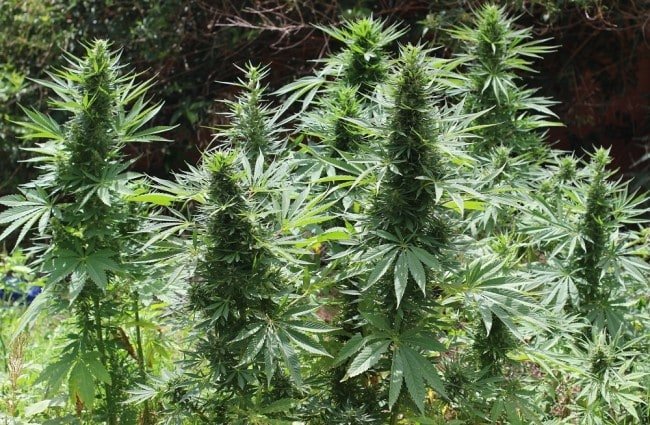
Moroccan Beldia is a pure sativa characterized by unparalleled flowering speed, completing the indoor cycle in just 7-8 weeks. It is a small to medium-sized plant, with narrow leaves and low-volume calyxes densely covered in viscous resin.
With moderate THC levels (2.5-5%) and a significant CBD presence, it offers a functional and clear experience. Indoor production stands at 400-450 g/m², while outdoors it shines for its ability to finish maturation in August or early September, completely avoiding autumn rains.
Technical Sheet
- Genetics: Pure Moroccan Landrace (Rif Mountains)
- Type: Pure Sativa (100%)
- Flowering: 7 – 8 weeks
- Harvest: August / Early September (Outdoor)
- Height: Low / Medium (60 – 90 cm indoors)
- Cannabinoids: THC 2.5-5%, CBD 0.5-2%
- Terpenes: Beta-Myrcene, Alpha-Pinene, Beta-Caryophyllene
- Yield: 400 – 450 g/m² (Indoor) / 400 – 600 g/plant (Outdoor)
- Techniques: Sea of Green (SOG), Organic cultivation, Selection of early phenotypes
- Extracts: Maximum yield for traditional dry sift extractions
- Effect: Clear, relaxing, light physical, functional
History
As reported in Seedfinder historical analyses and ACE Seeds conservation reports, Moroccan Beldia is an endangered genetic line. In recent decades, Rif growers have replaced these classic lines with more productive Pakistani and European hybrids, causing massive genetic contamination.
The original Beldia presented here was recovered before the massive introduction of foreign varieties, maintaining its characteristics of precocity and adaptability to poor soil.
“A genetic line that traded flower mass for the speed of resin synthesis.”
The history of Beldia is linked to the culture of charas and kif. Its structure is the result of centuries of natural and human selection aimed at threshing dried flowers.
Compared to tropical sativas, Beldia does not seek height but survival in windy, dry climates, developing a minimal vertical elongation rate and an accelerated life cycle that allows it to flower as soon as daylight hours begin to decrease slightly.
Cultivation management and yield parameters
Indoor
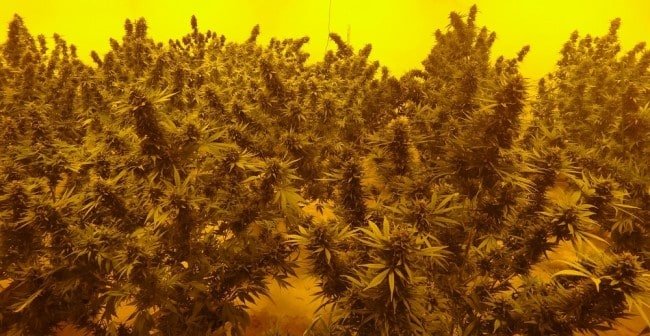
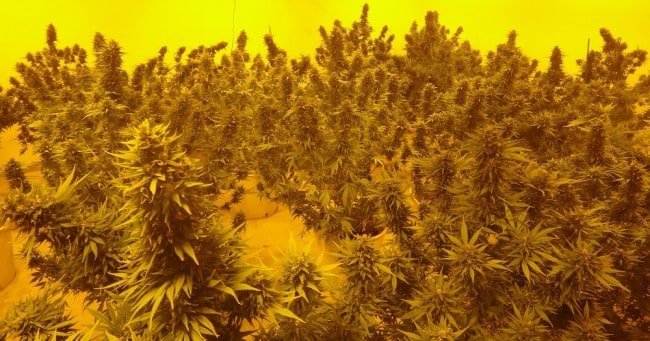
In an indoor environment, Moroccan Beldia requires a different approach than commercial hybrids. Due to its semi-autoflowering landrace nature, it can start showing the first signs of flowering even under an 18/6 photoperiod if root volume is limited or if the plant has passed 4-5 weeks of vegetative phase. It is advisable to use the Sea of Green (SOG) technique starting from small pots to further contain the structure.
The ideal setup involves solar spectrum LEDs and rigorous humidity control. During flowering, a VPD between 1.2 and 1.5 kPa stimulates the transpiration necessary for resin production. Electroconductivity (EC) must be kept low: Beldia is used to poor mineral soils, and excess nutrients can cause systemic blocks. An EC value of 1.2 – 1.4 is usually sufficient for the entire cycle.
Outdoor
Outdoors, Beldia is unbeatable for precocity. It can be planted in late spring and harvested in August, making it the perfect choice for mountainous or northern areas where autumn is prohibitive. The root system is not particularly deep but is very efficient in water absorption.
It adapts to poor, stony soils and requires very little care. Resistance to heat and drought is maximum, while its open structure allows for air circulation that prevents any form of bud rot.
Terpene profile analysis
The aromatic profile of Moroccan Beldia is that of traditional “blonde hashish”. Dominant notes are old wood, wet earth, and dry spices. The presence of Alpha-Pinene provides hints of pine resin and Mediterranean herbs.
During the curing phase, the flowers develop an earthy and honeyed smell, devoid of acidity. The resin is not sticky like that of modern varieties, but rather sandy and easy to detach, a fundamental characteristic for dry-sift hashish production.
For those performing ice and water extraction, the yield may be lower than dry sifting, as the trichome morphology is optimized for mechanical detachment from the dry plant.
Effect and stimulation: what to expect
The effect of Moroccan Beldia is perceived by users as a “functional” relaxation. Not being a high-THC genetic line, it does not induce paranoia, tachycardia, or a sense of disorientation. Many consumers report on Leafly a feeling of mental calm and physical clarity.
It is the ideal variety for those who want to enjoy the flavors of traditional hashish without being overwhelmed by excessive psychoactivity. The effect is short but intense initially, giving way to a pleasant sense of bodily well-being. It is traditionally associated with meditative or contemplative use, typical of Rif kif smokers.
Technical advantages
- Record Speed: One of the fastest sativas in existence, flowering in less than 55 days.
- Semi-autoflowering: Ability to flower early without drastic photoperiod manipulation.
- Drought Resistance: Survives with minimal water intake and high temperatures.
- Ease of cleaning: The calyx-to-leaf ratio and flower structure make trimming almost unnecessary.
- Genetic Purity: 100% Uncontaminated Landrace, essential for breeding.
Mistakes that ruin the harvest
- Over-fertilization: Supplying nutrients with the same intensity used for USA hybrids will burn the plant in a few days.
- Oversized pots in veg: Can cause an excessive delay in flowering or, conversely, root stress leading to hermaphroditism.
- High humidity in flowering: Although resistant, the plant is used to dry climates; humidity above 60% can compromise resin quality.
- Late harvest: Beldia matures very quickly. If you wait too long, the few volatile terpenes rapidly degrade into a hay smell.
- Frequent transplants: Like autoflowers, Beldia does not like repeated transplants; better to use the final pot as soon as possible.
Moroccan Beldia vs Other Queens
Moroccan Beldia vs Pakistan Chitral Kush (PCK)
While PCK is a pure indica with purple colors and berry aromas, Beldia is an earthy and woody sativa. Both are excellent for hashish, but Beldia is definitely faster and offers a clearer effect.
Moroccan Beldia vs Lebanon (Real Seed Company)
Both are Mediterranean/Middle Eastern landraces. Beldia tends to have a more sativa structure and slightly more height, while the Lebanese is often more compact with slightly higher CBD content.
Moroccan Beldia vs Wild Thailand
There is no comparison in terms of timing: Wild Thailand requires 14 weeks, Beldia 7. The Thai is electric and powerful, the Beldia is calm, traditional, and agronomically much simpler to manage.
Who it is not recommended for
Moroccan Beldia is not recommended for those looking for a total physical “knock-out” or extreme THC levels. It is not suitable for those who desire voluminous and compact flowers like those of Cali quality.
Furthermore, growers who prefer intensive training techniques (such as fimming or repeated topping) might find the plant too fast to respond correctly to these stresses before entering flowering.
FAQ
Is Beldia an autoflowering variety?
No, it is a photoperiod-dependent variety that manifests semi-autoflowering traits. It starts flowering much earlier than other sativas if it perceives root restrictions or minimal light changes.
What is its hashish yield?
It is one of the absolute best for dry sifting. The resin detaches with extreme ease, producing high-quality golden hashish.
Can it be grown indoor with 12/12 from seed?
Yes, it is one of the best techniques to manage this genetics and keep it small.
What does the smoke taste like?
It tastes like classic Moroccan hashish: woody, spicy notes, with an aftertaste of dry earth and a touch of aromatic herbs.
Is it pest resistant?
Yes, it has a thick leaf cuticle that makes it unattractive to many insects, but it should be monitored for spider mites in overly dry environments.
Annibale Seedshop’s Opinion
Moroccan Beldia is a must-buy for anyone wanting to understand the origins of hash culture. It is not a plant for those who only look at production or THC numbers. It is a noble, rustic genetic line with disarming speed.
Growing it is an act of botanical conservation. From a technical standpoint, it is fascinating to observe how a pure sativa can finish its cycle so quickly. Perfect for the “guerrilla grower” or for those wanting to produce their own traditional hashish at home.