Cannabis & Light: Which Is Better Between Sun and Indoor Grow Light?
Welcome to a new, fundamental chapter of our Cannabis Cultivation Manual! Whether your goal is recreational, therapeutic, or commercial, light represents the absolute fuel behind every single biological process of the plant. Without light energy, photosynthesis stops and your efforts vanish.
Today we will compare the king of the sky, the sun, with modern indoor lighting systems. We will see in detail which lamps and which spectrums to activate to make the plant explode during Cannabis Seeds Germination, the Vegetative and Flowering Stage.
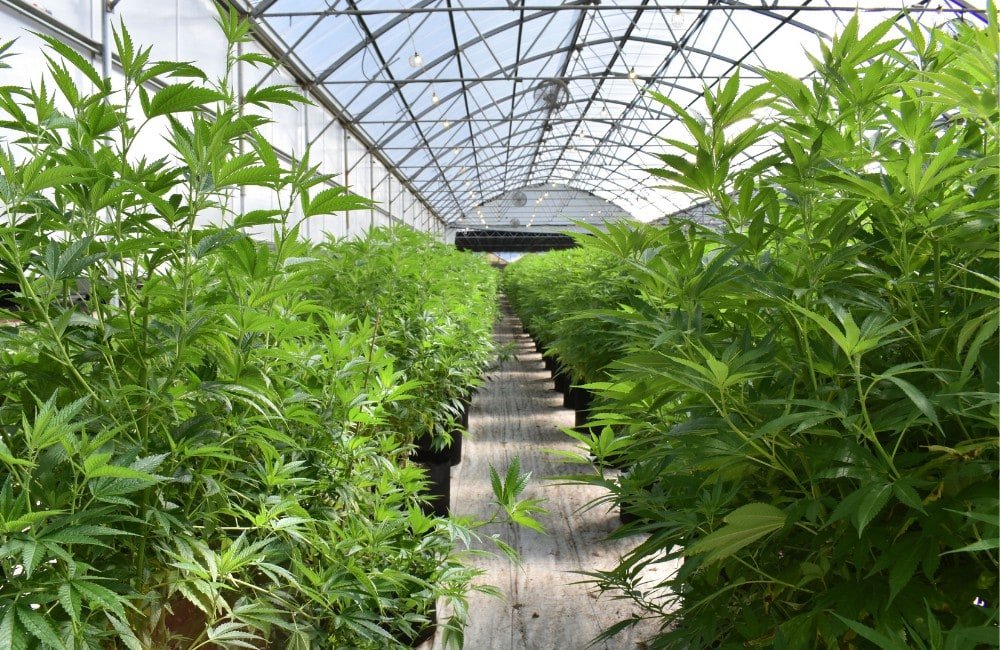
The Sun as Natural Light in Cannabis Cultivation
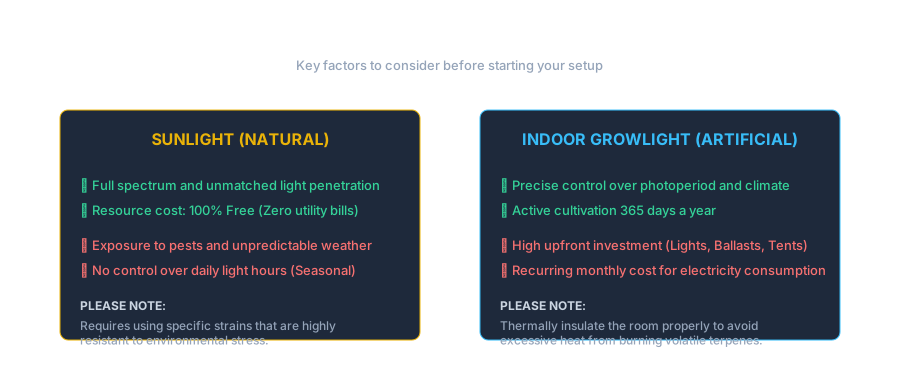
Let’s start with the undisputed king. Despite decades of technological innovations, futuristic grow lights, and customized artificial spectrums, the scientific community has not yet managed to match the perfection of sunlight.
The sun offers a complete, powerful, and free spectrum that remains the ideal choice for chlorophyll photosynthesis. Classic Cannabis is a photoperiod plant: this means it grows and flowers based exclusively on the hours of light it receives during the season.
However, there is a fascinating biological exception: Cannabis Ruderalis. Originally discovered in the coldest and most inhospitable areas of Russia and Siberia, this variety developed a unique adaptation of its kind. The Ruderalis flowers based on the age of the plant, regardless of the hours of light provided. However, it produces very thin buds, with reduced concentrations of cannabinoids and significantly less complex terpene profiles compared to its Indica and Sativa sisters.
The Climate Factor: While the sun is the best “lamp” available on the planet, it cannot be separated from the rest of the external climatic factors. Growing outdoors exposes you to torrential rains, hail, pests, and sudden frosts.
Furthermore, in many regions of Northern Europe and specific geographic areas, the hours of useful sunshine are not enough to sustain a satisfactory harvest. From this need for control and safety, Cannabis indoor cultivation was born—a closed ecosystem where you decide the weather.

Indoor Light and Grow Lamps
Switching to indoor cultivation brings the need to purchase a proper growlight (read more about the best cannabis indoor grow lamp). Today the market offers solutions for every pocket, but beware: not all lamps are suitable for every stage of development.
Mistaking the intensity or the light spectrum means stressing the plants and wasting money on the electricity bill. Let’s see how to configure the room to optimize every single vital stage.
Germination Phase: Delicacy and Cool Spectrums
In this very first stage of germination seeds, seedlings are extremely fragile. The young plant does not yet possess large, structured leaves to start massive photosynthesis, as it is focused on developing the root system.
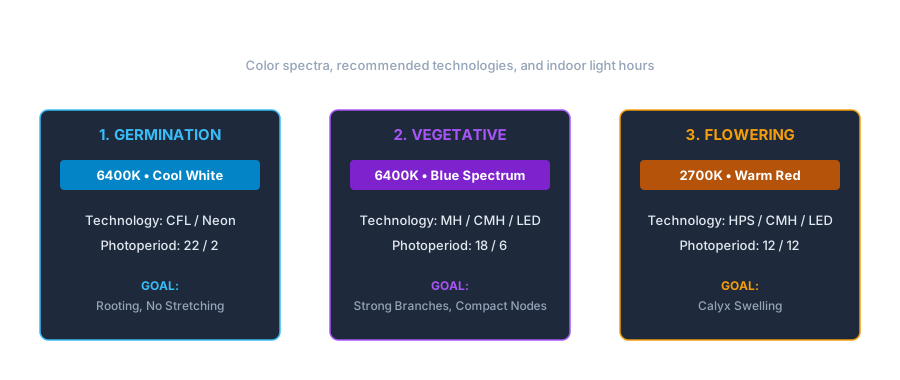
Low energy consumption lamps, such as neons or CFL lamps, with a 6400K white-bluish spectrum are needed. The light must be present but not aggressive, ensuring a good supply of Lumens without generating excessive heat.
If the light is too weak or positioned too far away, the plants will begin to suffer from stretching. This term indicates the dangerous elongation of the stem in a desperate search for light, a phenomenon that makes the stalk weak and prone to snapping.
The Annibale Seedshop Team recommends these proportions for managing the germination area:
- 60x60cm Space: 1 x 300W CFL lamp or 3-4 x 70W neon tubes.
- 100x100cm Space: 2 x 250-300W CFL lamps, well distributed.
Keep grow lamps at a distance of more than 10 cm from the tops of the plants. In this phase, plant tissues are tender and risk lethal heat burns in a very short time. As for the photoperiod, it can range from 16 to 24 hours of continuous light. Our advice is to set a cycle of 22 hours of light and 2 hours of darkness exclusively for the first few days, to completely eliminate the risk of stretching.

Vegetative Phase: Pushing for Structural Growth
From the fourth set of leaves onward, the plant shifts gears and the growth rate visibly accelerates. The first robust lateral branches begin to develop: it is the biological sign that you have entered the true vegetative stage.
Here, a net increase in light power is needed, switching to a classic photoperiod of 18 hours of light and 6 of darkness (or 20/4). The ideal options for this phase are divided according to the available space:
- 60x60cm Area: 1 or more 300W CFL lamps or specific growth LED panels.
- 100x100cm Area or larger: 1 x 400/600W MH (Metal Halide) lamp, or a 315W CMH (Ceramic Metal Halide).
MH lamps and CMH lamps with a 6400K blue spectrum are top-tier for ensuring compact internodes and healthy leaves. Remember that these technologies absolutely require an digital or electromagnetic ballast (power supply) to function.
The safety distance for MH lamps varies from 40 cm up to 60-70 cm from the tops. The exact measurement highly depends on the power of the lamp and the efficiency of your air extraction system.
The back-of-the-hand trick: Place your hand at the height of the highest top of the plant. If after 15 seconds you don’t feel uncomfortable heat on your skin, the lamp height is correct.
Flowering Phase: The Warm Spectrum of Red Gold
When the plants have colonized about 3/4 of the useful space (perfect if you grow in SOG), it is time to make the switch to 12 hours of light and 12 of darkness. This drastic change simulates the arrival of autumn and induces the flowering phase.
The first pre-flowers will make their appearance around the second week after the switch. If you grow regular seeds, this is the crucial moment to identify and eliminate males before they pollinate the females, compromising the quality of the buds.
In the first three weeks of flowering, plants undergo vigorous stretching, doubling or tripling their initial height. Carefully manage vertical spaces by day 25 of flowering to prevent plants from growing too close to the bulb.
To make the calyxes swell, a warm spectrum rich in red and orange tones is required. The undisputed queens of indoor flowering are HPS lamps (High-Pressure Sodium), CMHs, and modern full-spectrum LED grow lamps. Although HPS lamps are still among the most widespread in the world for their extraordinary yield, latest-generation LEDs are outclassing them everywhere thanks to significantly superior heat management and reduced consumption.
To ensure that light penetrates down to the lowest sites and avoid the formation of small, hollow flowers (so-called popcorn buds), apply proven techniques like targeted defoliation and lollipopping.
Safety Recommendations and Climate Management
Indoor light management is closely linked to the thermal management of the grow room. Temperatures above 28°C rapidly degrade cannabinoids and volatile aromatic compounds like terpenes and flavonoids, halting flower development.
Ensure constant air circulation using appropriate extractors and position clip fans directed at the space between the lamps and the plant tops, to break up heat pockets.
Finally, never forget electrical safety:
Never use lamps that have scratches, cracks, or damage on the protective glass. A damaged bulb can explode or cause dangerous malfunctions.
Isolate all electrical components (ballasts, timers, power strips) with obsessive care, keeping them away from water sources and watering areas.
Absolutely avoid using cheap materials or those of unknown origin. Low-quality components are the main cause of short circuits and fires within domestic walls. Always work like professionals!
And that’s all for today regarding Cannabis and Light: sun or indoor grow light. We look forward to seeing you in the next article concerning the Cannabis HLVd: Hop Latent Viroid!
Greetings from the Annibale Seedshop Team!
Davide, CEO Founder & Geneticist