Cannabis Indica VS Sativa: The Main Differences
Friends and customers of Annibale Seedshop, welcome back to our “Cannabis Curiosities” space! In our last blog installment, we analyzed in detail the pros and cons of Indoor vs. Outdoor cultivation. Today, we are taking a fundamental step forward for the technical knowledge of every grower and enthusiast worthy of the name.
We will analyze the taxonomic boundaries, biology, and effects of the two main subcategories belonging to the Cannabaceae family: Cannabis Indica and Cannabis Sativa. Understanding these macro-differences is the cornerstone for planning your cultivation space and selecting the perfect genetics based on your precise needs.

Indica vs. Sativa Differences: Comparing Cannabis Types
The cannabis plant is one of the most versatile and ecologically resilient species on the planet, capable of growing wild in almost every corner of the globe. Although they share the same membership in the Cannabaceae family (the same as hops), the Indica and Sativa variants express radically opposite evolutionary adaptations.
The differences are not limited to their macroscopic and aesthetic appearance. Each lineage possesses an exclusive terpene profile and a profoundly different internal molecular architecture (the phytocomplex). The quantitative ratio between the main cannabinoids triggers antithetical biological responses in the human endocannabinoid system.
It is precisely thanks to these biochemical combinations that medical science is now able to study targeted and differentiated applications, isolating the therapeutic responses of Indica-dominant milestones like Northern Lights or Blueberry, compared to Sativa-driven legends like Amnesia Haze or Hawaiian Snow.

Cannabis Ruderalis: The Autoflowering Variety and the Modern Paradox
Before diving into the pure morphological comparison between Indica and Sativa, it is only right to open a scientific parenthesis on the third sister of the family: Cannabis Ruderalis.
Originally discovered in the most inhospitable areas of central Russia and Siberia, Ruderalis evolved to survive polar climates, temperatures consistently close to freezing, and photoperiods characterized by extremely short summer days.
Unlike its older sisters, which are strictly photoperiod plants (meaning they only begin flowering when daily dark hours increase), Ruderalis expresses the autoflowering gene. The plant initiates floral development solely based on its biological age, independently of external light stimuli.

The Annibale Seedshop Technical Take on “Autos”
The introduction of Ruderalis genetics into breeding programs revolutionized the global seed market, giving rise to modern autoflowering varieties. However, we at Annibale Seedshop look at this commercial expansion with a critical and transparent eye, highlighting a clear qualitative paradox:
- The Advantage: Autoflowering seeds reduce the need to manually manage artificial light cycles indoors, making them popular among absolute beginners.
- The Compromise: The pure Ruderalis component brings with it a qualitatively inferior genetic background in terms of floral density, aromatic complexity, and active ingredient stability. Furthermore, the extremely short and unalterable vegetative phase (usually lasting just 20-25 days) leaves zero margin for error for the grower: a minor root stress or incorrect watering in the first two weeks will cause irreversible stunting, reducing the final harvest to just a few grams.
The economic drive of many mass-market seed banks to produce standardized autoflowering lines has often sacrificed the finesse and potency of the original terpene profiles found in pure photoperiod strains.

Landrace: The Genetic Database of Hemp
All of today’s commercial varieties derive from Landraces (pure native strains). These are centuries-old or millennia-old strains that reproduced in total geographical isolation within their ecosystem of origin, stabilizing their morphological traits. Landraces represent the true “genetic database” of cannabis: their phenotypes exhibit absolute stability and reliability, making them the irreplaceable foundation for breeders wishing to structure new strains and stable commercial hybrids.
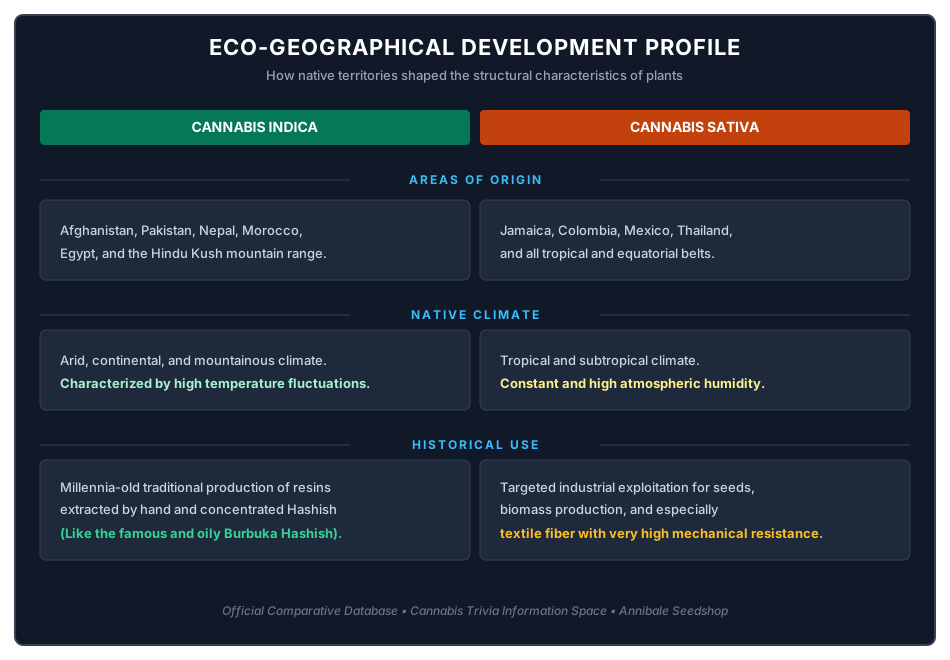
Geographical Origins: Growth Climates
The differing physical structure of these plants stems entirely from the climate of their native countries.
Italian Historical Note
Just over eighty years ago, in 1940, Italy was the world’s second-largest producer of Sativa hemp for fiber, with over 90,000 hectares cultivated. In Piedmont—the cradle of Annibale Seedshop—the historical region of “Canavese” owes its very name, its industrial tradition, and its heraldic coats of arms precisely to the endless expanses of textile hemp (Canapa in Italian language) that characterized its rural economy.
Morphological and Substantial Differences: A Direct Comparison
Let’s get to the heart of biological classification. Structural peculiarities determine the architecture of the grow room and the ease of space management.

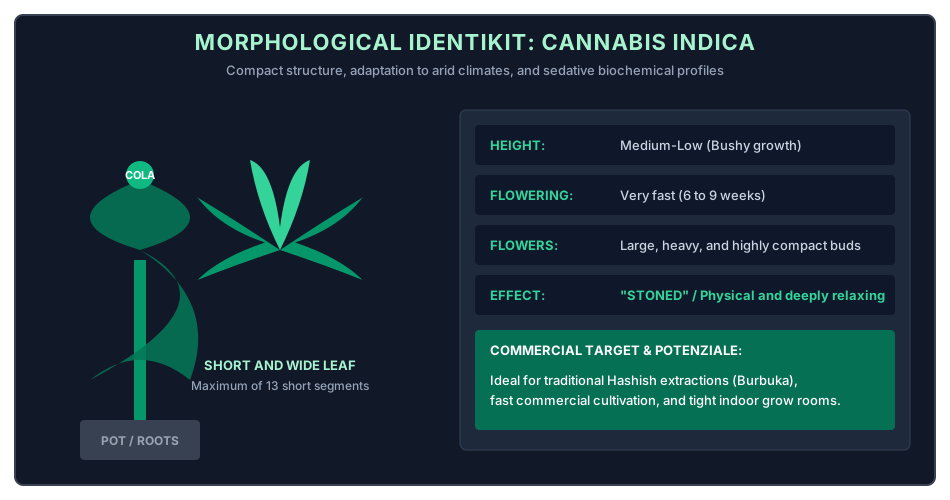
Cannabis Indica: The Bushy Structure
Cannabis Indica is structured to retain moisture and resist dry mountain winds.
- Growth Habit: Medium-to-short plants, extremely branched, with a dense, geometric, and bushy shape. They develop an imposing main bud surrounded by dense lower satellite branches. Indoors, the weight of the flowers in the final weeks often requires the use of support stakes to prevent branches from breaking.
- Foliage: The leaves are wide, stocky, and compact, with thick leaf segments designed to maximize photosynthetic efficiency during short seasons. They present a maximum number of 13 points.
- Flowering Time: It is the preferred choice for the commercial supply chain thanks to its speed of action: it requires 6 to 9 weeks from the photoperiod switch. Timeless examples include Skunk and Orange Bud.
- Effect (“Stoned”): The resin is dense and rich in cannabinoids with a markedly sedative, narcotic, and relaxing effect on the body. It is widely used as a natural aid against insomnia, stress, muscle spasms, and migraines.
Cannabis Sativa: The Tropical Giant
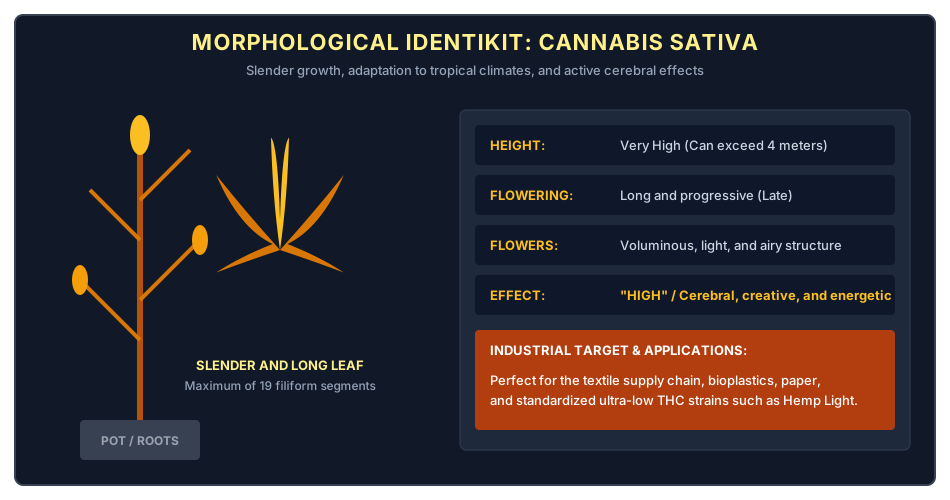
Evoluted in environments with very high vegetation density and humidity, Sativa grows tall to outcompete neighboring plants and capture sunlight.
- Growth Habit: Slender plants that easily exceed 4 meters in height outdoors. Branches are far apart, separated by very wide internodal spaces. The flowers develop airily along the entire length of the branch: this light, low-density structure is a fundamental natural adaptation to prevent the proliferation of molds (such as Botrytis) in humid tropical climates.
- Foliage: The leaves are the epitome of botanical elegance: filiform, extremely thin, long, and slender. They present a maximum number of 19 points.
- Effect (“High”): Produces a user experience diametrically opposed to Indica. The effect is distinctly cerebral, lysergic, and energizing. It stimulates creativity, artistic expression, and focus, leaving the body light and responsive—perfect for daytime use.
Cannabis Light CBD: What Is Its True Nature?
A final mention must be dedicated to so-called “Light Marijuana” or Cannabis with a low THC content and high CBD rate. From a taxonomic perspective, Cannabis Light is the result of rigorous genetic selection applied to industrial Sativa hemp varieties registered in the official European catalogue.
These genetics maintain the slender architecture, thin leaves, and textile strength of Sativa, but have been stabilized to produce flowers completely devoid of narcotic effects, with a THC level that legally does not exceed 0.2% (fluctuating in exceptional cases up to 0.6% depending on national regulations). Cultivating these varieties in Europe is perfectly legal and does not require special licenses, as long as you keep the purchase documentation of the certified seeds.
Whether your preference leans toward the compact and relaxing geometries of Indica or the slender and creative peaks of Sativa, analyzing your workspace and therapeutic goals remains the fundamental compass for every successful cycle. Choose wisely, structure your habitat, and always rely on genetics with proven biological stability!

And that’s all for today on the main differences between Cannabis Indica vs. Sativa. Keep following us in our next article to learn more about the “Top 10 Best Cannabis Sativa Seeds“!
Greetings from the Annibale Seedshop Team!
Davide, CEO, Founder & Geneticist