Sativa, Indica or Hashish? Ultimate Guide to Cannabis Effects
Welcome to a new chapter of our Cannabis Cultivation and Awareness Manual. Today we tackle one of the most complex, debated, and clicked questions in the entire international scene: what are the true effects of marijuana and how do they radically change if we choose a Sativa variety, an Indica, or a traditional concentrate like Hashish?
In the modern cannabis market, dominated by an incredible genetic evolution, superficiality is not allowed. Understanding the pharmacokinetics of different strains, the mysterious role of terpenes, and the scientific truth behind the historical myths of prohibition is the only way to navigate this world with awareness. Whether you are a grower looking for the perfect terpene profile or a curious consumer, get comfortable: here is the definitive analysis signed Annibale Seedshop & Genetics, optimized according to the latest standards of biological and medical understanding.

The Biochemical Engine: Cultivation, Drying, and the Magic of Decarboxylation
To fully understand the effects of cannabis, we must start from a fundamental biological premise: fresh, freshly harvested cannabis does not get you high.
During the delicate phases of the life cycle—from seed germination to vegetative development, up to the crucial weeks of flowering—the plant accumulates cannabinoids inside the heads of its glandular trichomes. However, at this stage, the active ingredients are found exclusively in their acid form (mainly THCA and CBDA). The THCA molecule possesses an extra carboxylic group in its chemical structure that prevents it from effectively binding to the CB1 receptors of our central endocannabinoid system. Consequently, it has no psychoactive properties.

The Chemical Conversion (Decarboxylation)
To activate the molecule, a chemical process called decarboxylation is required, which consists of losing a molecule of carbon dioxide (CO2). This process occurs spontaneously and slowly during the proper drying stage and subsequent curing of the weed, but it is triggered instantly through the direct application of heat. The three main methods of biological activation are:
- Combustion at very high temperatures: This is the classic dynamic of joints, bongs, and chillums. Extreme heat instantly decarboxylates the material but also destroys a very high percentage of volatile terpenes.
- Controlled baking in an oven (110 – 120°C for 30-40 minutes): The method of choice for preparing cannabis butter (Cannabutter) intended for edibles (muffins, cookies), which guarantees maximum conversion efficiency without degrading THC into CBN (a strongly sedative cannabinoid).
- Vaporization at the ideal temperature (205°C): The true technological gold standard. At this precise temperature, trichomes melt, releasing a pure spectrum of vaporized cannabinoids and terpenes, completely excluding toxic gases and polycyclic aromatic hydrocarbons resulting from the combustion of paper and plant matter.

Inhalation VS Ingestion: Two Different Pharmacokinetic Pathways
The typical sensations of cannabis—red eyes, altered perception of time, uncontrollable laughter, deep introspection, up to the classic “munchies” (the stimulation of the ghrelin hormone)—vary dramatically depending on the chosen route of administration.
Smoking or Vaporizing Cannabis (Inhalation)
When smoke or vapor enters the lungs, THC instantly crosses the pulmonary alveoli, entering the bloodstream directly. It crosses the blood-brain barrier within a matter of seconds.
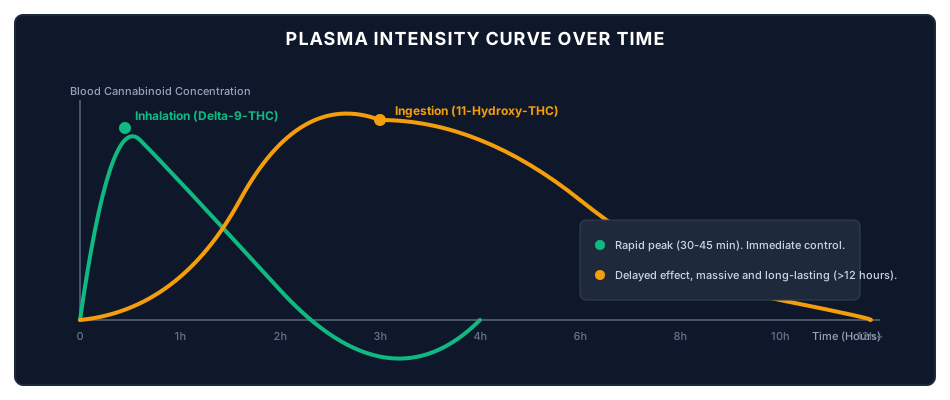
- Onset of effects: 2 – 5 minutes.
- Plasma peak: 30 – 45 minutes.
- Total duration: 2 – 4 hours.
This makes consumption by inhalation easily manageable: the user perceives the intensity of the effect in real time and can choose to stop as soon as they reach the desired level of alteration.

Eating Cannabis (Ingestion of Edibles)
The chemistry changes completely when cannabis is ingested. THC passes through the digestive tract and is processed by the liver. Here, the cytochrome P450 enzyme metabolizes Delta-9-THC, transforming it into 11-Hydroxy-THC. This molecule is significantly more potent, has a much higher brain penetration capacity, and is characterized by superior biological stability.
- Onset of effects: 30 – 90 minutes (influenced by the presence of food in the stomach).
- Plasma peak: 2 – 3 hours.
- Total duration: From 6 to over 12 hours.

ANNIBALE’S WARNING: The staff of Annibale Seedshop strongly advises novice consumers or those without adequate experience against ingesting THC-based products. The main danger lies in the delayed effect. Many users, fooled by the wait, continue to consume sweets (often lured by the exceptional aroma of varieties like our Lavender Muffin F1), ingesting massive doses of cannabinoids. The resulting effect can turn into a psychedelic and introspective experience of unmanageable and unpleasant intensity.
The Cannabis Trinity: Interaction Between THC, CBD, and the Terpene Entourage Effect
For decades, cannabis potency was measured exclusively based on the quantitative percentage of THC (the primary psychoactive phytocannabinoid). Modern plant neuroscience has debunked this one-dimensional approach, introducing the concept of the Entourage Effect.
- THC acts as the primary accelerator of the experience, stimulating dopamine and altering sensory perceptions.
- CBD (Cannabidiol) is the great moderator. While lacking psychoactive properties of its own, it acts as a negative allosteric modulator of CB1 receptors. This means it binds to the receptor, changing its shape and reducing THC’s ability to bind to it. CBD effectively mitigates the anxiety, tachycardia, and paranoia that extreme doses of pure THC could induce.

The Revolutionary Importance of Terpenes and Flavonoids
Terpenes are incredibly volatile hydrocarbon aromatic compounds secreted within the very same resin glands of cannabis. They are solely responsible for the plant’s aromatic spectrum, capable of reproducing complex scents like cream, lemon, berries, gas, or diesel (aroma profiles on which the Annibale Genetics team constantly works to stabilize their strains).
Cutting-edge scientific research confirms that terpenes do not just serve olfactory purposes: they actively modulate THC’s action in the brain.
- Myrcene (earthy and clove aroma) increases the permeability of the blood-brain barrier, boosting the sedative effect of THC.
- Limonene (citrus aroma) promotes the release of serotonin, countering bad moods and elevating mental energy.
- Linalool (lavender aroma) exerts a deeply relaxing and anxiolytic synergistic action at the muscular level.

The Spectrum of Cannabis Effects: Sativa VS Indica VS Hashish
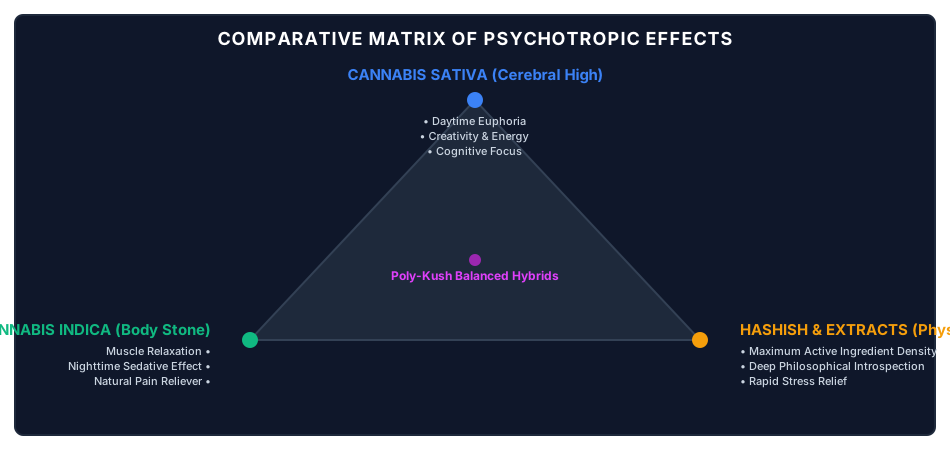
The genetics of the plant determine the composition of its internal chemical cocktail (cannabinoid/terpene ratio), giving rise to three major families of macroscopic effects.
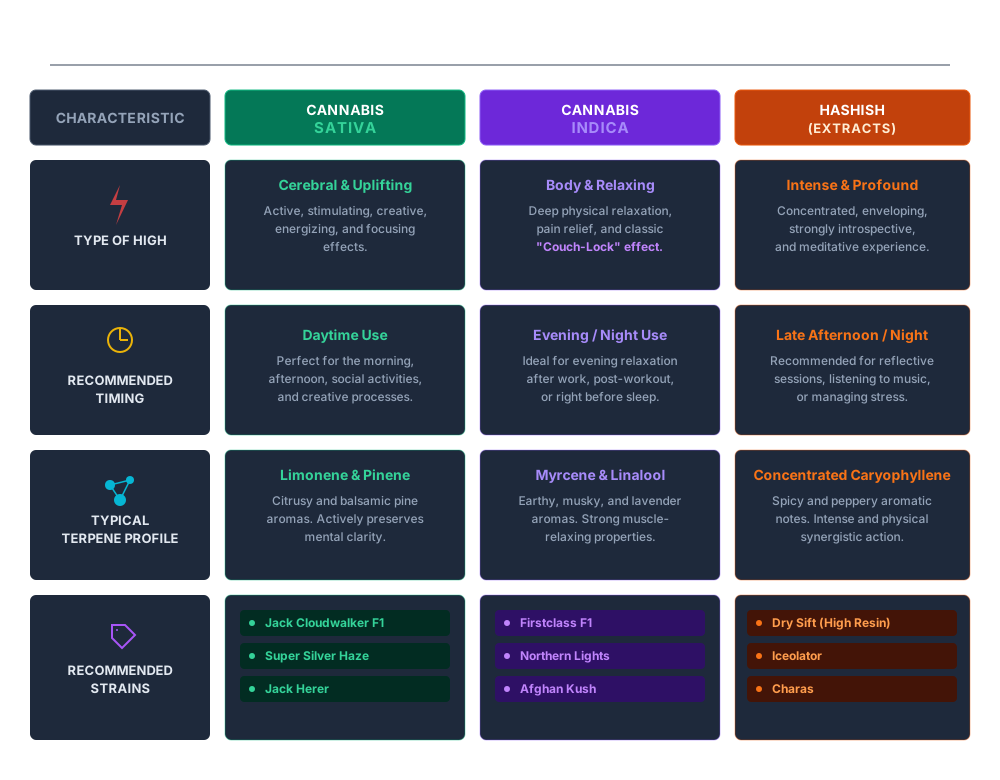
1. Cannabis Sativa: The Mental Accelerator
The best Sativa-dominant strains act primarily on a neurological level. They generate strong cognitive stimulation, amplify the perception of colors and sounds, and boost creativity. It is the favorite weed of recreational consumers who wish to maintain an active social life or dedicate themselves to painting, writing, and music. If taken late at night, its powerful energy boost can cause temporary insomnia.

2. Cannabis Indica: The Body Relaxer
The best Cannabis Indica genetics are the quintessence of muscle and physical relaxation (the classic stoned effect or “couch-lock”). They have strongly narcotic and sedative properties, ideal for those who use cannabis for therapeutic purposes to counter chronic pain, muscle spasms, or severe sleep disorders. It is the perfect choice to end a stressful day in front of a movie.

3. Hashish and Extracts: The Depth of Resin
Hashish is the product of isolating and subsequently compacting only the plant’s trichomes. Being stripped of inert plant matter (cellulose, stems, leaves), Hashish offers a significantly higher concentration of cannabinoids and terpenes compared to raw flowers.

The effect of Hashish is distinguished by a marked physical component combined with a deep introspective and philosophical attitude. It instantly calms systemic anxiety and induces a widespread body warmth. Historically appreciated worldwide, it boasts extraordinary historical anecdotes: did you know that Queen Victoria of England herself regularly used concentrated cannabis tinctures and extracts to alleviate the painful symptoms of menstrual cramps?
Science VS Prohibition: The Rhesus Monkey Study That Invented the False Myth of Brain Damage
Anyone, at least once in their life, has been told that “smoking marijuana inexorably burns brain cells.” Where does this statement come from, and why does the international scientific community today consider it one of the greatest methodological frauds in the history of medicine?
The Historical Case of Dr. Robert Heath (1974)
During Richard Nixon’s presidency and the launch of the bloody War on Drugs, the United States government heavily funded research aimed at proving the intrinsic toxicity of cannabis.
In 1974, Dr. Robert Heath of Tulane University Medical School in New Orleans conducted a study on Rhesus monkeys, claiming that after a year of daily exposure to the equivalent of 30 joints a day, the test subjects’ brains showed systemic atrophy, necrosis, and nerve cell death. Based on this study, then-California Governor Ronald Reagan publicly stated in the Los Angeles Times: “The most authoritative scientific sources confirm that permanent brain damage is the inevitable result of marijuana use.”

The Truth Revealed: Mechanical Asphyxiation, Not Toxicity
The scientific world spent a full 6 years of legal battles to force Heath’s laboratories to release the actual methodological protocols of the study. When the data finally came to light, the scandal was absolute.
Dr. Heath had not administered the equivalent of 30 joints over the course of a day. He had forced the monkeys to inhale the concentrated smoke of over 60 joints in just 5 consecutive minutes through airtight, gas-tight masks.
The monkeys were literally deprived of the oxygen necessary for cellular life, undergoing daily mechanical asphyxiation for 90 days straight. As anyone knows, total oxygen deprivation to the brain for 5 minutes causes immediate brain cell death due to hypoxia. The observed brain damage was caused by suffocation, and had zero toxicological correlation with THC.
Subsequent rigorous studies, conducted by the National Center for Toxicological Research under Dr. William Slikker and the prestigious SRI International institute, monitored primates exposed to extremely high doses of cannabis for entire years without ever finding any structural alteration or neuronal death in brain tissue. Smoking cannabis in adulthood, in moderation, does not burn any neurons.
Real Effects on Short-Term Memory and Creativity
THC temporarily interacts with receptors located in the hippocampus, the brain region responsible for encoding immediate memories. Consequently, during the psychotropic effect, one experiences a transient inefficiency of short-term memory (the classic difficulty of remembering a word or a concept started a few minutes prior). This effect disappears completely as the body metabolizes THC.
Neuroimaging studies highlight that long-term use in adulthood modifies the brain’s functional networks in interesting ways: while some areas linked to rigid focus may show lower reactivity, the neural networks responsible for divergent thinking, imagination, and creativity are significantly more extensive and interconnected compared to the average non-consuming population.
Obviously, any continuous abuse, especially if started during adolescence before prefrontal cortex development is complete, can alter optimal brain development, which is why it is essential to promote responsible consumption limited solely to adulthood.

Frequently Asked Questions (FAQ): Scientific Answers to the Community’s Doubts
Does Cannabis Sativa cause more anxiety than Cannabis Indica?
Yes, potentially. Pure Sativa strains have high concentrations of THC and terpene profiles rich in pinene and limonene, which stimulate brain activity by accelerating heart rate. In individuals prone to panic attacks, this stimulating effect can be misinterpreted by the brain as an anxiety signal. Indicas, thanks to myrcene and linalool, induce physical calm that actively counters anxious states.
What are the “Munchies” and why are they triggered indiscriminately by both weed and hash?
THC binds to CB1 receptors located in the brain’s olfactory bulbs and the hypothalamus. This interaction drastically amplifies our sensitivity to scents and flavors, leading the brain to believe the body is in an advanced state of fasting. Furthermore, it stimulates the secretion of ghrelin, the hormone that triggers an uncontrollable craving for high-calorie, fatty, and sweet foods.
Does Hashish expire or lose its effects over time?
Hashish does not expire in the toxicological sense of the word, but if exposed to direct sunlight, oxygen, or high temperatures, it undergoes a chemical degradation process. THC oxidizes, transforming into CBN (Cannabinol). Consequently, old or poorly stored hashish will lose its original euphoric and cerebral component, becoming a powerful sedative capable of causing only drowsiness and physical heaviness.
Is it possible to suffer a fatal overdose by consuming too much marijuana or hashish?
No, it is biologically impossible. Unlike opiates or alcohol, whose receptors are also mapped in the brainstem (the area controlling automatic vital functions like cardiorespiratory rhythm), cannabinoid receptors are completely absent in this zone. Massive consumption (especially via edibles) can cause a bad psychological experience known as a “greening out” (nausea, dizziness, hypotension), but it cannot in any way cause respiratory arrest or death.
Why do some people feel no effect the first time they smoke cannabis?
This phenomenon is linked to a lack of receptor sensitization. The endocannabinoid system of some individuals requires a sort of “initialization”: upon first intake, CB1 receptors are still inactive or reduced in number. Often, by the second or third session, the brain learns to recognize and welcome the THC molecule, manifesting the full psychotropic effects of the consumed strain.
Commercial Transparency Note: The quality of the final effect depends exclusively on the purity of the cultivation. To avoid heavy metals, mold, or chemical contaminants present in street weed, conscious home-growing remains the best choice. Visit the Annibale Seedshop & Genetics store and discover our exclusive selections.
Hoping that you enjoyed this article on the effects of marijuana within our blog and found it equally useful, we invite you to keep following us in our next upcoming articles!
Greetings from the Annibale Seedshop Team, we look forward to seeing you in our next article on “What is Hash and how to produce it“!
Davide, CEO, Founder and Geneticist