


Showing 49–72 of 1004 results
- 30% On Sale!

- 30% On Sale!
- 15% On Sale!
- 15% On Sale!
- 12% On Sale!
- 10% On Sale!
- 15% On Sale!
- 14% On Sale!
- 15% On Sale!
- 15% On Sale!
- 13% On Sale!
- 15% On Sale!
- 10% On Sale!
- 12% On Sale!
- 9% On Sale!
- 10% On Sale!
- 38% On Sale!
-
- 15% On Sale!
- 10% On Sale!
- 30% On Sale!
- 15% On Sale!
- 30% On Sale!
- 13% On Sale!





All Cannabis Seeds
Whether you are an experienced grower, a cannabis plant enthusiast, an industry professional, or a commercial marijuana cultivator, if you want to buy premium cannabis seeds, this is the exact page that will perfectly suit your needs!
How Many Types of Cannabis Seeds Exist?
Marijuana seeds can be structured into several primary categories:
- Regular Seeds
- Feminized Seeds
- Regular Autoflowering Seeds
- Feminized Autoflowering Seeds
- CBD & CBG Seeds
- Fast Version Seeds
- Bulk Cannabis Seeds
Depending on your level of expertise in hemp cultivation, your specific goals, and your financial allocation, you can select a precise type of marijuana seeds that will allow you to achieve a specific plant with equally unique characteristics!
The Genetic Architecture of Cannabis: Decoding the Embryo’s Biological Potential
To compete in modern agronomic spaces, a grower cannot rely on guesswork. Every single seed contains a complex interplay between genotype (the inherited blueprint) and environment, which ultimately dictates the plant’s final phenotypic expression. In the global market, the structural classification of seeds based on sexual and photoperiodic traits responds to precise space, time, and energy management requirements. Understanding these differences is paramount to setting up an efficient, predictable, and high-yielding life cycle.
Feminized Seeds: Grow Efficiency and Photoperiodic Control
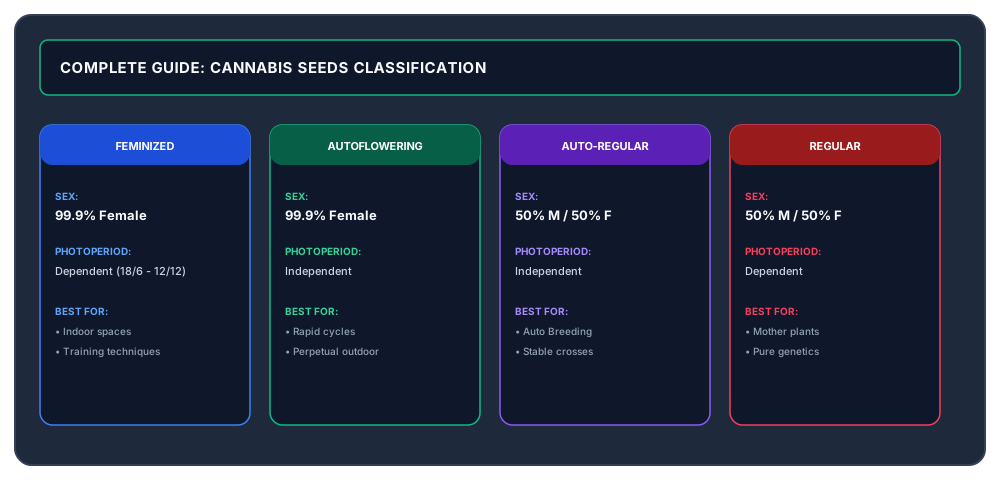
Feminized cannabis seeds serve as the backbone of modern commercial and hobbyist indoor cultivation aimed at premium flower production. Through highly calibrated Don’t search for sexual inversion techniques (utilizing silver thiosulfate or colloidal silver on elite mother plants), the male chromosome is entirely omitted from the reproductive cycle.
- Operational Efficiency: This methodology ensures a 99.9% female phenotypic expression, completely mitigating the risk of accidental pollination and eliminating the labor costs associated with sexing and culling male plants.
- Growing Management: As photoperiod-dependent plants, they allow the cultivator to dictate the exact duration of the vegetative stage (18/6 light cycle). This structural control is the absolute prerequisite for advanced training techniques such as Low Stress Training (LST), Main-lining, or SCROG (Screen of Green), where hormonal distribution (auxins) is manipulated to maximize light penetration across an even canopy of trichome-laden buds.
Feminized Autoflowering Seeds: The Rapid-Cycle Revolution and Ruderalis Heritage
Feminized autoflowering seeds have fundamentally rewritten the geographical constraints of outdoor cultivation, blending the operational certainty of a female crop with the unparalleled speed of Cannabis Ruderalis—a wild sub-species native to Eastern Europe that adapted to flower independently of light hours.
- Photoperiod Independence: Unlike traditional photoperiod cultivars, autoflowers trigger flower development strictly based on biological age (typically between day 21 and 28 from germination), allowing a seamless seed-to-harvest cycle in just 8 to 11 total weeks.
- Environmental Adaptability: This rapid timeline empowers growers to establish outdoor perpetual harvests or maximize short northern summers, successfully harvesting before the onset of autumn rains, cold spikes, and pathogenic molds like Botrytis cinerea. Furthermore, their compact, stocky structure makes them the premier choice for discrete cultivation environments (guerrilla or balcony gardens).
Regular Seeds: Hybrid Vigor and Genetic Pool Preservation
For botanical purists, professional breeders, and dedicated preservationists, regular photoperiod cannabis seeds remain the irreplaceable gold standard. By delivering a natural, unaltered statistical distribution of 50% male and 50% female individuals, these seeds preserve the natural DNA of the plant, completely free from any chemical manipulation.
- Heterosis (Hybrid Vigor): Regular lineages inherently display superior resilience against environmental stressors, more aggressive root architectures, and long-term genetic stability. This makes them uniquely qualified for selecting mother plants destined to produce viable, high-quality clones for decades to come.
- Breeding Viability: Without regular seeds and the systematic selection of male pollen from stable specimens, it would be scientifically impossible to create new hybrid cultivars, stabilize backcrosses, or preserve precious endangered Landrace genetics (pure strains native to isolated geographic regions).
Regular Autoflowering Seeds: The New Frontier of Elite Automated Breeding
Regular autoflowering seeds (or auto-regulars) represent the vital biological link between the autoflowering universe and the untampered purity of natural reproduction. At Annibale Seedshop, we have invested years of specialized research and development into this specific genetic niche, breeding and stabilizing a vast library of proprietary auto-regular lineages, establishing ourselves as a global benchmark for this category.
- Independent Breeding Potential: Much like traditional regular seeds, regular autoflowering variants yield a natural distribution of male and female specimens, while keeping the automatic trait fully stabilized. This empowers home geneticists and craft breeders to create their own stable autoflowering crosses locally, bypassing the need for complex, chemical-heavy sexual inversion methods.
- Unmanipulated Genetic Prowess: Free from the cellular stresses of feminization, auto-regular muscles and females offer exceptionally clean transmission of recessive traits. They stand as the ultimate biological tool for introducing the rapid flowering mechanics of Ruderalis into elite photoperiod cultivars or conducting open-pollination runs designed to build highly resilient automatic populations rich in terpene biodiversity.

Seedbank Atlas: From Amsterdam Old-School to West Coast “Cali” Legends
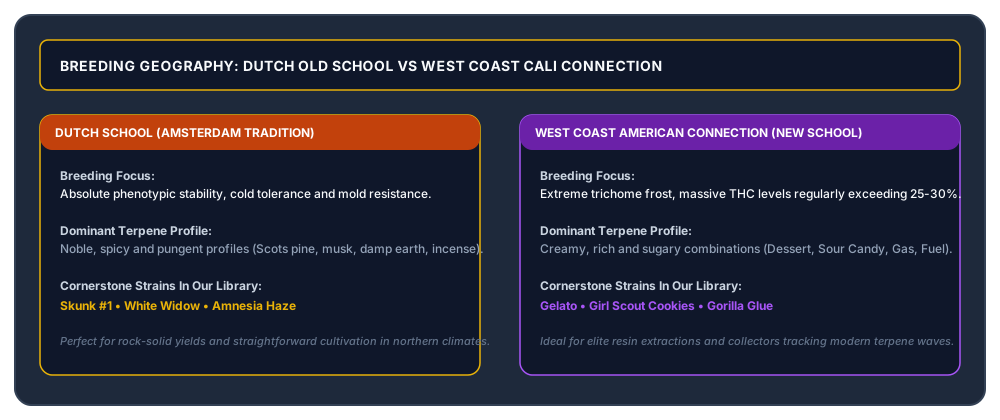
The global map of cannabis genetics is historically split between two overarching breeding philosophies: the rock-solid, timeless Dutch school (Old School) and the contemporary revolution of the American West Coast (New School). Understanding how these distinct geographical regions have shaped modern cultivars is paramount for any grower aiming to select cannabis seeds with precise structural and bio-chemical expressions.
The Dutch School: The Golden Age of Amsterdam, Stability, and International Cups
The backbone of European cannabis heritage is firmly rooted in the Netherlands, where legendary seedbanks like Sensi Seeds, Green House Seeds, Barney’s Farm, and Dutch Passion rescued, cataloged, and stabilized the very first commercial lineages throughout the 1980s and 1990s.
- Breeding Focus: The primary objective of the Dutch school has always been absolute phenotypic stability and climatic resilience. Iconic strains such as Skunk #1, White Widow, and Amnesia Haze were selectively bred to perform flawlessly under the harsh, damp climates of Northern Europe and within early indoor configurations.
- The Classic Terpene Profile: Old-school genetics are structurally dominated by volatile organic terpenes like myrcene, pinene, and terpinolene. On the palate, this translates to deep, penetrating aromas of pine, forest moss, rich earth, and that unmistakable sharp, incensed pungency typical of traditional Haze lines. These are the structured, “noble” flavors that pioneered cannabis culture across Amsterdam’s coffeeshops.
The American Revolution: The “Exotic” Phenomenon and the West Coast Connection
In recent years, the epicenter of global cannabis breeding has aggressively shifted toward California, Oregon, and Washington State. Vanguard seedbanks like Humboldt Seed Co., LIT Farms, and autoflowering specialists like Fast Buds 420 have completely disrupted the market by introducing Exotic Strains and Dessert Strains.
- Breeding Focus: American geneticists pivoted away from pure structural hardiness to focus obsessively on complex terpene synergy and extreme trichome production (the coveted canopy “frost”). The benchmarks here are maximum visual impact (bag appeal) and astronomical THC thresholds consistently breaking the 25-30% mark.
- The Modern Terpene Profile: Driven by genetic titans like Girl Scout Cookies, Gelato, Gorilla Glue, and Sour Diesel, the California school introduced flavor vectors previously deemed impossible. Limonene and caryophyllene take center stage, yielding profiles that are ultra-creamy, doughy, zuccherine, or heavily chemical (the classic “Gas” or “Fuel” attribute). Experiencing a modern Cali strain today is akin to tasting an artisanal pastry, fruit gelato, or sour candy.
The European Middle Ground: Spanish Innovation and Domestic Selections
Positioned between these two powerhouses is the elite craftsmanship of Spanish breeding and boutique genetic houses, including Silent Seeds, Sweet Seeds, and our proprietary line, Annibale Genetics, which is proudly 100% Italian. This “third way” operates as a biological bridge: it captures the hyper-aromatic, exotic terpene profiles of the USA and hybridizes them with the stable, fast-flowering, and resilient frameworks of European heritage. The result is a diverse array of polyhybrids (including the renowned Fast Versions), structurally optimized to thrive under the Mediterranean sun as well as within highly technical indoor environments.
Technical Guide to Scientific Storage and Germination of Cannabis Seeds
Seed Preservation: Protecting Embryo Viability
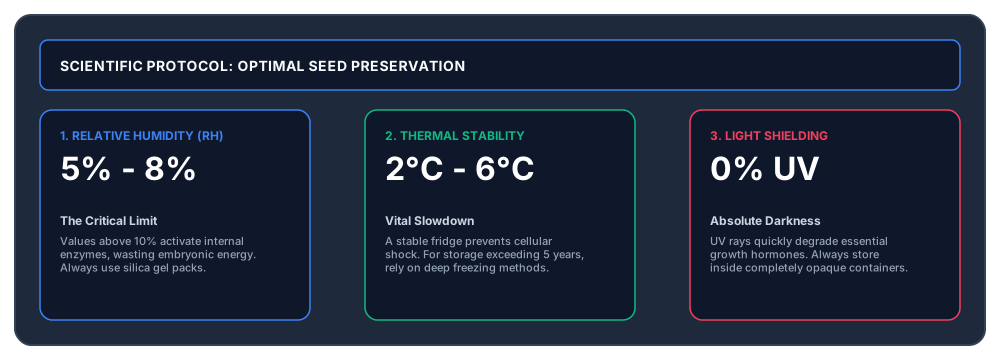
A cannabis seed is a living organism in a quiescent (dormant) state. Inside its protective outer shell lies an embryo waiting for the correct environmental cues to trigger its metabolic pathways. To preserve a germination rate close to 100% over a long-term period, it is paramount to insulate the seed from its three natural biological adversaries: Humidity, Temperature, and Light.
- Relative Humidity (RH): This is the single most critical factor. Humidity levels exceeding 8-10% coax the seed into activating internal enzymatic processes, which quickly depletes the embryo’s energy reserves, leading to premature death or the onset of fungal pathogens. Seeds must be stored in airtight containers, ideally vacuum-sealed, utilizing silica gel packs to strip away residual moisture.
- Thermal Control: Fluctuating temperatures destroy cellular stability. For short-to-medium-term preservation (up to 2 years), a stable temperature between 2°C and 6°C (a standard no-frost refrigerator compartment) is optimal for slowing down vital functions without freezing internal tissues. For long-term preservation (beyond 5 years), professional geneticists utilize vacuum-sealed deep-freezing below sub-zero thresholds, taking extreme care to prevent thermal shock during thaw cycles.
- Zero Photoperiod (Absolute Darkness): Ultraviolet light quickly degrades vital growth hormones (such as gibberellins) shielded within the seed embryo. Consequently, storage must take place inside opaque vials or shielded blister packs.
The Germination Protocol: Biological Activation and Legal Framework
Important Legal Note: Depending on your specific national or local jurisdiction, triggering the germination of cannabis seeds can be completely legal, regulated, or prohibited. We strongly urge our global clientele to thoroughly research the active legislation in their territory before engaging in any botanical operations.
When legal parameters permit, activating the embryo requires triggering the process of imbibition (water absorption). Modern agronomy highlights three verified and highly efficient methodologies:
- The Water Glass Method: Submerging the seeds in demineralized water (with a pH calibrated between 6.0 and 6.5) at a steady temperature of 20-22°C for a window of 12 to 24 hours. As soon as the shell cracks open, exposing the tip of the primary radicle, the seed must be immediately integrated into the final medium to prevent root asphyxiation.
- The Paper Towel Method: Placing the seeds between two layers of unbleached, damp (but never waterlogged) paper towels, sandwiched between two plates to retain absolute darkness and localized ambient moisture. This offers an immediate visual way to monitor early radicle development.
- Direct Medium Sowing: The most natural path, strongly favored for autoflowering lines that are inherently sensitive to transplant shock. The seed is buried at a depth of roughly 0.5 to 1 cm in a soft, well-aerated, lightly pre-moistened substrate (such as a peat-perlite blend or rockwool cubes), keeping ambient temperatures dialed in at around 24°C.

Selection Criteria
Before scrolling through our comprehensive frequently asked questions, it is paramount to understand how to map out catalog technical specifications to select your ideal strain. Yield data (g/m2 indoor or outdoor) and cannabinoid thresholds are not rigid absolute numbers; rather, they represent bio-chemical potentials heavily dependent on your specific cultivation environment and expertise.
How to Select Seeds Based on Habitat and Operational Goals
- Indoor Cultivation (Controlled Environments): When growing inside a tent, your absolute limiting factors are vertical height and thermal/humidity management. Indica-dominant strains or stocky, compact polyhybrids (Cookies or Kush lineages) are structurally ideal. Focus on strains boasting high g/m2 metrics, optimizing your square footage through hydroponic setups or highly aerated inert mediums.
- Outdoor grow and Guerrilla Cultivation: In open fields, your primary enemy is the seasonal autumn weather shift. If your geographic location suffers from cold, rainy autumns, entirely avoid late-flowering Sativas (12-14 weeks) and prioritize Fast Versions or Autoflowering lines. For Guerrilla configurations (where daily manual watering is impossible), regular Landrace selections or unmanipulated regular seeds offer far superior structural hardiness and natural pest resistance.
- Cannabinoid Engineering (THC, CBD, CBG): In 2026, potency is no longer judged solely by raw THC percentages—even though our elite cultivars consistently breach the 30% threshold. Elite breeders have shifted focus toward full-spectrum terpene preservation and the maximization of minor cannabinoids like CBG, CBD, and CBN, which directly modulate the psychoactive trajectory via the entourage effect.
FAQ: Top User Questions about Cannabis Seeds
How much do premium, high-quality cannabis seeds actually cost?
The market price for a single cannabis seed typically scales from €3.50 to €25. This valuation is governed by years of genetic stabilization, lineage scarcity, and the breeder’s history. Elite historical exceptions exist for preservationists; for instance, the pure regular stocks from Super Strains (the original creators of the authentic Amnesia heirloom) can command steep premium prices per pack due to their extreme scarcity, historical value, and untampered reproductive purity.
What are Bulk Cannabis Seeds, and are they stable?
Bulk seeds are unbranded, premium cannabis seeds sold in massive volumes without commercial lifestyle packaging, allowing for a highly competitive price point. They are the premier choice for large-scale licensed commercial operations looking to optimize overhead. Genetically, when sourced from vetted authorities like Annibale Seedshop, bulk configurations deliver identical germination rates and phenotypic consistency compared to boxed brands, as they frequently originate from the exact same elite European cultivation facilities.
What is the exact technical difference between “Fast Version” and Autoflowering strains?
The distinction is fundamentally determined by photoperiod dependency:
- Fast Versions are photoperiod-dependent plants (requiring a structural 12/12 light flip to trigger bloom) that carry a recessive autoflowering gene, accelerating their maturation cycle by 10 to 14 days compared to standard lines.
- Autoflowering Strains are completely independent of light cycles, automatically inducing bud development based on biological age alone, regardless of the light exposure schedule (e.g., 18/6 or 20/4).
Is it possible to keep a stable mother plant or take clones (cuttings) from an autoflowering seed?
Biological Fact: No, it is scientifically impossible. Because the life cycle of an autoflowering plant is strictly governed by an internal cellular clock inherited from Cannabis Ruderalis, any cutting taken from an automatic plant will mirror the exact biological age of the donor mother. The clone will automatically transition into bloom simultaneously with the mother plant, making it impossible to revert or sustain in a perpetual vegetative state. For long-term mother plants, utilizing photoperiod-dependent (regular or feminized) seeds is mandatory.
Why did my cannabis seed crack open but the radicle stopped growing?
This specific failure, known as early-stage damping-off or germination arrest, is consistently caused by three operational errors:
- Substrate Saturation: The medium is completely waterlogged, stripping away oxygen from the taproot and causing anaerobic suffocation.
- Pathogenic Outbreaks: Utilizing unsterilized water or handling tools introduces aggressive fungal spores like Pythium or Rhizoctonia, which instantly degrade the delicate embryonic tissue.
- Thermal Shock: Ambient temperatures plunging below 18°C or spiking beyond 28°C instantly paralyze the seed’s cellular division processes.
What are CBD and CBG seeds, and how do they interact with THC?
High-CBD (Cannabidiol) and High-CBG (Cannabigerolo) seeds are specialized cultivars bred to exhibit negligible psychoactive THC levels while maximizing non-intoxicating therapeutic compounds. CBG is recognized as the “stem cell cannabinoid” from which all others synthesize. When interacting alongside THC, these minor cannabinoids alter binding affinities at the receptor sites within our endocannabinoid system (CB1 and CB2)—successfully buffering THC-induced anxiety, extending therapeutic longevity, and delivering a clear-headed, functional, body-centric physical relaxation.
Cannabis Indica or Sativa Seeds?
Indica and Sativa are the two primary families of the hemp plant, each expressing distinct structural growth habits, unique active compounds, terpene dynamics, and physiological effects. To truly understand which botanical profile fits your needs, read our in-depth comparison article on Indica VS Sativa!
Cultivating Cannabis Seeds Indoor or Outdoor (or Guerrilla)?
Indoor vs Outdoor? That is the ultimate dilemma! Depending on your chosen grow environment, you must purchase cannabis seeds genetically tailored to thrive in that specific habitat; otherwise, your investments and manual labor will be highly compromised. To explore this topic further, make sure to read our dedicated guide Indoor VS Outdoor!
Where can I buy cannabis seeds safely and reliably?
Cannabis seeds can be legally purchased as collectible souvenirs or preservation items across many international jurisdictions, both in physical shops and specialized e-commerce platforms. The fundamental difference of Annibale Seedshop lies in our meticulous environmental quality control: unlike other stores, we store our seeds inside dedicated refrigerated chambers under constant temperature (2-6°C) and automated moisture control. This guarantees absolute embryonic freshness, ultra-fast worldwide shipping in 100% stealth packaging, and expert technical customer support that leaves nothing to chance.
Most Famous Hemp Seeds
- Girl Scout Cookies (or its variant Boyscout Cookies F1)
- Strawberry Cough
- Amnesia
- Original Orange Bud Auto
- Gorilla Glue 4
- Skunk 11 (or its Lemon Skunk variant)
- Jack Herer
- Gorilla Zkitllez
- OG Kush
- Blueberry Muffin (or its Lavender Muffin F1 variant)
- White Widow
- Super Lemon Haze
- Sour Diesel (or an incredible strain that looks like it, the Firstclass F1)
- Bruce Banner 3
15 Famous Cannabis Seeds banks
There are many hemp seeds sought after for their fantastic genetic qualities, and they come from the most disparate Marijuana seed banks in the world. In our catalog there are over 50 of the best Cannabis Seed Banks in the world offering the highest quality Marijuana seeds!
- Kannabia
- Barney’s Farm
- Annibale Genetics
- Nirvana Seeds
- Royal Queen Seeds
- DNA Genetics
- Sensi Seeds
- Dutch Passion
- Amsterdam Genetics
- Bulk Seedbank
- Grand Daddy Purple
- Bodhi Seeds
- Humboldt Seed Co.
- ACE Seeds
- Green House Seeds
- Mosca Seeds and many others!
The Annibale Seedshop Team remains at your complete disposal to help you choose the Cannabis seeds that are closest to your needs, do not hesitate to contact our Staff!