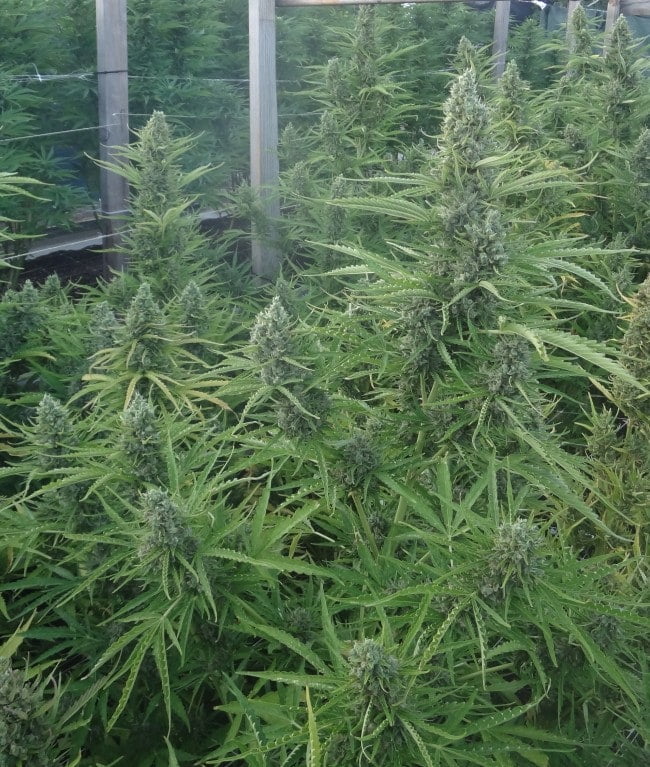
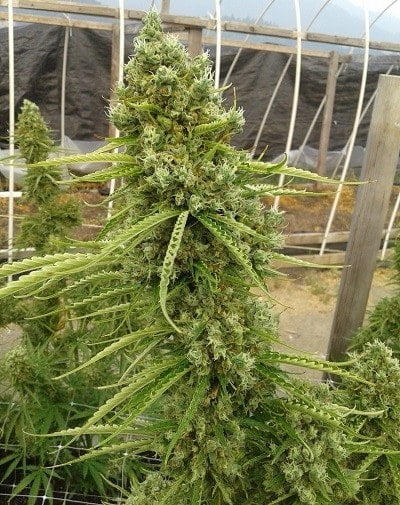
The hybridization of Auto Malawi x Northern Lights represents ACE Seeds’ first true entry into the non-photoperiod sector, applying rigorous stabilization criteria to a pure landrace of African origin.
This cross blends the energy of the Malawi Killer with an advanced selection of Northern Lights Auto, resulting today in a stable generation (F4-F5) that eliminates the hermaphroditism issues typical of wild sativas.
From an agronomic standpoint, the plant shows extraordinary vigor compared to category averages, developing with an imposing main cola and solid lateral branches capable of supporting a substantial flower mass.
Auto Malawi x Northern Lights in brief
Auto Malawi x Northern Lights is a balanced hybrid composed of 50% sativa and 50% indica, with the introduction of ruderalis genetic stock for cycle automation.
The total time from germination to harvest ranges between 65 and 70 days (9-10 weeks), offering high yields both in controlled environments and open fields. With a THC content stabilizing between 10% and 15%, it is an efficient choice for those requiring multiple harvests during the summer season or minimal management of vertical space.
Technical Sheet
- Genetics: Malawi Killer x Northern Lights Auto (F4-F5 Hybrid)
- Type: 50% Sativa / 40% Indica / 10% Ruderalis
- Full Cycle: 9 – 10 weeks from germination
- Harvest: Multiple (from early summer to late autumn outdoors)
- Height: Medium / Tall for an autoflower (80 – 130 cm)
- Cannabinoids: THC 10-15%, CBD < 0.05%, CBG < 0.2%
- Terpenes: Beta-Myrcene, Limonene, Alpha-Pinene, Caryophyllene
- Yield: 450 – 500 g/m² (Indoor) / 100 – 150 g/plant (Outdoor)
- Techniques: Sea of Green (SOG), Low Stress Training, Immediate final pot
- Extracts: Good return in dry sift extractions thanks to trichome consistency
- Effect: Lucid and energizing at first, progressively warm and relaxing
History
The history of this hybrid, extensively documented on Seedfinder agronomic databases, stems from the need to make Malawi’s genetic heritage accessible to those growing in northern latitudes.
Pure African sativas require very long cycles, but ACE Seeds’ breeding work integrated a real genetic timer that triggers flowering independently of light hours.
“A genetic timer that encloses the vigor of great African landraces in a compact structure with an accelerated cycle.”
The inclusion of Northern Lights Auto not only stabilized precocity but also introduced the stress tolerance typical of the best Dutch indica lines.
Official observations from the breeder indicate that, by the fourth generation of stabilization, the population shows remarkable phenotypic uniformity, reducing variations and ensuring the emergence of structurally predictable and stable plants.
Cultivation management and yield parameters
Indoor
In the grow room, managing Auto Malawi x Northern Lights requires optimizing time from day one. The plant has a fixed vegetative window of about 4-5 weeks before the automatic onset of flowering; for this reason, it is mandatory to avoid intermediate transplants by using the final pot of 11-15 liters right away.
Any mistake in the early stages can cause root stress that blocks its final development. The ideal setup involves providing a constant photoperiod of 20 hours of light and 4 hours of darkness throughout the life cycle, using full-spectrum LEDs. Vapor Pressure Deficit (VPD) parameters must be calibrated around 1.0 kPa in the first few weeks, rising to 1.3 – 1.4 kPa in late flowering.
Regarding nutrition, macroelement absorption is steady: electroconductivity (EC) must start low (0.8) and then stabilize at a maximum value of 1.5 – 1.6 during peak flowering.
Outdoor
Outdoors, this variety fully expresses the concept of operational efficiency. Thanks to its accelerated cycle, it allows for planning multiple harvests within the same season, exploiting the months with the highest light intensity (May-July) for maximum yield.
The root system benefits from adding mycorrhizae to the substrate to speed up expansion in the first few days. Resistance to temperature fluctuations and wind is excellent due to the heritage inherited from Northern Lights, while the airy aerial development facilitates air passage, reducing the risk of pathogen attacks.
Terpene profile analysis
The biochemical profile of Auto Malawi x Northern Lights diverges sharply from the classic chemical or sugary aromas of industrial varieties. As highlighted in cultivation logs on GrowDiaries, the main phenotypes express aromas reminiscent of strawberry yogurt and tropical fruit juices (peach and mead), accompanied by woody and resinous background notes.
In the final weeks of flowering and during the curing phase, the heavier terpenes consolidate, developing a musky and sweet liqueur scent that persists long in the dry flower. The density of trichomes on the small leaves makes this plant very interesting for cold extraction or mechanical threshing, where it offers a clean return and a golden coloration classic of traditional hashish.
Effect and stimulation: what to expect
Based on aggregate evaluations provided by users on Leafly, the effect of this genetics develops in three distinct phases. Many consumers report an immediate mental opening, characterized by sensory clarity and stimulation of creative thinking, linked to the sativa component of Malawi.
Later, perception evolves toward a warm, soothing, and slightly dreamy sensation. The final phase is dominated by the indica component of Northern Lights, which offers deep muscle relaxation, making it a genetics traditionally associated with evening consumption or functional rest periods.
The stability of the cannabinoid profile ensures a predictable experience free of anxiety spikes.
Technical advantages
- Photoperiod independence: Flowers in any season and latitude without changes to light hours.
- Accelerated cycle: Harvest ready in less than 70 total days from germination.
- Robust structure: Develops strong lateral branches that reduce the need for mechanical supports.
- Phenotypic uniformity: F4-F5 stabilization ensures a population of homogeneous plants.
- Climatic resistance: Above-average tolerance to thermal shocks and outdoor humidity.
Mistakes that ruin the harvest
- Multiple transplants: Moving the plant causes root stress that irreversibly blocks its final size.
- Nitrogen excess in flowering: The plant is sensitive to nitrogen; too high a salt load inhibits proper calyx development.
- Initial excessive irrigation: Keeping the substrate constantly waterlogged in the first 15 days prevents oxygenation and limits lower plant structure development.
- Drastic pruning: Being an autoflower, invasive pruning reduces leaf mass without giving the plant time to recover before flowering.
- Lack of air circulation: In indoor cultivations, the density of the main cola requires constant ventilation to avoid moisture stagnation and internal molds.
Auto Malawi x Northern Lights vs Other Queens
Auto Malawi x Northern Lights vs Auto Zamaldelica
Auto Zamaldelica is a more extreme automatic sativa with longer flowering times and a purely psychedelic, sometimes anxious effect. Auto Malawi x NL is much more balanced, easier to manage, and offers a relaxing component absent in Zamaldelica.
Auto Malawi x Northern Lights vs Commercial Northern Lights Auto
Commercial versions of NL Auto focus exclusively on speed and narcotic relaxation, sacrificing the aromatic profile. This ACE Seeds hybrid introduces the fruity complexity and clear potency of Malawi, elevating the overall quality of the flower.
Auto Malawi x Northern Lights vs Autoflowering Hazes
Automatic Hazes tend to stretch untidily and produce airier flowers. Auto Malawi x Northern Lights maintains a compact structure and hard calyxes, ensuring a higher real weight for the same volume.
Who it is not recommended for
This variety is not recommended for growers intending to apply intensive pruning techniques or prolonged vegetative cycles, as the life cycle is managed by an unalterable biological timer. It is not suitable for those demanding THC levels above 25% or artificial chemical candy aromas.
Finally, it is discouraged for those growing hydroponically with high salt boost systems without millimetric monitoring of electroconductivity (EC) parameters.
FAQ
When does Auto Malawi x Northern Lights start flowering?
The plant triggers flowering automatically between the fourth and fifth week from germination, regardless of the set photoperiod.
What is the recommended final pot?
The use of 11 to 15-liter fabric pots from seeding is recommended to avoid any form of root system restriction.
Does it handle humidity well at the end of the cycle?
Yes, the upper structure of the plant is erect and open enough to promote good air passage, reducing the onset of botrytis compared to pure indicas.
What is the ideal EC value in flowering?
During peak flowering, it is recommended to stabilize the EC between 1.4 and 1.6 in soil, avoiding sudden nutrient increases.
How many harvests can be done outdoors?
In Mediterranean regions, it is possible to plan up to three consecutive harvests from April to November.
Annibale Seedshop’s Opinion
Auto Malawi x Northern Lights by ACE Seeds represents a fundamental technical evolution in the world of autoflowers. We are not facing the usual mass-catalog commercial genetics, but a serious breeding work that brings the complexity of African landraces into an operational format within everyone’s reach.
Its resistance, combined with a terpene profile reminiscent of fruity yogurt, makes it an ideal choice for the grower looking for efficiency, speed, and a final flower quality that leaves nothing to be desired compared to traditional photoperiod varieties.